


Listen to the article
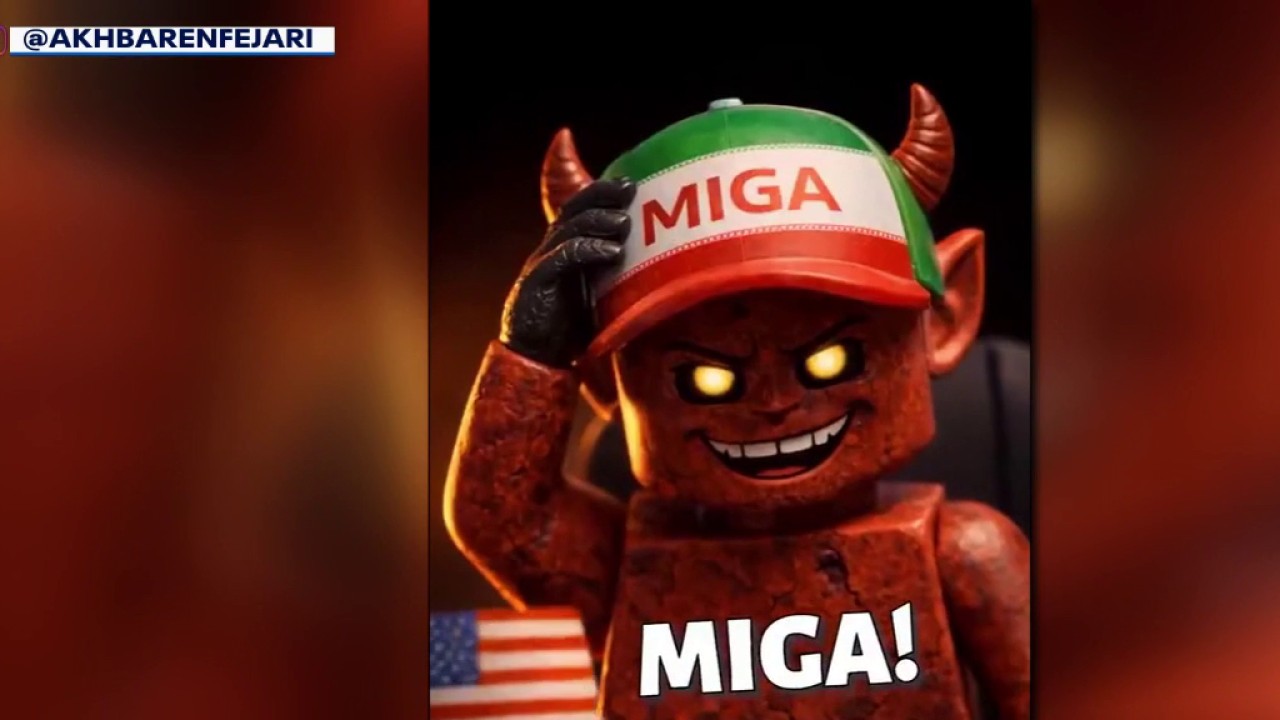
In a notable escalation of political messaging through emerging technology, Iranian state media has produced a video mocking former President Donald Trump using artificial intelligence techniques, mirroring similar tactics employed by the Trump administration’s White House social media accounts.
The video, released Monday through Iran’s official media channels, represents the latest development in the growing use of AI-generated content in political communication and propaganda on the international stage. Details about the specific content of the Iranian video remain limited, but analysts suggest it appears to be a direct response to the Trump administration’s own use of AI in social media messaging.
“We’re seeing the predictable evolution of information warfare,” said Dr. Mira Kaplan, a digital media expert at Georgetown University. “When one government begins using AI-enhanced content for political messaging, others inevitably follow suit. What’s concerning is how this technology enables the rapid production of increasingly sophisticated and potentially misleading content.”
The Trump administration has drawn criticism in recent months for its increased reliance on AI-generated imagery and content across official White House social media platforms. Critics have raised concerns about transparency, with several instances where manipulated or entirely AI-generated visuals were presented without clear disclosure of their artificial origins.
Relations between Iran and the United States have remained tense following the collapse of the nuclear agreement during Trump’s presidency. The Iranian media’s decision to target Trump specifically suggests ongoing animosity toward the former president, whose “maximum pressure” campaign imposed severe economic sanctions on the country.
Media analysts note that this exchange represents a troubling trend in how governments worldwide are adopting AI tools for propaganda purposes. “What we’re witnessing is the democratization of sophisticated media manipulation technology,” explained Carlos Vega, senior fellow at the Digital Policy Institute. “Previously, high-quality video and image manipulation required significant resources and expertise. Now, these capabilities are increasingly accessible to governments and non-state actors alike.”
The incident highlights growing concerns about AI’s role in shaping public perception and political discourse. A recent Pew Research Center study found that nearly 70% of Americans express concern about their ability to distinguish between authentic and AI-generated content in news and political messaging, with similar concerns emerging globally.
Lawmakers in several countries have proposed legislation requiring transparent labeling of AI-generated content, particularly when used by government entities or in political campaigns. However, implementation and enforcement challenges remain significant obstacles.
“The technology is advancing faster than regulatory frameworks can adapt,” said Representative Anna Chen, who serves on the House Technology Committee. “We’re working on bipartisan legislation that would require clear disclosure when AI is used in official government communications, but international coordination is essential for meaningful impact.”
Media literacy experts emphasize the importance of public education in navigating this changing landscape. “Citizens need to develop a healthy skepticism toward visual media, especially in political contexts,” said Marcus Johnson, director of the Center for Digital Literacy. “Understanding the capabilities and limitations of AI-generated content is becoming as fundamental as being able to recognize partisan bias in traditional media.”
As the 2026 midterm elections approach in the United States, observers anticipate increased deployment of AI-enhanced messaging across the political spectrum, raising questions about authenticity, accountability, and the future of democratic discourse in an era of increasingly sophisticated digital manipulation.
The Iranian video marks an important milestone in how foreign governments are responding to and mirroring U.S. communication tactics, potentially signaling a new front in international information operations where artificial intelligence becomes a standard tool in the diplomatic arsenal.
Fact Checker
Verify the accuracy of this article using The Disinformation Commission analysis and real-time sources.

18 Comments
The use of AI-generated content in political messaging is a troubling development that underscores the need for increased media literacy and fact-checking. Maintaining a healthy skepticism is crucial to preserving the integrity of the democratic process.
I agree. As these technologies become more advanced, the potential for manipulation and misinformation only grows. Vigilance and critical thinking will be essential in navigating this evolving landscape.
The escalation of AI-powered propaganda tactics between nations is a worrying development that underscores the need for robust regulation and ethical frameworks around the use of these emerging technologies. Maintaining public trust in democratic institutions must be the top priority.
Agreed. As AI becomes more advanced, the potential for its misuse in political messaging only grows. Strengthening media literacy and fact-checking efforts will be crucial to mitigating the risks and preserving the integrity of the democratic process.
As the use of AI in political messaging becomes more prevalent, it will be important for the public to scrutinize the source and intent behind such content. Fact-checking and media literacy will be key to navigating this evolving landscape.
Well said. Maintaining a healthy skepticism and critical eye when consuming political media, especially AI-generated, is crucial to preserving the integrity of the democratic process.
This article raises important questions about the role of AI in modern political discourse. While the technology can be a powerful tool, its use in propaganda is deeply troubling and warrants careful scrutiny.
The escalation of AI-powered propaganda tactics between nations is a concerning development that speaks to the need for strengthening media literacy and fact-checking efforts. Maintaining a critical eye and healthy skepticism is essential in this evolving landscape.
Absolutely. As these technologies become more advanced, the potential for misinformation and manipulation only grows. Upholding democratic values and preserving the integrity of public discourse must be the top priority.
This article raises valid concerns about the use of AI-generated content in political propaganda. While technological innovation can have many benefits, its weaponization for manipulative messaging is deeply troubling and warrants serious scrutiny.
This article highlights the troubling trend of nations using AI to produce increasingly sophisticated propaganda. While technological innovation can be beneficial, its weaponization for political messaging is deeply concerning and warrants careful scrutiny.
Fascinating how technology can be weaponized for political propaganda. While AI-generated content can be an efficient tool, it’s crucial to maintain ethical standards and transparency, lest it erode public trust.
Agreed. The use of AI in political messaging raises valid concerns about the potential for misinformation and manipulation. Responsible oversight is needed to ensure these technologies are not abused.
The escalation of AI-powered propaganda tactics between nations is a concerning trend. While technological innovation can have many benefits, it’s clear that robust policies and ethical frameworks are needed to prevent its misuse.
Absolutely. The potential for AI to be weaponized for disinformation campaigns highlights the need for international cooperation and regulation in this space. Upholding democratic values must be the priority.
This article highlights the concerning trend of nations using AI to produce increasingly sophisticated propaganda. While innovation can be positive, the weaponization of these technologies for political messaging is deeply worrying.
The escalation of AI-powered propaganda tactics is a concerning development that speaks to the need for stronger regulation and ethical frameworks around the use of these emerging technologies. Maintaining trust in democratic institutions must be a top priority.
Agreed. As AI becomes more advanced, the potential for its misuse in political messaging only grows. Robust oversight and public awareness will be crucial to mitigating the risks and preserving the integrity of the democratic process.