


Listen to the article
In a significant military display, Iranian state media has released footage showcasing what it claims to be an extensive drone stockpile housed in an underground tunnel facility, highlighting the country’s growing unmanned aerial capabilities amid escalating regional tensions.
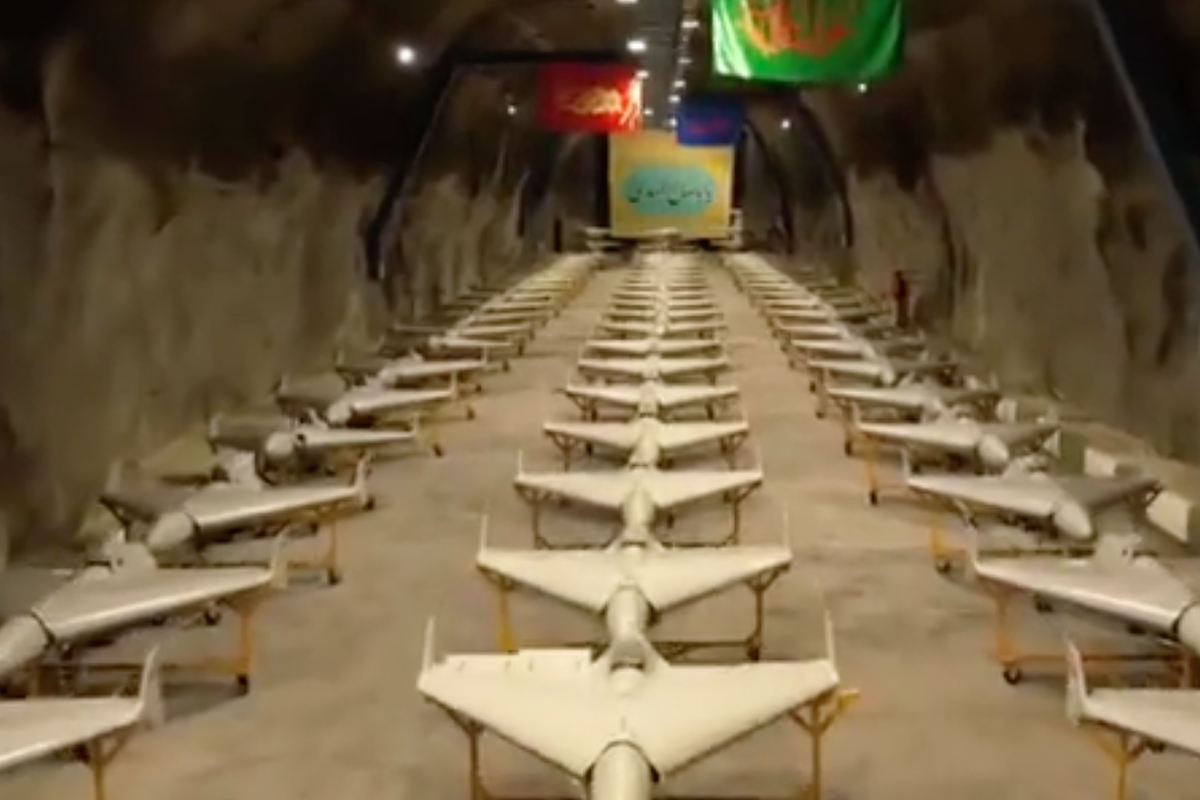
The video, published Monday by Fars News Agency, reveals rows of combat drones mounted on rocket launchers inside what appears to be a fortified subterranean complex. The agency, which maintains close ties to the Islamic Revolutionary Guard Corps (IRGC), described the footage as “new images of the IRGC drone tunnel and firing at US bases.”
The carefully staged presentation features tunnel walls adorned with Iranian flags and portraits of the late Supreme Leader Ayatollah Ali Khamenei, underscoring the ideological underpinnings of Iran’s military program. This rare glimpse into Iran’s military infrastructure comes at a time of heightened confrontation between Tehran and Washington.
Military analysts note that Iran has significantly expanded its drone capabilities in recent years, developing a diverse arsenal ranging from surveillance to attack platforms. The country’s drone program has become a cornerstone of its asymmetric warfare strategy, allowing it to project power while avoiding the costs associated with developing a conventional air force.
The timing of this release appears deliberate, following months of growing tensions in the Middle East, particularly surrounding Iran’s involvement in regional conflicts and ongoing disputes over its nuclear program. By showcasing its drone capabilities, Iran is sending a clear message about its military readiness and deterrence posture.
Western intelligence sources have long maintained that Iran houses critical military assets in underground facilities to protect them from potential airstrikes. These hardened sites represent a significant challenge for potential adversaries, as they are designed to withstand conventional bombing campaigns.
The reference to “firing at US bases” in the Fars description likely alludes to Iran’s January 2020 missile strikes against American forces at Iraq’s Ain al-Asad airbase, launched in retaliation for the U.S. killing of top Iranian general Qassem Soleimani. That attack marked one of the most direct military confrontations between the two nations in decades.
Regional security experts suggest the video release serves multiple purposes: boosting domestic morale, deterring potential aggressors, and signaling Iran’s military evolution despite years of international sanctions. The country has increasingly relied on domestically produced weapons systems as foreign acquisitions have been limited by embargoes.
“This display demonstrates Iran’s commitment to developing indigenous military capabilities despite international pressure,” said a Middle Eastern defense analyst who requested anonymity due to the sensitivity of the subject. “The underground storage also reveals Tehran’s awareness of its vulnerabilities to advanced strike capabilities possessed by its adversaries.”
The drone program has become particularly valuable to Iran as it enables the country to project influence across the Middle East through proxies while maintaining plausible deniability. Iranian-made drones have reportedly been deployed in conflicts from Yemen to Syria, and have been implicated in attacks against oil facilities and shipping in the Persian Gulf.
This revelation comes amid ongoing international efforts to revive the 2015 nuclear deal with Iran, which the United States withdrew from in 2018. The Biden administration has expressed interest in diplomatic re-engagement, but progress has stalled amid complex negotiations and continued regional provocations.
For neighboring Gulf states and Israel, Iran’s expanding drone capabilities represent a growing security concern, particularly as these weapons systems have demonstrated their effectiveness in penetrating sophisticated air defenses in recent regional conflicts.
As diplomatic channels remain fraught with challenges, this latest display of military might suggests Iran continues to prioritize developing asymmetric warfare capabilities as both a defensive measure and a means of regional power projection.
Fact Checker
Verify the accuracy of this article using The Disinformation Commission analysis and real-time sources.

23 Comments
Silver leverage is strong here; beta cuts both ways though.
If AISC keeps dropping, this becomes investable for me.
Good point. Watching costs and grades closely.
Good point. Watching costs and grades closely.
Interesting update on Iran State Media Displays Alleged Drone Arsenal in Propaganda Video. Curious how the grades will trend next quarter.
Good point. Watching costs and grades closely.
Good point. Watching costs and grades closely.
The cost guidance is better than expected. If they deliver, the stock could rerate.
Uranium names keep pushing higher—supply still tight into 2026.
Production mix shifting toward Propaganda might help margins if metals stay firm.
Good point. Watching costs and grades closely.
Good point. Watching costs and grades closely.
Silver leverage is strong here; beta cuts both ways though.
Good point. Watching costs and grades closely.
Good point. Watching costs and grades closely.
Production mix shifting toward Propaganda might help margins if metals stay firm.
I like the balance sheet here—less leverage than peers.
Good point. Watching costs and grades closely.
Uranium names keep pushing higher—supply still tight into 2026.
Good point. Watching costs and grades closely.
Good point. Watching costs and grades closely.
The cost guidance is better than expected. If they deliver, the stock could rerate.
Good point. Watching costs and grades closely.