


Listen to the article
Iran’s Social Media Network Shifts Focus to US-Israeli Conflicts, Study Reveals
Iran has strategically pivoted its network of social media accounts from stoking division in the UK and US to promoting regime propaganda about the ongoing US-Israeli military actions, according to a new study from Clemson University.
The comprehensive research, titled “From Texas to Tehran: A Multilingual, IRGC-affiliated Influence Operation on X, Instagram, and Bluesky,” has identified at least 61 accounts linked to Iran’s Islamic Revolutionary Guard Corps (IRGC) operating across multiple platforms. These accounts have produced over 59,400 original posts that have reached potentially millions of users through thousands of reposts.
Previously, these accounts targeted the United Kingdom with narratives supporting Scottish independence. However, following recent military escalations, the network immediately shifted to disseminating pro-Iranian messaging regarding conflicts with Israel and the United States.
“The network’s rapid transition to defensive propaganda shows how Iran prioritized content that might help shorten the conflict, employing all available resources, even those not optimally positioned to reach US or Israeli audiences,” the study stated.
The accounts fall into two distinct groups. The first operates in Spanish, with profiles claiming to be located in Texas, California, Venezuela, and Chile. The second group posts in English with personas purportedly from Scotland, England, and Ireland. Technical data, however, reveals their true origin—connection metadata from X indicates many accounts connect via the “Iran Android App” or “West Asia Android App,” while Instagram data explicitly identifies eight accounts as “based in Iran.”
Before February 2026, the Latin American personas typically shared anti-Trump, anti-ICE, and anti-imperialist content, while also posting graphics protesting US actions against Venezuelan President Nicolás Maduro. The British Isles accounts focused on domestic issues, promoting Scottish independence and Irish reunification while criticizing the Labour Party, the Union, and the Royal Family.
Most profiles use stolen or AI-generated images, primarily presenting as women. Several Irish accounts specifically claim to be new converts to Islam. Despite this coordinated effort at disguise, their technical origins are traceable through platform metadata.
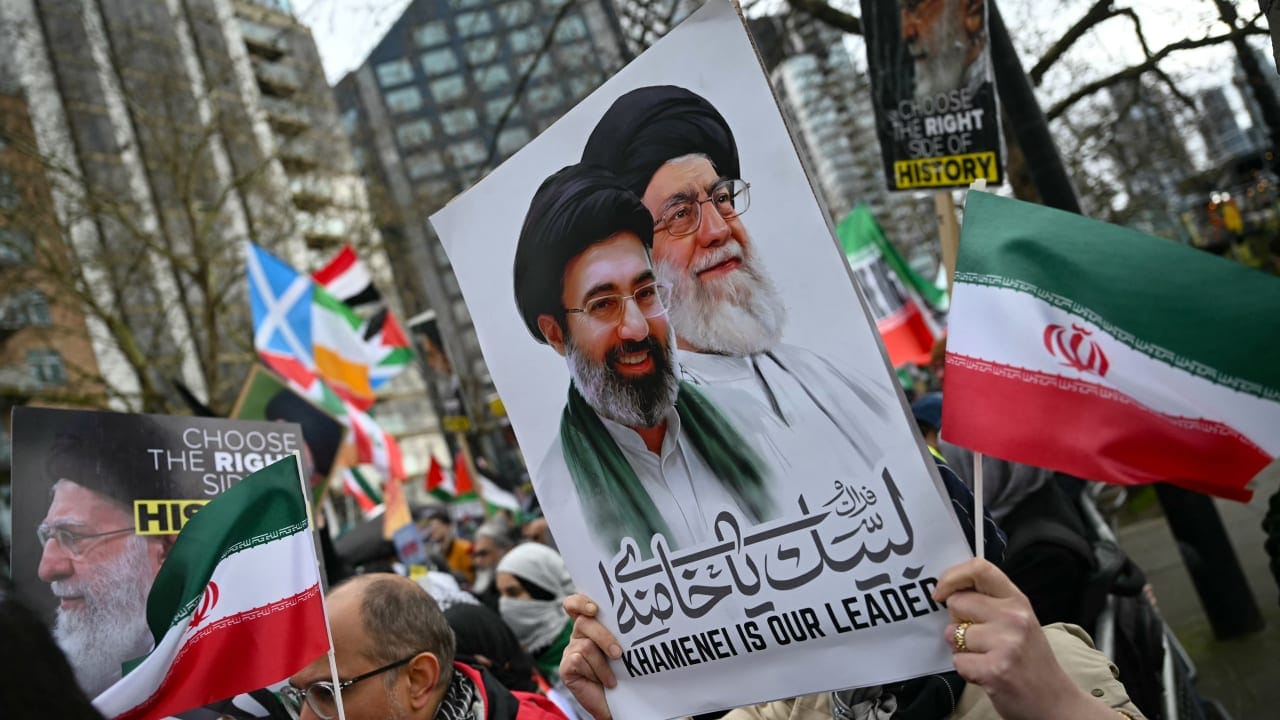
Within 24 hours of hostilities between Iran, Israel, and the United States, the accounts dramatically shifted to Iranian war propaganda. Some posts praised Ali Khamenei as a “martyr who sacrificed himself” following his death, while others spread disinformation, including AI-generated images purporting to show destruction of American military bases.
The study noted significant coordination patterns across the accounts. The Latin American profiles displayed nearly identical posting schedules and volume, all using the same web application client. The British and Irish accounts showed clustered activity suggesting multiple operators working with similar behaviors.
Despite this coordination, researchers found no evidence of AI-generated content, noting that “content shows no sign of being written by a large language model” and that “some posts display occasional errors indicative of human action.”
While the study acknowledged the accounts’ current reach is relatively limited, it warned that “if left unchecked, these accounts could gain meaningful influence, as we saw in Iran’s earlier campaigns targeting Scottish independence.”
The researchers emphasized the importance of monitoring vulnerable communities that might be particularly susceptible to foreign influence operations to protect authentic discourse. Since the study’s publication, the majority of the accounts on X have been suspended.
This revelation highlights Iran’s evolving information warfare strategy, demonstrating how quickly state actors can repurpose existing influence networks to respond to geopolitical developments and conflicts, shifting their focus to critical national security interests when threatened.
Fact Checker
Verify the accuracy of this article using The Disinformation Commission analysis and real-time sources.

12 Comments
While I’m not surprised to see Iran leveraging social media for propaganda, the scale and coordination of this operation is quite alarming. The ability of authoritarian regimes to reach global audiences through these platforms is a concerning trend we need to address.
Agreed. The proliferation of state-backed disinformation campaigns on social media platforms poses a real threat to democratic discourse. Stronger content moderation and transparency measures are needed to combat these influence operations.
This is a sobering reminder of the ongoing information warfare being waged online. Iran’s ability to rapidly shift its social media strategy to target US-Israeli conflicts shows their adaptiveness and commitment to spreading pro-regime narratives. We must remain vigilant against such manipulation.
Well said. Countering state-sponsored disinformation requires a multilayered approach involving platform policies, media literacy education, and public awareness. Maintaining a free and open information ecosystem is crucial for democratic societies.
Interesting how Iran is leveraging social media to push pro-regime narratives. It’s concerning to see them exploiting online platforms for propaganda purposes. I wonder how effective these influence campaigns are in swaying public opinion.
You raise a good point. Social media manipulation by state actors is a real threat to objective information sharing. It’s crucial to be vigilant about identifying and calling out these types of coordinated influence operations.
This report highlights the ongoing battle for information control and narrative shaping on social media. Iran’s pivot to focus on US-Israeli conflicts is clearly a strategic move to bolster support for their regime. We must remain vigilant against these deceptive tactics.
Absolutely. The geopolitical implications of state-backed social media manipulation are significant. Countering this with fact-based, transparent information is crucial to maintaining an informed public discourse.
This seems like a concerning development. Iran’s efforts to control online discourse and push its agenda are troubling, especially given the potential reach and impact of social media. We should be cautious about accepting narratives from state-backed accounts.
I agree, transparency and accountability around these social media influence campaigns is essential. Platforms need to do more to detect and disrupt coordinated inauthentic behavior by state actors.
I’m curious to learn more about the specific tactics and messaging tactics Iran is using in this social media influence operation. Understanding their playbook could help counter these types of propaganda efforts in the future.
That’s a great point. Detailed analysis of the narratives, networks, and tactics employed by Iran and other state actors in these online influence campaigns is crucial. Policymakers and platforms need this intel to develop effective mitigation strategies.