


Listen to the article
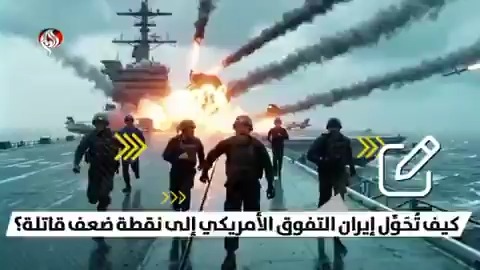
Iranian state media released a disturbing new propaganda video this week depicting a simulated attack on a U.S. aircraft carrier in the Persian Gulf, escalating tensions between Tehran and Washington amid ongoing regional conflicts.
The video, produced by Iran’s Islamic Revolutionary Guard Corps (IRGC), shows mock missile strikes against a replica of an American carrier, complete with computer-generated explosions and dramatic military footage. The simulation appears designed to demonstrate Iran’s claimed capabilities to target U.S. naval assets in the strategically vital waterway.
Military analysts note that the timing of the video’s release coincides with increased U.S. naval presence in the region following attacks on commercial shipping in the Red Sea by Iran-backed Houthi rebels. The USS Dwight D. Eisenhower carrier strike group has been operating in the area since late 2023 as part of the Pentagon’s response to these threats.
“This is classic psychological warfare,” said Dr. Emily Landau, a Middle East security specialist at the Wilson Center. “Iran wants to signal to both domestic and international audiences that it can challenge U.S. military superiority in the Gulf, regardless of whether their actual capabilities match the propaganda.”
The simulated attack represents the latest in a series of provocative actions by the IRGC’s naval forces. In recent years, Iran has seized multiple foreign vessels, including oil tankers and military patrol boats, in the Strait of Hormuz – a critical chokepoint through which approximately 20% of the world’s oil supply passes daily.
Energy markets reacted cautiously to the propaganda video, with crude oil prices rising slightly as traders assessed the potential for actual military confrontation. The Persian Gulf region remains crucial to global energy security, with Saudi Arabia, Iraq, the United Arab Emirates, and Kuwait – all major oil producers – bordering its waters.
“Any actual conflict in the Gulf would have immediate and severe consequences for global energy prices and supply chains,” explained Sarah Emerson, president of Energy Security Analysis Inc. “That’s why these propaganda efforts, while concerning, are viewed by many as posturing rather than precursors to direct military action.”
The Biden administration responded with measured criticism, calling the video “irresponsible” while reaffirming America’s commitment to freedom of navigation in international waters. State Department spokesperson Matthew Miller emphasized that U.S. naval forces would continue their operations in the region undeterred.
“The United States maintains a robust naval presence in the Middle East to ensure the security of vital shipping lanes and to support our regional allies,” Miller stated at a press briefing. “We remain committed to diplomatic solutions but are fully prepared to defend our interests and personnel if necessary.”
This isn’t the first time Iran has showcased simulated attacks on U.S. naval assets. In 2015, the IRGC conducted military exercises that included firing missiles at a mock-up of an American aircraft carrier. These displays typically correspond with periods of heightened diplomatic tension or significant anniversaries in the Iranian revolutionary calendar.
Regional security experts point out that Iran’s actual military capabilities, while substantial for a regional power, remain significantly outmatched by U.S. forces. The Iranian navy primarily relies on asymmetric warfare tactics, utilizing swarms of small fast-attack boats, naval mines, and anti-ship missiles rather than conventional naval power.
“Iran knows it cannot win a direct confrontation with the U.S. Navy,” said Rear Admiral (ret.) James Stavridis, former NATO Supreme Allied Commander. “Their strategy instead focuses on making any potential conflict as costly as possible through these asymmetric means.”
The propaganda video comes at a sensitive moment in U.S.-Iran relations, with nuclear negotiations stalled and Tehran continuing to expand its uranium enrichment activities beyond limits established in the 2015 nuclear deal, which the Trump administration withdrew from in 2018.
As tensions persist, shipping companies operating in the Gulf have been advised to maintain heightened security protocols, though major carriers have not altered their routes in response to the video. Maritime security firms recommend vigilance but note that Iran has historically calculated its provocations to remain below thresholds that would trigger direct military response.
Fact Checker
Verify the accuracy of this article using The Disinformation Commission analysis and real-time sources.

9 Comments
This is clearly an attempt by Iran to stir up tensions and project an image of strength. However, the US naval presence in the Persian Gulf remains formidable, and I doubt Iran would risk a direct confrontation given the potential consequences.
While the video is concerning, I think we need to be careful not to overreact. Iran’s military capabilities are likely exaggerated for propaganda purposes. The US Navy will continue to maintain a strong deterrent presence in the region.
Agreed. It’s important to keep a level head and not get drawn into an escalating war of rhetoric. Maintaining open lines of communication and avoiding miscalculation will be key.
Simulating attacks on the US Navy is a risky move by Iran. While it may play well domestically, it could further inflame regional tensions. Hopefully cooler heads will prevail and both sides show restraint to avoid miscalculation.
Interesting to see Iran flexing its military capabilities, even if in a simulated fashion. However, I would caution against reading too much into this video. The US presence in the region remains formidable, and I doubt Iran would risk an overt attack.
You make a fair point. Iran may be trying to project an image of strength, but the US naval forces in the Persian Gulf are certainly no paper tiger.
This is a concerning escalation of tensions, but I don’t think we should take the video at face value. Iran’s military capabilities are likely exaggerated for political purposes. The US Navy will continue to maintain a strong deterrent presence in the Persian Gulf.
While the video is concerning, it’s likely just more Iranian propaganda to rally domestic support. The US Navy’s presence in the region remains formidable, and I doubt Iran would risk an actual attack given the potential consequences.
Iran seems to be ratcheting up the rhetoric with this video, but I doubt they would actually risk a direct military confrontation with the US given the overwhelming power disparity. This is likely more about domestic political messaging than a credible threat.