


Listen to the article
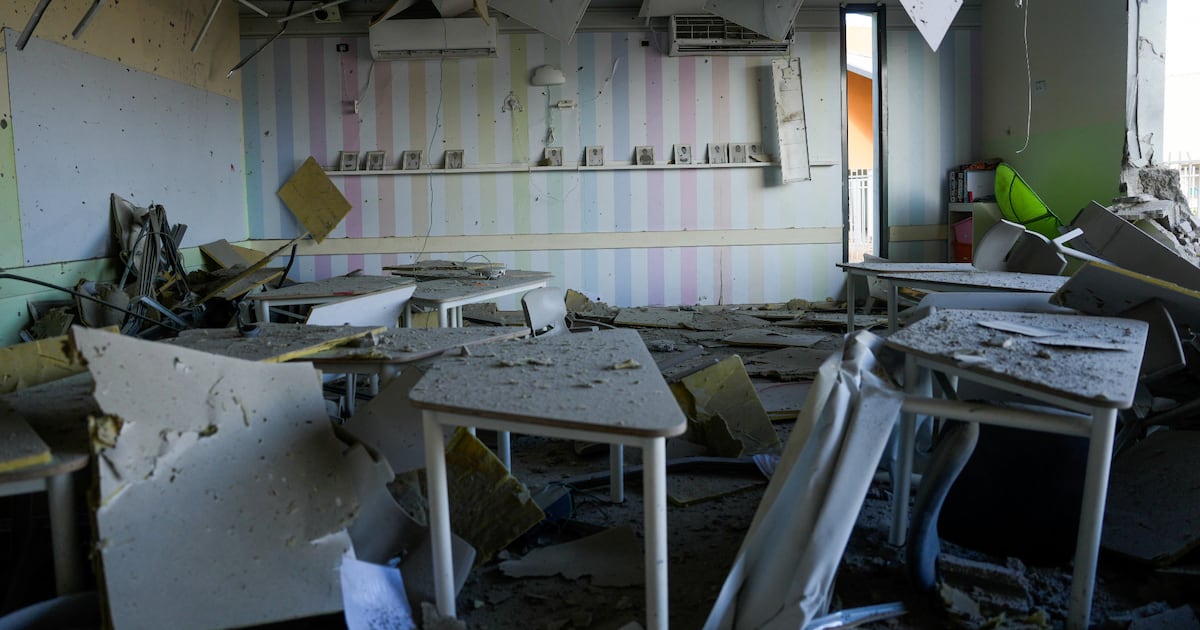
In an impassioned statement that has drawn significant attention, a political figure has accused attendees of accepting propaganda regarding the alleged bombing of a girls’ school in Iran. The remarks, made during what appears to have been a formal gathering, have ignited debate over the verification of international incidents and the responsibility of media in conflict reporting.
“Many people in this room have fallen for that propaganda,” stated Leavitt during the discussion about reports of an attack on an educational facility for girls in Iran. The comment suggests skepticism about widely circulated accounts of the incident, challenging the audience to reconsider information they may have accepted as factual.
The statement comes amid ongoing tensions surrounding Iran’s domestic and international policies, where determining the accuracy of reports has become increasingly complex due to limited press freedom and restricted access for independent journalists and international observers.
Iran’s educational system has long been a focal point of human rights concerns, particularly regarding girls’ access to schooling. Following the 1979 Islamic Revolution, educational policies have undergone various reforms, with girls’ education remaining a sensitive issue both domestically and internationally.
Media specialists note that verification challenges in closed societies like Iran create fertile ground for competing narratives. “When independent verification is difficult or impossible, information vacuums are quickly filled with narratives that serve various political agendas,” explains Dr. Maryam Tehrani, a Middle East media analyst at Columbia University.
The incident in question occurs against a backdrop of Iran facing heightened international scrutiny regarding its human rights record, particularly concerning women’s and girls’ rights. The 2022 death of Mahsa Amini while in custody of Iran’s morality police sparked unprecedented protests centered largely on women’s rights issues.
Canadian-Iranian relations, which have been strained since the 2020 downing of Ukraine International Airlines Flight PS752 that killed 55 Canadian citizens and 30 permanent residents, add another layer of complexity to how such incidents are perceived and discussed within Canadian political circles.
Leavitt’s statement reflects growing concern among some policymakers about information reliability in international reporting, particularly involving nations with restricted press access. However, critics argue that dismissing reports of violence against vulnerable populations without substantial evidence can potentially minimize legitimate human rights concerns.
Media ethics experts point out that news consumers increasingly face challenges in distinguishing between verified reporting, propaganda, and misinformation. “The democratization of information sharing through social media has created both opportunities for suppressed stories to emerge and pathways for strategic misinformation,” notes Professor James Hendricks, who specializes in international journalism ethics at the University of British Columbia.
Human rights organizations have consistently advocated for increased transparency and access for independent observers in regions where allegations of rights abuses emerge. Amnesty International’s recent report on educational access highlights that “verification of incidents should not become a barrier to addressing potential human rights violations.”
The controversy surrounding Leavitt’s remarks underscores broader questions about information literacy in an era of competing global narratives. Political scientists suggest that public discourse increasingly reflects deeper divisions about trusted information sources rather than just policy disagreements.
Canadian diplomatic officials have maintained that while verification of international incidents is essential, the protection of vulnerable populations, particularly children, remains a non-negotiable priority in Canada’s foreign policy approach.
As this story develops, media watchers note that the incident serves as a reminder of the complex interplay between information access, political positioning, and human rights advocacy in international relations. The challenge of determining factual accuracy while maintaining vigilance for human rights abuses continues to test both policymakers and the public alike.
The debate sparked by Leavitt’s statement is likely to contribute to ongoing conversations about media literacy, international reporting standards, and the responsibilities of public figures when discussing unverified but potentially serious human rights concerns.
Fact Checker
Verify the accuracy of this article using The Disinformation Commission analysis and real-time sources.

14 Comments
Leavitt’s comments accusing others of ‘falling for propaganda’ over the Iran girls’ school bombing are concerning. Rather than making broad accusations, it would be more productive to examine the specific evidence and factors at play in this tragic incident.
I agree. Dismissing verified human rights abuses as ‘propaganda’ without clear justification is irresponsible and risks further obscuring the truth. Nuanced discussion is needed to properly address such sensitive issues.
Accusing others of falling for ‘propaganda’ over the Iran girls’ school bombing seems like an attempt to discredit the incident rather than engage with the substance. I’m curious to hear Leavitt’s specific evidence supporting that claim.
Agreed, making broad accusations of propaganda without clear justification is concerning. Substantive discussion of the facts and circumstances around this incident would be more constructive.
While the Iran girls’ school bombing reports should be scrutinized, Leavitt’s claims of ‘propaganda’ feel like an oversimplification. Navigating international conflicts and verifying information can be extremely complex, requiring nuanced analysis, not sweeping dismissals.
Absolutely. Dismissing the incident as ‘propaganda’ shuts down meaningful dialogue rather than furthering our understanding. A more thoughtful, evidence-based approach is needed here.
Interesting perspective, though the reports of the Iran girls’ school bombing do seem well-documented. Verifying international incidents can certainly be challenging, but dismissing it as ‘propaganda’ seems premature without a thorough investigation.
I agree, we should be cautious about jumping to conclusions either way. Maintaining a balanced, fact-based view is important when sensitive political issues are involved.
Leavitt’s comments dismissing the Iran girls’ school bombing as ‘propaganda’ are concerning. Verifying international incidents can be challenging, but such broad accusations risk further obscuring the truth. A more measured, evidence-based analysis would be far more constructive.
I agree wholeheartedly. Unsubstantiated claims of ‘propaganda’ are counterproductive and distract from the core human rights issues at stake. Nuanced discussion grounded in facts is essential when addressing sensitive global conflicts.
The Iran girls’ school bombing is a serious and tragic incident that deserves rigorous scrutiny, not blanket dismissal as ‘propaganda.’ While media coverage can be imperfect, outright accusation of propaganda is concerning and may distract from the core issues.
You make a fair point. Healthy skepticism is warranted, but we must be careful not to sow further confusion or doubt around verified human rights abuses. Nuanced analysis is needed here.
While the Iran girls’ school bombing reports should be scrutinized, Leavitt’s ‘propaganda’ claims seem like an attempt to discredit rather than engage constructively. Maintaining objectivity is crucial when dealing with complex geopolitical issues and human rights concerns.
Precisely. Resorting to accusations of ‘propaganda’ without substantive evidence undermines meaningful dialogue. A more rigorous, fact-based approach is needed to properly address this tragic incident.