


Listen to the article
Iran’s AI-Generated LEGO Videos Target American Public Opinion as War Tensions Escalate
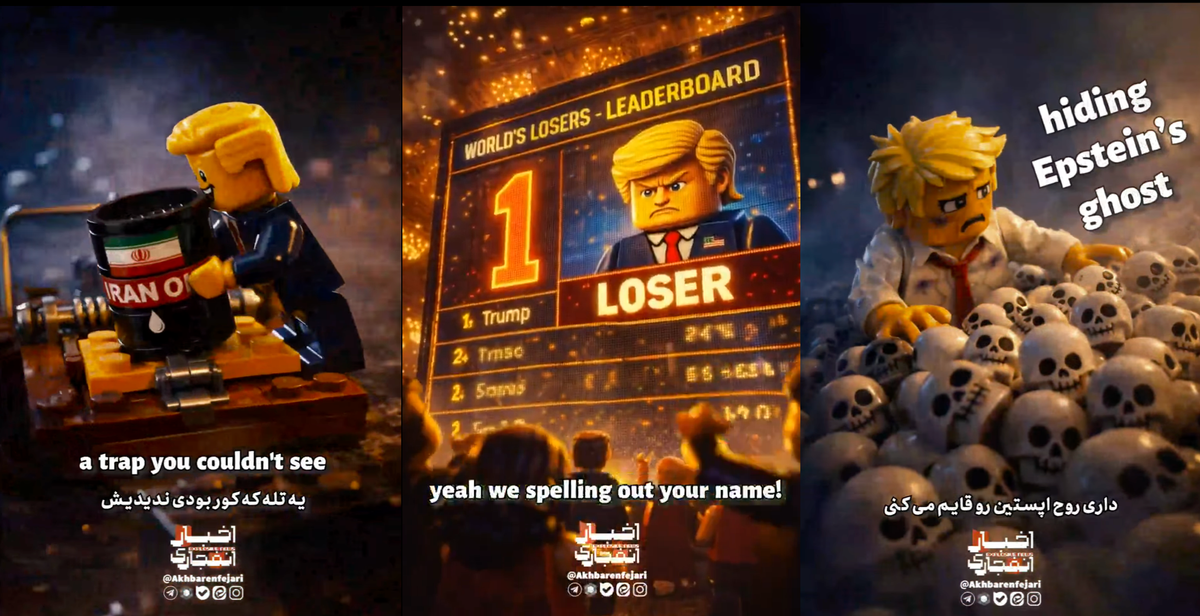
An AI-generated LEGO movie from Iran depicting former President Trump as a war-hungry pedophile has gone viral across social media platforms, marking a new phase in digital propaganda warfare. The video, created by the Iran-based “Explosive News Team,” is part of a growing collection of AI-generated LEGO videos mocking Trump and Israeli Prime Minister Benjamin Netanyahu.
While propaganda has been a fixture of international conflicts for decades, the current situation represents a significant evolution. During earlier conflicts like World War II, the Korean War, and the Vietnam War, enemy propaganda typically consisted of battlefield pamphlets and radio broadcasts aimed at demoralizing troops. These materials rarely reached the American public directly.
Today’s digital landscape has dramatically changed this dynamic. Iranian propagandists can now rapidly produce sophisticated animated content and distribute it directly to American audiences through social media, bypassing traditional information gatekeepers.
The latest viral video features a catchy rap song portraying Trump as a “loser” and has garnered millions of views across multiple platforms. Simultaneously, Iran has released other AI-generated content showing Trump drowning in blood, while the U.S. Department of Homeland Security shares stylized images of ICE agents at airports.
Media analysts note that Iran appears to be studying American cultural touchpoints carefully. “These are videos meant for the American people crafted in a language Iran knows we’ll understand,” said one observer tracking the trend. The LEGO format is particularly effective as it’s instantly recognizable worldwide, requiring no specialized knowledge to comprehend.
The Iranian propaganda effort seems calibrated to speak to broader American concerns about the conflict. A recent Pew Research poll found that 61 percent of Americans disapprove of Trump’s handling of the current crisis, with many worried about rising gas prices, economic instability, airport disruptions, and a conflict that appears to lack clear objectives.
Kelsey Atherton, Chief Editor at the Center for International Policy, told 404 Media that Iran’s propaganda follows a recognizable pattern: “The really striking throughline is connecting victims from Minab to Epstein, a cartoonish antisemitism that attributes the bog-standard reactionary hawkishness of Trump and Netanyahu to a sinister and supernatural evil, and heavy emphasis on missiles and revenge-weapons.”
Atherton noted historical parallels: “There’s a grand tradition of wartime propaganda aimed at convincing the other side to quit. Iran’s online propaganda is trying to activate this by appealing to class war and leaning on antisemitism to erode support among Americans watching short-form vertical video.”
Meanwhile, the Trump administration’s propaganda efforts have heavily featured video game references and memes that often require specific cultural knowledge to understand. Examples include DHS depicting Halo’s Master Chief as an anti-immigrant enforcer and White House officials posting Grand Theft Auto references alongside footage of airstrikes.
This isn’t the first time LEGO has featured in international propaganda. Last year, Russian propagandists circulated images of fake LEGO sets depicting soldiers’ funerals ahead of a Moldovan election. In 2020, China released “Once Upon a Virus,” a LEGO-style film mocking America’s pandemic response.
The contrast between approaches is striking. While Iran crafts content aimed at broad American audiences using universally recognized symbols like LEGO, the Trump administration’s digital messaging often appears designed primarily to energize its existing base rather than persuade undecided Americans.
An Iranian television commentator once remarked that America “doesn’t have any heroes. All of their heroes are cartoon characters—they’re all fictional.” This observation seems to have informed Iran’s strategy of using cartoons and LEGO to communicate with the American public in what they perceive as a language Americans will understand.
As this digital propaganda battle continues, both sides are leveraging increasingly sophisticated AI tools to produce content at unprecedented speed and scale, marking a new frontier in how nations attempt to influence foreign public opinion during times of conflict.
Fact Checker
Verify the accuracy of this article using The Disinformation Commission analysis and real-time sources.

13 Comments
The use of AI-generated LEGO videos for propaganda purposes is an interesting tactic. While creative, it raises concerns about the potential for such content to sway public opinion, especially when it targets sensitive political issues. Fact-checking and media literacy will be crucial moving forward.
You make a good point. The proliferation of AI-powered propaganda is a worrying development that requires careful scrutiny from the public and policymakers alike.
Fascinating how Iran is leveraging AI and social media to directly target American audiences with their propaganda. While freedom of expression is important, the rapid spread of disinformation is concerning. I hope the public remains vigilant and fact-checks claims, especially on sensitive geopolitical issues.
The use of AI-generated LEGO videos for propaganda purposes is certainly an innovative tactic. However, it raises valid concerns about the potential impact on public opinion, especially on sensitive topics like geopolitical tensions. Maintaining a critical eye and verifying information sources will be crucial moving forward.
You make a good point. The proliferation of AI-powered propaganda is a worrying development that requires careful scrutiny from the public and policymakers alike.
This article highlights the growing sophistication of modern propaganda campaigns. While freedom of expression is vital, the rapid spread of AI-generated disinformation is troubling. I hope the public remains vigilant and fact-checks claims, especially on sensitive geopolitical issues like this.
Interesting how Iran is leveraging AI and social media to directly target the American public with their propaganda. While freedom of speech is important, the spread of disinformation is concerning. I wonder how effective these LEGO videos will be at shaping public opinion.
You raise a good point. Propaganda can be powerful, especially when it’s slickly produced and distributed through modern digital channels. It’s important to be critical consumers of media and fact-check claims.
The use of AI-generated LEGO videos for propaganda purposes is certainly an innovative tactic. It will be intriguing to see how this evolving digital battlefield plays out between nations. Fact-checking and media literacy will be crucial for the public to navigate these murky waters.
I agree, the proliferation of AI-powered propaganda is a concerning trend. Maintaining a skeptical eye and verifying information sources will be key for citizens to cut through the noise and misinformation.
The use of AI-generated LEGO videos for propaganda purposes is certainly an innovative approach. However, it raises valid concerns about the potential impact on public opinion, especially on sensitive topics like geopolitical tensions. Maintaining a critical eye and verifying information sources will be crucial moving forward.
I agree, the proliferation of AI-powered propaganda is a worrying trend that requires close attention. Fact-checking and media literacy will be essential for citizens to navigate these murky waters.
This article highlights the growing sophistication of modern propaganda campaigns. While freedom of expression is vital, the rapid spread of AI-generated disinformation is troubling. I hope the public remains vigilant and fact-checks claims, especially on sensitive geopolitical issues.