


Listen to the article
The growing polarization of global politics has once again come into sharp focus as reactions to recent diplomatic developments in the Middle East reveal deeply entrenched ideological divides. Critics are pointing to an increasingly familiar pattern of online discourse that simplifies complex geopolitical situations into moral binaries.
Following the announcement of a ceasefire in the region last week, a flurry of social media commentary has emerged that analysts say reflects a troubling trend in how international conflicts are discussed and understood by the public. Observers note that much of this commentary falls into predictable patterns of either wholesale condemnation of Western policy or uncritical support for adversarial regimes.
“What we’re seeing is a reflexive anti-Western stance that doesn’t necessarily engage with the substantive realities on the ground,” says Dr. Sarah Khoury, an expert in Middle Eastern politics at Georgetown University. “There’s a difference between legitimate criticism of foreign policy and automatically viewing every Western action through the most cynical possible lens.”
The ceasefire announcement, which came after weeks of intense diplomatic maneuvering, has been characterized by some online commentators as a major diplomatic breakthrough. However, regional experts have been quick to point out that the agreement leaves many fundamental issues unresolved and represents more of a pause than a solution to the underlying conflict.
“Anyone suggesting this is some kind of definitive resolution is either being disingenuous or hasn’t been following the situation closely,” notes Jonathan Mercer, a former State Department analyst focused on the region. “These are incremental steps that may prevent immediate escalation but don’t address the root causes of instability.”
The situation in Iran provides a particular flashpoint for these divided perspectives. While human rights organizations have documented the Iranian regime’s systematic repression of political dissent, women’s rights, and religious minorities, some online commentators appear willing to overlook these abuses when framing their critiques of Western policy.
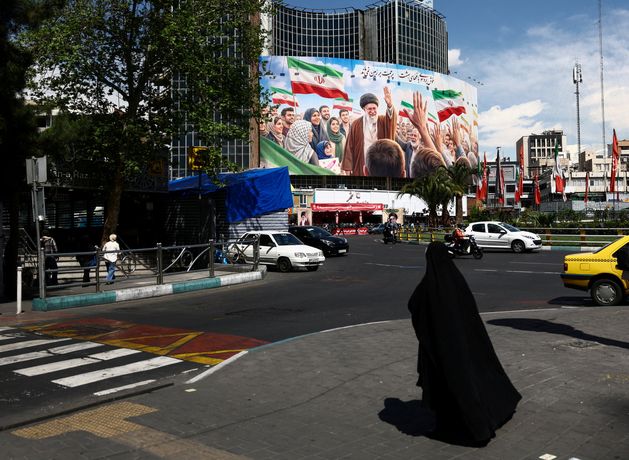
Images of propaganda billboards featuring Iran’s Supreme Leader have become common sights in Tehran’s urban landscape, part of a comprehensive state media apparatus that tightly controls information within the country. Meanwhile, Iranian citizens who speak out against government policies continue to face harassment, imprisonment, and worse.
The criticism of U.S. President Donald Trump’s foreign policy approach represents a legitimate area for debate. His administration has faced questions about policy inconsistencies, particularly regarding campaign promises to end America’s military engagements abroad while simultaneously escalating tensions in certain regions.
“There’s nothing wrong with holding any administration accountable for policy contradictions,” explains Professor Elaine Kamarck of the Brookings Institution. “But constructive criticism requires nuance and acknowledgment of the complex constraints facing any president when dealing with entrenched conflicts.”
Social media platforms have amplified these discussions, often stripping away context and nuance in favor of emotionally charged, simplistic narratives. Algorithms tend to reward engagement rather than accuracy, creating echo chambers where ideological perspectives are reinforced rather than challenged.
Media literacy experts suggest that consumers of news should be particularly vigilant about seeking multiple sources of information, especially when consuming content about complex international situations.
“It’s human nature to gravitate toward explanations that confirm our existing beliefs,” says Dr. Martin Reynolds, who studies information ecosystems at Columbia University. “But understanding global affairs requires us to resist simplistic narratives that cast every situation as heroes versus villains.”
As tensions continue to simmer across multiple global hotspots, the importance of informed, nuanced discussion becomes increasingly crucial. The ability to simultaneously criticize aspects of Western foreign policy while acknowledging the genuine oppression that exists under authoritarian regimes represents a balancing act that many online discussions fail to achieve.
The challenge for engaged citizens remains finding ways to navigate through polarized discourse to reach more substantive understanding of complex global realities – a task that grows more difficult as information ecosystems become increasingly fragmented.
Fact Checker
Verify the accuracy of this article using The Disinformation Commission analysis and real-time sources.

23 Comments
Interesting update on Iran Finds Willing Propagandists Among Irish Supporters, O’Hanlon Argues. Curious how the grades will trend next quarter.
The cost guidance is better than expected. If they deliver, the stock could rerate.
Interesting update on Iran Finds Willing Propagandists Among Irish Supporters, O’Hanlon Argues. Curious how the grades will trend next quarter.
Good point. Watching costs and grades closely.
Good point. Watching costs and grades closely.
Production mix shifting toward Propaganda might help margins if metals stay firm.
Good point. Watching costs and grades closely.
Good point. Watching costs and grades closely.
If AISC keeps dropping, this becomes investable for me.
Silver leverage is strong here; beta cuts both ways though.
Good point. Watching costs and grades closely.
Good point. Watching costs and grades closely.
Uranium names keep pushing higher—supply still tight into 2026.
Good point. Watching costs and grades closely.
Good point. Watching costs and grades closely.
I like the balance sheet here—less leverage than peers.
Uranium names keep pushing higher—supply still tight into 2026.
Nice to see insider buying—usually a good signal in this space.
Good point. Watching costs and grades closely.
Good point. Watching costs and grades closely.
Interesting update on Iran Finds Willing Propagandists Among Irish Supporters, O’Hanlon Argues. Curious how the grades will trend next quarter.
Good point. Watching costs and grades closely.
Good point. Watching costs and grades closely.