


Listen to the article
Iran’s Regime Deploys Spectacle and Fear to Maintain Control Amid Crises
In a determined effort to project strength amid mounting internal and external pressures, Iran’s leadership has intensified its campaign of carefully orchestrated public displays and harsh repression in recent months. Following Mojtaba Khamenei’s elevation to a more prominent role in the regime, state media has broadcast pro-government rallies across multiple cities, featuring supporters waving flags and displaying portraits of Supreme Leader Ali Khamenei and his son Mojtaba.
These demonstrations, however, appear to be more manufactured than spontaneous. In Isfahan, one such rally reportedly continued even as explosions from nearby airstrikes could be heard in the background—a stark juxtaposition that underscores the regime’s determination to maintain appearances regardless of circumstances.
The facade extends to Iran’s media environment as well. According to Wall Street Journal reporting, Iranian state media has increasingly relied on artificial intelligence to generate imagery and voice-overs to maintain the appearance of Mojtaba Khamenei’s public presence while he remains largely out of sight. The Institute for Strategic Dialogue has documented a significant increase in AI-generated and misleading visuals distributed through state-linked networks, all designed to portray Iran as victorious and resilient during the ongoing conflict.
Death and martyrdom have become central to the regime’s narrative-building efforts. Reuters has reported on elaborate public mourning ceremonies for war casualties in Tehran, while the Associated Press noted that Eid prayers have been transformed into platforms for mourning leaders killed in recent conflicts. Through these ritualized displays of grief, the government attempts to convert loss into ideological strength, using funeral pageantry to reinforce the narrative that martyrdom continues to bind the system together.
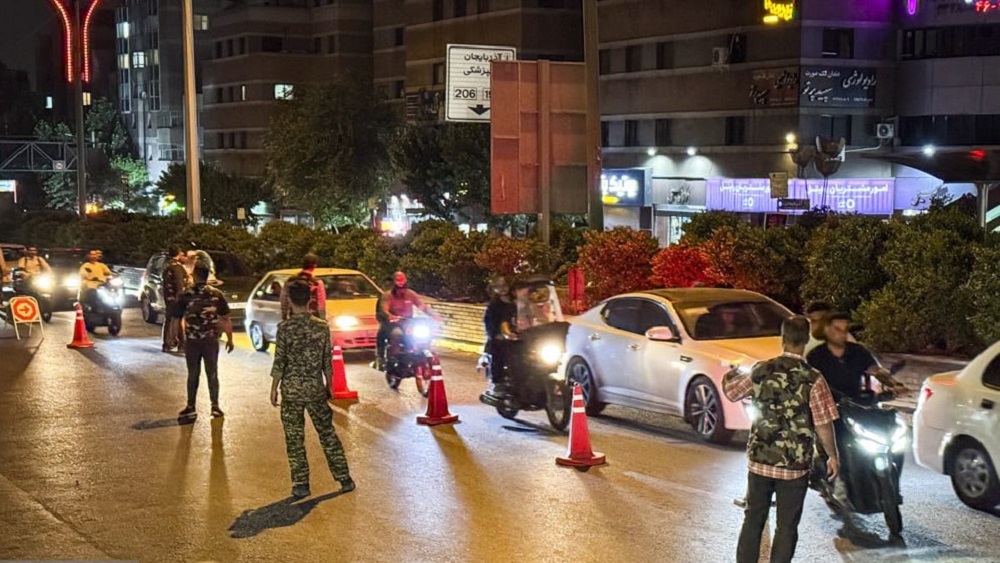
This propaganda campaign stands in stark contrast to the regime’s intensified repression against its own citizens. On March 19, authorities executed three young men in Qom who had been arrested during January’s protests, including 19-year-old wrestler Saleh Mohammadi. These were the first executions directly tied to the January protests, with human rights organizations reporting that the convictions relied on confessions obtained through torture and grossly unfair trials. According to Amnesty International, at least 30 people, including children, remain at risk of the death penalty in cases linked to the uprising.
This dual approach reveals the true structure of the regime’s wartime politics: rallies, censorship orders, AI-enhanced imagery of leadership, and ceremonial funerals are primarily intended to reassure the ruling elite and security apparatus, while executions serve to terrorize the general population into compliance.
The clerical leadership appears most concerned not with foreign pressure but with internal upheaval. Their messaging strategy represents the desperate language of a system aware that its survival hinges on maintaining loyalty among military, security, and paramilitary forces who are essential for suppressing public dissent. These forces, while potentially protected from external military threats, remain vulnerable to declining morale, fractures in state cohesion, and growing public anger.
As the regime struggles to maintain control, it has created an increasingly synthetic reality through staged events and manipulated media, revealing its fundamental insecurity. A government confident in its legitimacy and popular support would not need to execute young protesters during wartime or fabricate imagery of its leadership. Instead, the Iranian authorities have doubled down on a strategy that combines propaganda for loyalists with terror for society—a telling indication of a regime fighting for its survival on multiple fronts.
Fact Checker
Verify the accuracy of this article using The Disinformation Commission analysis and real-time sources.

10 Comments
While the Iranian regime’s propaganda efforts may work domestically, they’re unlikely to convince the international community of its strength and legitimacy. Staging rallies and using AI to create a false narrative can’t hide the underlying instability and repression.
This article highlights the increasingly desperate measures the Iranian regime is taking to maintain its grip on power. Resorting to such blatant propaganda and media manipulation is a sign of weakness, not strength.
It will be interesting to see how the international community responds to these propaganda tactics. Continued pressure and exposure of the regime’s true nature may be the only way to undermine its efforts.
This article highlights the lengths Iran’s regime will go to maintain a facade of control and public support, even amid crises. Deploying staged rallies, AI-generated media, and harsh repression suggests a regime increasingly disconnected from reality.
The regime’s use of propaganda and spectacle is clearly an attempt to distract from its internal struggles and external pressures. It’s a concerning sign of how far they’ll go to project an image of strength.
The regime’s use of spectacle and fear to rally support is a concerning trend. As the article suggests, it reflects a leadership that is increasingly disconnected from reality and willing to go to extreme lengths to maintain power.
It’s unsurprising that Iran would turn to propaganda and media manipulation to bolster its position. Authoritarian regimes often rely on these tactics when facing challenges to their legitimacy and control.
The regime’s reliance on artificial intelligence to create the illusion of Mojtaba Khamenei’s public presence is particularly worrying. It suggests a willingness to completely fabricate reality to maintain the appearance of stability.
This article provides a sobering look at the lengths the Iranian regime will go to in order to project an image of control and stability. The use of AI-generated media and staged rallies is a troubling development.
While the regime may be able to temporarily maintain a facade of strength, its reliance on such blatant propaganda ultimately undermines its legitimacy and credibility on the global stage.