


Listen to the article
Indian Intelligence Agencies Uncover Iran-Linked Radicalization Efforts
Intelligence agencies in India have detected a concerning rise in radicalization efforts targeting youth across multiple states, with perpetrators exploiting the ongoing Israel-US-Iran conflict as a catalyst. Officials report that these efforts employ sophisticated AI-generated propaganda videos customized in regional languages to maximize their impact.
The operation began with the killing of Iran’s Supreme Leader, Ayatollah Ali Khamenei, which prompted Iranian retaliation against US and Israeli interests throughout West Asia. As tensions escalate, Indian security agencies have intercepted communications revealing coordinated attempts to radicalize youth in vulnerable regions, particularly Uttar Pradesh, Jammu and Kashmir, and Kerala.
An Intelligence Bureau official disclosed that radical elements are creating and distributing AI-generated propaganda videos tailored to specific linguistic demographics. “For Kerala, the videos are produced in Malayalam to target youth in that state. Similarly, content targeting Kashmir is in Kashmiri or Koshur, while Hindi is used for Uttar Pradesh,” the official explained.
The technological sophistication extends beyond these regions, with AI being leveraged to create similar content in Urdu and other Indian languages, indicating a strategic plan to expand their influence nationwide.
Security experts note that the radicalization campaign isn’t limited to Shia Muslims, despite the Iran connection, but also targets Sunni communities. “The ultimate objective is to radicalize youth and incite them to carry out attacks within India,” another official stated.
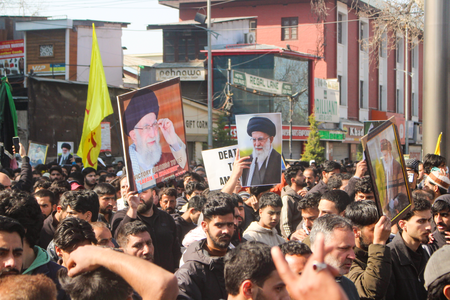
Following Khamenei’s death, the Indian government issued preventive advisories warning that extremist elements would likely attempt to infiltrate prayer meetings and solidarity rallies. This prediction appears to be materializing, as mourning processions have already been observed in major cities including Hyderabad, Mumbai, Lucknow, and Delhi, with more expected in coming weeks.
Beyond AI-generated content, authorities are closely monitoring religious and cultural influencers operating online channels, who might subtly incorporate incendiary messaging. Intelligence sources reveal that narratives around “Shia genocide” and “attacks on the Umma” (global Muslim community) are being weaponized to foster radicalization.
Counter-terrorism experts highlight the paradoxical opportunism of groups like Islamic State, which, despite their historical opposition to Shiites, are attempting to capitalize on the situation to advance their extremist ideology. “Both Islamic State and Al-Qaeda have frequently exploited global events to promote their version of Islam,” an official noted. “They’re pushing the narrative that the United States and Israel are fundamentally anti-Islamic.”
Digital platforms including X (formerly Twitter), WhatsApp, and Telegram have become primary vectors for disseminating radical messaging. Officials observe that current messaging remains relatively subtle, suggesting a testing phase that could intensify as the conflict escalates.
Intelligence agencies are particularly concerned about encrypted communications being used to provide operational guidance. Financial flows potentially supporting these activities are also under scrutiny.
The involvement of Pakistan’s Inter-Services Intelligence (ISI) adds another layer of complexity. “The ISI is opportunistically supporting elements exploiting the Iran conflict to foment extremism in India,” an intelligence source revealed. “Their endgame is to cultivate homegrown extremism and inspire self-radicalized individuals to conduct lone-wolf attacks.”
Security officials emphasize that these efforts appear to be part of a longer-term strategy rather than immediate attack planning. “These actors are working to create a large pool of radicalized individuals using the Iran situation as leverage, with the ultimate goal of orchestrating significant attacks against Indian interests,” according to agency assessments.
As the conflict continues to unfold, Indian security forces remain vigilant against this evolving threat landscape that combines international tensions, technological sophistication, and regional vulnerabilities.
Fact Checker
Verify the accuracy of this article using The Disinformation Commission analysis and real-time sources.

15 Comments
The use of AI to create customized propaganda videos in regional languages is a sophisticated tactic. It’s important that authorities work closely with tech companies and civil society to detect and disrupt these coordinated disinformation campaigns.
I’m curious to know more about the specific tactics and channels being used to distribute this AI-generated propaganda. Understanding the mechanics of these campaigns is crucial for developing effective countermeasures.
This is a sobering reminder of the evolving threat landscape in the digital age. AI-powered disinformation is a growing challenge that requires sustained, collaborative efforts to address effectively.
Exploiting geopolitical tensions to radicalize youth is a dangerous trend. The Indian government must prioritize protecting its citizens, especially the most vulnerable, from these insidious influence operations.
It’s worrying to see foreign actors leverage AI technology to sow discord and radicalize local populations. This underscores the need for robust cybersecurity and digital sovereignty initiatives in India.
Agreed. Strengthening India’s digital defenses and enhancing its technological self-reliance should be top priorities to counter these kinds of malicious influence campaigns.
This is a concerning development. AI-powered propaganda campaigns can be highly effective at radicalizing vulnerable youth. It’s critical that Indian intelligence agencies remain vigilant and take proactive steps to counter these malicious efforts.
This is a complex challenge that requires a multi-pronged approach. In addition to intelligence gathering and disruption efforts, investment in media literacy and critical thinking education could help build resilience against such manipulation.
The targeting of youth is particularly concerning, as they are more vulnerable to such manipulative tactics. Protecting the next generation from extremist indoctrination should be a key focus for Indian authorities.
This is a stark reminder of the need for robust cybersecurity measures and digital resilience across all sectors of Indian society. Protecting youth from radicalization should be a top national priority.
Combating AI-powered disinformation campaigns targeting youth is a complex challenge that requires a coordinated, multi-stakeholder approach. I hope Indian authorities can effectively disrupt these efforts and safeguard vulnerable populations.
While the use of AI in propaganda campaigns is alarming, I’m hopeful that advances in detection and mitigation technologies can help security agencies stay ahead of these adversaries. Vigilance and innovation will be crucial.
The regional language focus of these propaganda videos highlights the importance of language-specific monitoring and response capabilities. Tailored solutions will be essential to combat this multifaceted threat.
You make a good point. Developing localized expertise and partnerships will be key to disrupting these campaigns and reaching vulnerable populations with counter-narratives.
The use of AI to create personalized propaganda is a concerning development. I’m curious to learn more about the specific tactics and channels being used, as well as the demographics most at risk of being targeted.