


Listen to the article
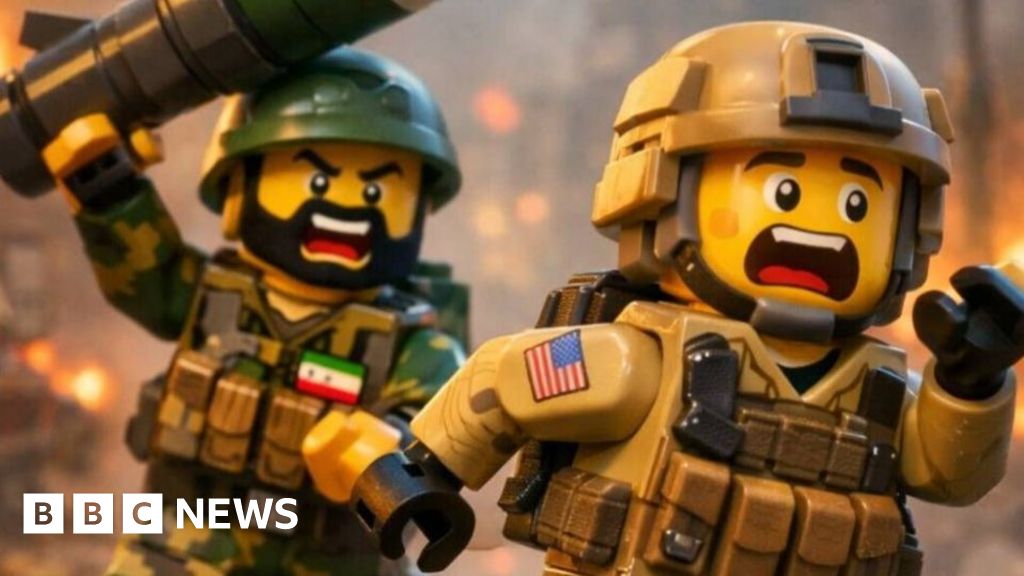
A Palestinian digital artist is attracting global attention for creating war videos using artificial intelligence that show Lego-like figures in scenes resembling the ongoing conflicts in Gaza and Lebanon. These videos, which have garnered millions of views across social media platforms, have sparked debate among experts about their role as propaganda in the Israel-Hamas war.
The creator, who identifies himself only as Mahmoud from Gaza, now living in Turkey, has produced dozens of these short clips over the past year. His most viral works depict blocky, animated characters that resemble children’s toys engaged in combat scenarios clearly meant to represent Palestinian fighters confronting Israeli forces.
“I’m trying to show the reality of what’s happening in Gaza through a creative lens,” Mahmoud told the BBC in an exclusive interview. “These aren’t just animations – they tell the story of my people’s resistance in a way that reaches audiences who might otherwise tune out traditional war coverage.”
The videos typically feature Hamas fighters portrayed heroically, shown launching rockets, operating in underground tunnels, or engaging Israeli tanks. Despite their toy-like appearance, the imagery is unmistakably political, with Palestinian flags prominently displayed and clear visual references to specific military confrontations that have occurred during the conflict.
Media analysts note that the videos’ stylized aesthetic may be particularly effective at circumventing content moderation systems on platforms like TikTok, Instagram, and X (formerly Twitter). The cartoon-like quality gives the creator plausible deniability about glorifying real violence, even as the message remains clear to viewers.
“What we’re seeing is a sophisticated evolution of war propaganda,” explains Dr. Sarah Levine, a digital media researcher at Oxford University. “By using AI to create content that looks superficially like children’s animation, these videos can spread militant messaging while flying under the radar of content moderators. The aesthetic creates emotional distance from the violence while still conveying the political narrative.”
The animations are created using text-to-video AI tools that have become widely available in the past year. These technologies allow users to generate short video clips by simply typing descriptive prompts, making sophisticated propaganda production accessible to individuals without traditional animation skills or expensive equipment.
Social media metrics show that Mahmoud’s videos regularly achieve engagement rates far exceeding typical news coverage of the conflict. His most popular clip, showing toy-like fighters emerging from tunnels to ambush military vehicles, accumulated over 20 million views across platforms within 48 hours of posting.
Israeli officials have condemned the videos as dangerous glorification of terrorism, while supporters view them as creative expressions of resistance. The controversy highlights the evolving battleground of information warfare, where AI-generated content increasingly shapes public perception of global conflicts.
“What makes these videos particularly effective is how they simplify complex geopolitical situations into digestible, emotionally resonant narratives,” notes media analyst Tariq Rahman. “The toy-like aesthetic creates a sense of moral clarity that real footage, with all its ambiguity and horror, often lacks.”
The emergence of these AI-generated war narratives comes amid broader concerns about technology’s role in shaping public understanding of conflicts. Major social media platforms have struggled to develop consistent policies on AI-generated content that references real-world violence without explicitly showing it.
When asked about the ethical implications of his work, Mahmoud defended the videos as legitimate political expression. “People call it propaganda when it comes from Palestinians, but everyone tells stories about conflict from their perspective. I’m just using new tools to ensure our voices aren’t silenced.”
Digital rights experts warn that the controversy signals broader challenges ahead as AI-generated content becomes increasingly sophisticated and prevalent in conflict zones worldwide. The blurring line between creative expression, journalism, and propaganda presents complex regulatory challenges for platforms and governments alike.
As the Israel-Hamas conflict continues, these AI-generated representations may play an increasingly significant role in shaping international public opinion, especially among younger audiences accustomed to consuming information through short-form video content on social media platforms.
Fact Checker
Verify the accuracy of this article using The Disinformation Commission analysis and real-time sources.

12 Comments
The creator’s stated intent to ‘show the reality of what’s happening in Gaza’ through these Lego-style videos is admirable, but the heroic depiction of Hamas fighters is concerning. We must scrutinize how this type of content, regardless of its artistic merit, could be leveraged for political messaging and the shaping of public opinion.
These AI-generated animations depicting the Israel-Hamas conflict are certainly attention-grabbing. However, their portrayal of Hamas fighters in a heroic light is troubling and raises valid concerns about their potential use as propaganda. We must carefully evaluate the nuances and impacts of this type of content.
These AI-generated videos offer a unique and accessible perspective on the ongoing conflict in Gaza and Lebanon. However, the heroic depiction of Hamas fighters is problematic and raises valid concerns about the videos’ potential use as propaganda. We must approach this content with a critical eye and consider its broader societal impacts.
The creator’s intent to use a ‘creative lens’ to ‘show the reality’ of the conflict is admirable, but the heroic portrayal of Hamas fighters in these AI-powered Lego-style videos is concerning. We must carefully scrutinize how this type of content, regardless of its artistic merits, could be leveraged for political messaging and the shaping of public opinion.
While the Lego-like animation style used in these AI-generated videos is visually engaging, the heroic depiction of Hamas fighters is deeply troubling. We must be vigilant about the potential for this type of content to be used as effective propaganda, regardless of the creator’s stated intentions.
While the use of AI-powered Lego-like animation to depict the Israel-Hamas conflict is an innovative artistic approach, I worry about the potential for these videos to be used as effective propaganda tools. We must carefully examine the nuances and implications of this type of content, particularly the heroic portrayal of Hamas fighters.
The use of Lego-style animation to depict the Israel-Hamas war is an intriguing artistic choice. While it may make the content more palatable, we must be vigilant about how these videos could be manipulated for political messaging or to sway public opinion.
You raise a good point. The toy-like aesthetics could make these videos more engaging, especially for younger audiences. But that also heightens the risk of them being used as effective propaganda. We must scrutinize the creator’s intent and the videos’ real-world impact.
I’m curious to learn more about the creator’s motivations and process for these AI-powered videos. While they offer a unique perspective on the conflict, the potential for propaganda concerns me. We should approach this content with a critical eye and consider its broader societal implications.
These AI-generated videos are certainly thought-provoking. While they may capture the realities of the conflict in an accessible way, I worry they could also serve as powerful propaganda tools. We must be cautious about how such content shapes public perceptions.
I agree, these videos walk a fine line. They provide a creative window into the conflict, but the heroic portrayal of Hamas fighters is concerning. We need to critically examine the intent and impact of this type of content.
The use of AI-powered Lego-style animation to depict the Israel-Hamas conflict is a creative approach, but the heroic portrayal of Hamas fighters is highly problematic. We must carefully evaluate how this type of content, despite its artistic merits, could be leveraged for political messaging and the shaping of public opinion.