


Listen to the article
Iranian officials have strongly rebutted claims made by U.S. President Donald Trump during his recent State of the Union address, describing his statements about Iran as deliberate falsehoods intended to undermine upcoming nuclear negotiations between the two nations.
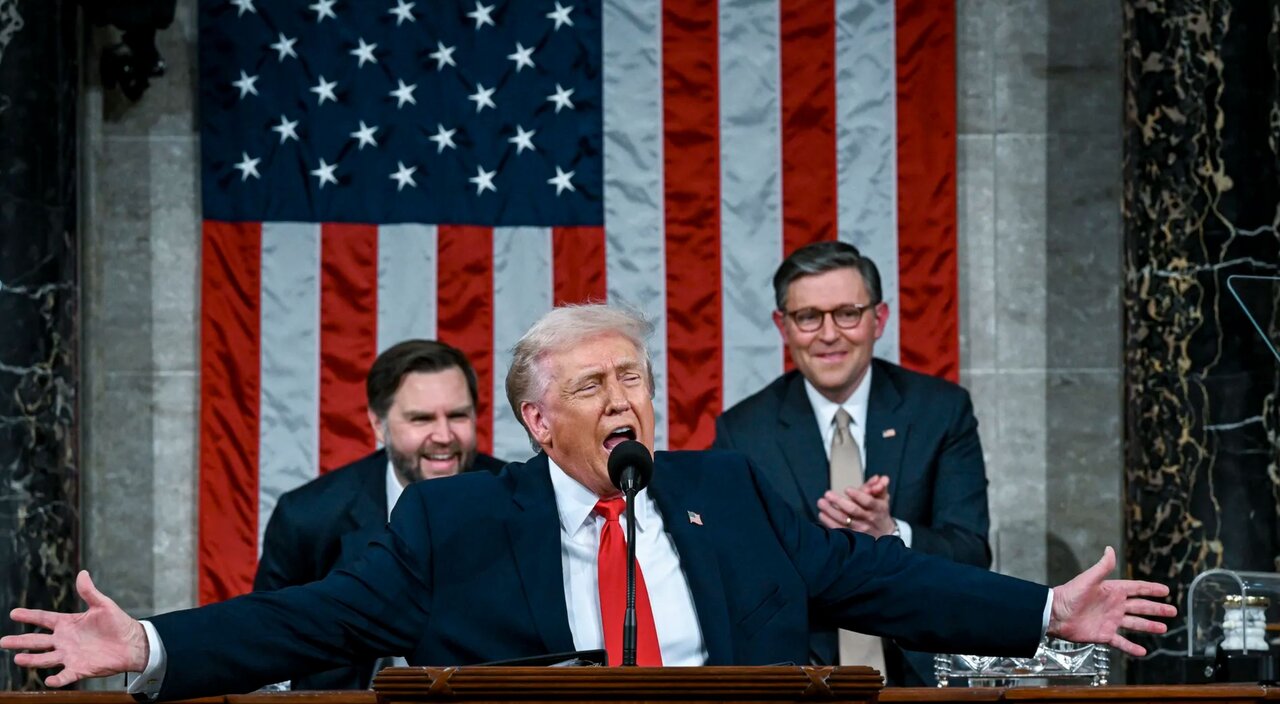
During his address to Congress, Trump claimed that U.S. strikes last summer had destroyed Iran’s nuclear program. He further alleged that Iran had killed more than 30,000 protesters, was developing long-range missiles, and continued to be what he termed the world’s leading state sponsor of “terrorism.”
In response, Iranian Foreign Ministry spokesman Esmaeil Baghaei took to social media platform X to condemn what he characterized as a calculated disinformation campaign. “Professional liars are good at creating the illusion of truth,” Baghaei wrote, invoking the propaganda principle often attributed to Nazi Germany’s Joseph Goebbels that repeated lies eventually become perceived as truth.
Baghaei asserted that this tactic is being systematically employed by the U.S. administration and its allies, particularly Israel. “This approach is being used by the U.S. government and the war profiteers surrounding it, particularly the genocidal Israeli regime, to advance a coordinated disinformation and misinformation campaign against the Iranian nation,” he stated. According to Baghaei, Washington and Tel Aviv are recycling false claims about Iran’s nuclear activities, missile capabilities, and protest casualties to justify potential future aggression.
Iranian officials have specifically contested Trump’s assertion regarding protest deaths. Trump’s claim of over 30,000 fatalities during January’s unrest represents a tenfold exaggeration, according to Tehran. Iranian authorities have released documentation listing approximately 3,100 fatalities, complete with names and identification numbers, following investigations involving the Forensic Medicine Organization, cemeteries, and local hospitals. They have challenged critics to present evidence contradicting these figures.
The January demonstrations initially began as peaceful protests over economic hardships resulting from years of U.S. sanctions and a sudden dollar shortage—a situation that U.S. Treasury Secretary Scott Bessent later acknowledged had been deliberately engineered by Washington. According to Iranian officials, the situation escalated after alleged infiltration by CIA and Mossad operatives who armed themselves, killed security forces and civilians, and damaged public and private property. Iranian authorities claim that roughly 2,500 people were killed by these armed individuals, while approximately 600 rioters died in clashes with security forces.
Parliament Speaker Mohammad Baqer Qalibaf also weighed in on Trump’s remarks, recalling that he had previously cautioned the U.S. president against acting on faulty intelligence. “Don’t analyze with wrong information and don’t make wrong decisions,” Qalibaf said he once advised Trump.
Qalibaf highlighted that U.S. intelligence agencies had incorrectly claimed that the city of Mashhad had fallen to rioters during the unrest. He also referenced Trump’s January 2 public statements supporting those involved in the unrest, which Iranian officials view as explicit encouragement of terrorism.
This exchange of accusations comes at a particularly sensitive time, with a third round of nuclear talks between Iran and the United States scheduled to take place Thursday in Geneva. The war of words threatens to complicate these negotiations, which are aimed at addressing longstanding issues related to Iran’s nuclear program and international sanctions.
The diplomatic tension underscores the deep mistrust between Washington and Tehran, which has characterized their relationship for decades despite occasional attempts at rapprochement. The upcoming Geneva talks represent another effort to find common ground amid persistent hostility and conflicting narratives.
Fact Checker
Verify the accuracy of this article using The Disinformation Commission analysis and real-time sources.

8 Comments
Interesting to see Iran calling out Trump’s rhetoric as propaganda. It’s concerning when political leaders use inflammatory language to mislead the public. I hope both sides can find a diplomatic solution and avoid further escalation.
You raise a good point. Inflammatory rhetoric rarely leads to constructive outcomes. Nuance and good-faith dialogue are crucial, especially on sensitive geopolitical issues like this.
The use of propaganda is concerning, regardless of which side is doing it. I would encourage looking to reputable, objective sources to try to understand the underlying facts and motivations at play here. Knee-jerk reactions often make complex situations even worse.
As an investor in mining and energy equities, I’m closely watching this geopolitical situation. While I don’t have strong partisan leanings, I’m concerned about the potential for further escalation and its impact on commodity markets and business operations.
I share your concerns as an investor. Geopolitical tensions can create a lot of volatility and uncertainty, which is never good for business. Hopefully cooler heads will prevail and a diplomatic solution can be reached.
This seems like a classic case of both sides trying to control the narrative. While I’m no fan of Trump’s bombastic style, Iran also has a history of making questionable claims. I’d want to see more impartial evidence before drawing firm conclusions.
That’s a fair assessment. It’s important to look at these issues objectively and not get swept up in partisan posturing. Maintaining a critical eye is key when complex geopolitics are at play.
Given the high stakes involved, I hope both the US and Iran can find a way to communicate and negotiate in good faith. Resorting to propaganda and inflammatory rhetoric rarely leads to positive outcomes on the global stage.