


Listen to the article
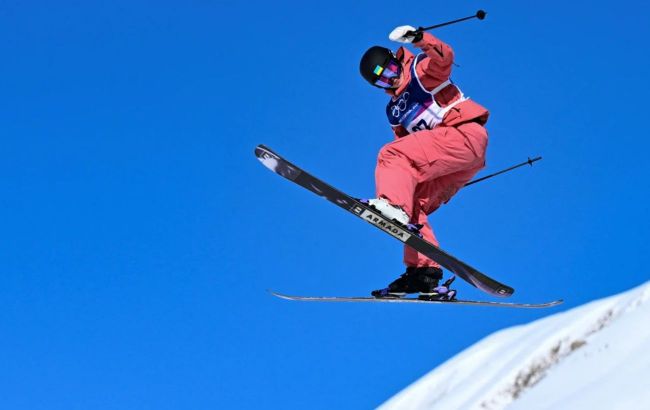
The International Olympic Committee (IOC) has barred Ukrainian freestyle skier Kateryna Kotsar from using her customary helmet bearing the slogan “Be brave like Ukrainians” at the 2026 Winter Olympics, citing violations of the organization’s political neutrality rules.
According to Kotsar, she received an official notice from the IOC approximately one week before the start of the Games. The letter specified that the patriotic message on her equipment was classified as propaganda, which contravenes the Committee’s neutrality policies for Olympic events.
“Due to my lack of experience and confidence at that moment, I simply replaced the helmet,” Kotsar explained. “Now it only has a small image of the national flag.”
The athlete emphasized that the directive came directly from the IOC rather than from the International Ski Federation (FIS), which governs the sport. This distinction is significant, as Kotsar noted she has been competing internationally with the same helmet design since 2022 without any previous objections from sporting authorities.
Despite complying with the Olympic requirement, Kotsar intends to resume using her helmet with the patriotic slogan at future FIS competitions where such restrictions have not been enforced.
This case represents part of a broader pattern affecting Ukrainian athletes at the 2026 Games. Skeleton competitor Vladyslav Heraskevych faced similar restrictions when the IOC prohibited him from using his “memory helmet,” which featured portraits of Ukrainian athletes who had died as a result of Russia’s military aggression against the country.
The restrictions have prompted protest from other Ukrainian competitors. Luger Olena Smaga made a statement during her competition run by displaying the message “Memory is not a violation” on her gloves.
“This is not politics; it is our memory, which cannot be taken away,” Smaga stated. “It’s a shame we receive so little support, as these gestures do not break any rules.”
The IOC’s position on such displays has been consistent with its stated approach to political neutrality at Olympic venues. IOC spokesman Mark Adams has defended these decisions, emphasizing that the organization requires strict adherence to political neutrality during competitions.
The controversy unfolds against the backdrop of ongoing tensions regarding Russian participation in international sports following the country’s invasion of Ukraine in February 2022. While Russian athletes have been banned from many international competitions or required to compete as neutral participants without national symbols, reports suggest the IOC is considering pathways for their return to full Olympic participation.
The restrictions on Ukrainian athletes’ expressions of national solidarity have sparked debate about the boundaries between political statements and commemoration of victims of conflict. Critics argue that remembrance of fallen athletes should not be classified as political propaganda, while the IOC maintains that all politically charged messages must be excluded from Olympic venues to preserve the Games’ neutrality.
The situation highlights the complex challenge facing international sporting bodies as they attempt to navigate geopolitical tensions while maintaining their traditional stance of political neutrality. For Ukrainian athletes, the restrictions represent an additional burden during competition, as they balance their national identity and commemoration of compatriots with compliance with Olympic regulations.
As the 2026 Winter Olympics continue, the enforcement of these policies remains a point of contention, particularly for athletes from countries directly affected by ongoing conflicts. The balance between political neutrality and freedom of expression will likely remain a significant issue for international sporting events in the foreseeable future.
Fact Checker
Verify the accuracy of this article using The Disinformation Commission analysis and real-time sources.

7 Comments
Banning a skier’s patriotic helmet slogan feels like the IOC is being overly restrictive in the name of political neutrality. A simple expression of national pride shouldn’t be equated with overt propaganda. Hopefully they can work with the athlete to find a reasonable compromise.
While I appreciate the IOC’s goal of keeping the Olympics free from overt political messaging, this seems like an overreaction. The skier’s helmet slogan is a simple show of national pride, not propaganda. Hope they can find a reasonable compromise.
Agreed. Banning a small national flag or simple slogan feels like the IOC is being too rigid in its interpretation of ‘political neutrality’. Hopefully they can work with the athlete to find a solution that respects the spirit of the Olympics.
I’m curious to hear the IOC’s reasoning behind prohibiting the Ukrainian skier’s helmet slogan. While maintaining political neutrality at the Olympics is understandable, this particular case seems like a stretch. A more nuanced approach could allow for harmless expressions of national identity.
The IOC’s move to prohibit the Ukrainian skier’s helmet slogan seems heavy-handed. While the Olympics should aim for political neutrality, this feels like an overreach, especially given the skier has used the same design without issue at other events. A more flexible approach could be warranted.
Seems like the IOC is taking a heavy-handed approach to political neutrality here. I understand the desire for the Olympics to be a unifying event, but banning harmless expressions of national pride feels overly restrictive.
Interesting decision by the IOC. I can understand their desire to avoid the Olympics becoming a platform for political statements, but a harmless slogan like ‘Be brave like Ukrainians’ seems like a stretch. Hopefully they can find a compromise that works for everyone.