


Listen to the article
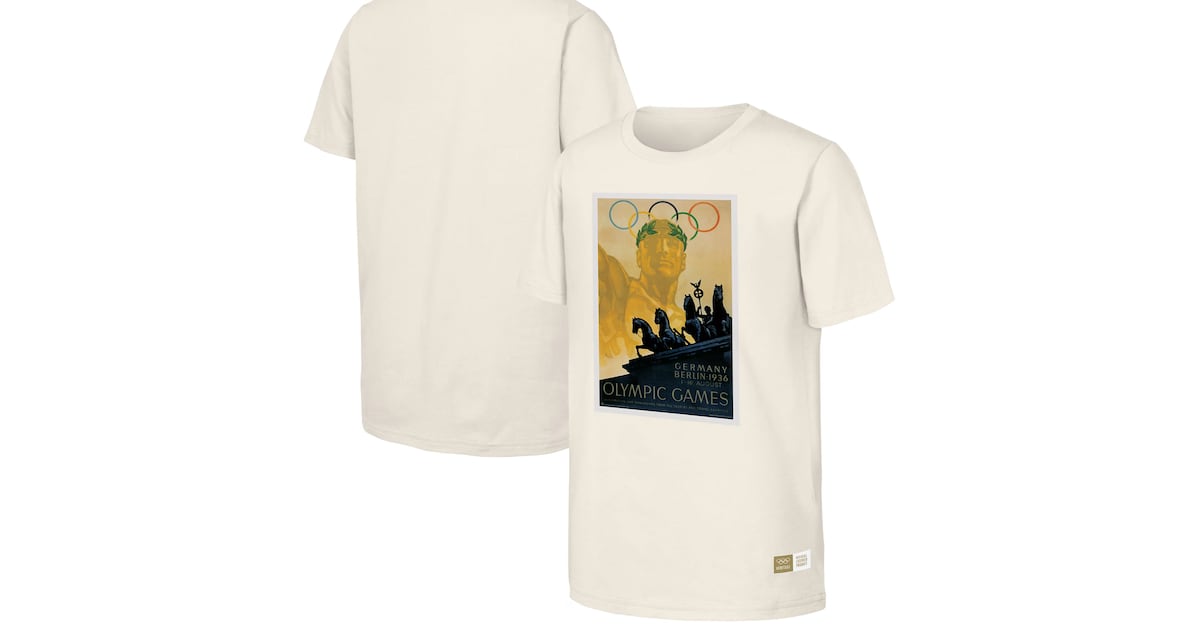
In an unexpected controversy surrounding Olympic merchandising, the International Olympic Committee (IOC) has come under scrutiny for selling T-shirts featuring artwork from the 1936 Berlin Games, an Olympics historically known for its exploitation as a Nazi propaganda platform under Adolf Hitler’s regime.
The contentious item, which has already sold out in the Olympics’ official online shop, was marketed as part of the “Olympic Heritage Collection.” The design replicates imagery originally used in Nazi Germany’s Olympic propaganda, featuring a man wearing a laurel crown alongside the Olympic rings and Berlin’s Brandenburg Gate.
Following public backlash, the IOC has defended its decision to sell merchandise commemorating the controversial 1936 Games. IOC spokesperson Mark Adams addressed the criticism on Sunday, presenting several justifications for the organization’s position.
“We cannot rewrite history. The 1936 Games happened,” Adams stated. He emphasized positive aspects of those Games, particularly highlighting African American athlete Jesse Owens’ historic four gold medal performance that famously contradicted Nazi racial ideologies. “We hold up what Jesse Owens did, and a number of other athletes, as a great example of upholding the Olympic spirit.”
Adams further explained that trademark protection was a significant factor in the IOC’s decision to produce and sell the merchandise. “The validity of those trademarks depends on us exercising our rights. If we stop using the trademarks they can be taken by other people and potentially misused,” he noted.
According to Adams, the IOC produced only “a small number” of the items, with the primary motivation being legal protection of Olympic intellectual property rather than commercial gain. “The main reason is to protect our copyright so they are not misused,” he added.
The 1936 Olympics remains one of the most politically charged sporting events in history. Hitler’s government used the international platform to promote Nazi ideology and present a sanitized image of the regime to the world. This occurred just three years before Germany invaded Poland, triggering World War II.
The controversy highlights the ongoing challenge sporting organizations face when navigating historical legacies that intersect with troubling political periods. The IOC, as custodian of Olympic history, must balance preserving its heritage while being sensitive to historical traumas.
This isn’t the first time Olympic merchandising has sparked controversy. The organization has previously faced criticism for commercialization of the Games and questions about manufacturing practices of Olympic-branded products.
Sports memorabilia experts note that official Olympic merchandise represents a significant revenue stream for the IOC, with collectibles from all Olympic Games, including controversial ones, often sought after by historians and collectors.
The Berlin Olympics merchandise controversy emerges at a time when many institutions worldwide are reassessing how they commemorate difficult historical periods. Museums, universities, and cultural organizations increasingly grapple with questions about how to acknowledge problematic aspects of history without appearing to celebrate or normalize them.
The sold-out status of the shirt suggests there was considerable consumer demand despite—or perhaps because of—its controversial nature. The IOC has not indicated whether it plans to produce additional Berlin Games merchandise or if it will reconsider its approach to marketing items connected to Olympics with complicated political contexts.
As preparations continue for the 2024 Paris Olympics, this incident serves as a reminder of the complex interplay between sports, history, politics, and commerce that the Olympic movement continues to navigate nearly a century after the Berlin Games.
Fact Checker
Verify the accuracy of this article using The Disinformation Commission analysis and real-time sources.

12 Comments
While the IOC’s perspective on not rewriting history is understandable, the decision to sell merchandise replicating Nazi propaganda is highly questionable. A more thoughtful, nuanced commemoration of the 1936 Olympics that highlights the inspiring stories and accomplishments of athletes like Jesse Owens would have been a better choice.
This is a tricky situation. The IOC is correct that we can’t rewrite history, but selling merchandise featuring Nazi imagery seems shortsighted at best. A more educational, contextual approach focused on the positive stories and achievements of the 1936 Olympics would have been more appropriate.
While I appreciate the IOC wanting to acknowledge the historical significance of the 1936 Olympics, the choice to sell shirts replicating Nazi propaganda is questionable at best. A more thoughtful, educational approach focused on the inspiring accomplishments of athletes like Jesse Owens would have been far more appropriate.
Interesting to see the IOC trying to commemorate the 1936 Berlin Olympics, despite the clear Nazi propaganda associations. Acknowledging Jesse Owens’ inspiring achievements is a positive, but the decision to sell merchandise replicating Nazi imagery is concerning.
The IOC’s defense of this decision is understandable, but I worry it glosses over the complex and troubling history of the 1936 Olympics. Profiting off of Nazi imagery, even inadvertently, seems like a misstep that could alienate many. A more nuanced, thoughtful commemoration would have been better received.
I can see both sides of this issue. The IOC is right that we can’t simply erase or ignore the historical facts of the 1936 Olympics. But actively profiting off of Nazi propaganda, even indirectly, seems ill-advised. A more nuanced, thoughtful commemoration would have been a wiser choice.
While the IOC’s point about not rewriting history is valid, the decision to sell merchandise featuring Nazi propaganda imagery is highly problematic. A more thoughtful, educational approach focused on the positive stories and achievements of the 1936 Olympics would have been a better way to commemorate that complex history.
This is a complex issue without a simple answer. On one hand, the IOC has a point about not rewriting history. But on the other, actively selling products tied to Nazi propaganda is highly questionable. A more nuanced, educational approach may have been better received.
I can understand the IOC’s perspective of not wanting to ‘rewrite history’, but this feels like a misstep. Profiting off of Nazi-era propaganda, even inadvertently, seems ill-advised. Perhaps a more thoughtful, educational approach would have been better received.
The IOC’s defense of this decision is understandable, but I worry it downplays the egregious use of the 1936 Olympics for Nazi propaganda purposes. While Jesse Owens’ accomplishments were incredible, the overall context of those Games cannot be ignored.
I agree. Commemorating specific athlete achievements is one thing, but profiting off of Nazi imagery is another matter entirely. The IOC needs to tread carefully here.
I’m conflicted on this. The IOC is right that we can’t ignore the historical facts of the 1936 Olympics. However, the decision to sell merchandise featuring Nazi imagery seems tone-deaf and insensitive, even if the intent was to highlight positive stories like Jesse Owens’.