


Listen to the article
In a move that has sparked widespread criticism, the International Olympic Committee (IOC) is facing backlash over a controversial merchandise item that references one of the most politically charged Olympic Games in history.
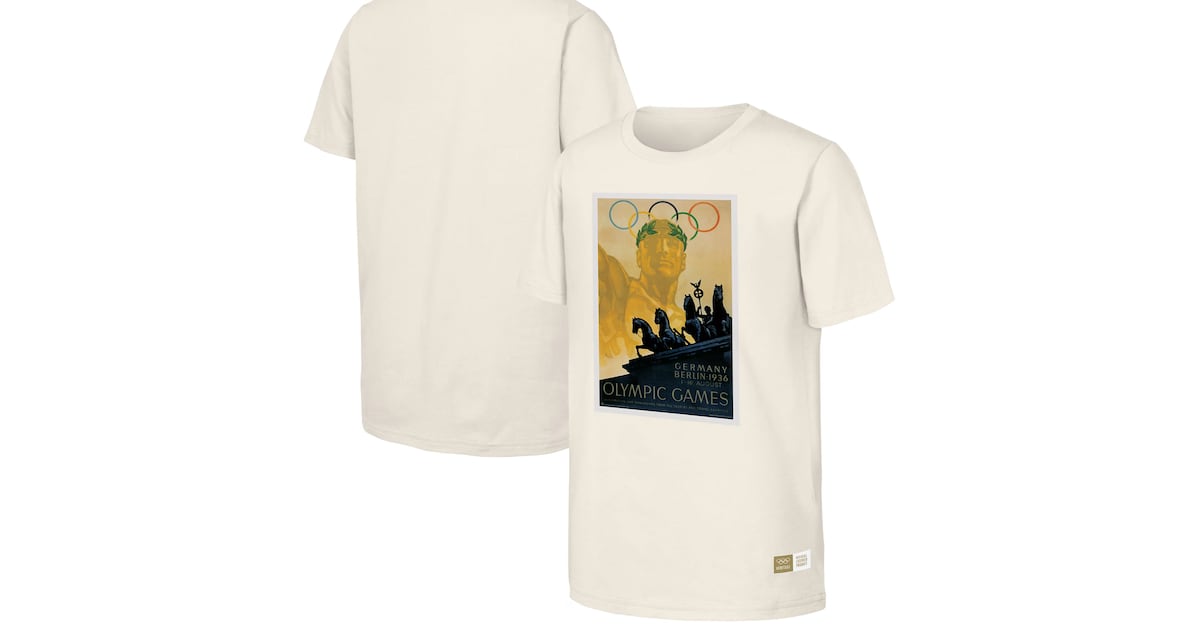
The IOC has come under intense scrutiny for selling a T-shirt featuring artwork from the 1936 Berlin Olympics, an event widely known for being exploited by Adolf Hitler’s regime as a propaganda platform for Nazi Germany. The shirt, which was part of the organization’s “Olympic Heritage Collection,” has reportedly sold out from the Olympics’ official online shop.
The controversial garment replicates design elements from the original 1936 Games propaganda materials, including imagery of a man wearing a laurel crown, the Olympic rings, and Berlin’s iconic Brandenburg Gate—symbols that became intertwined with the Nazi regime’s attempt to showcase German superiority through the international sporting event.
Despite the outcry, the IOC has defended its decision to produce and sell the merchandise. IOC spokesperson Mark Adams addressed the controversy on Sunday, presenting a multi-faceted justification for the organization’s position.
“We cannot rewrite history. The 1936 Games happened,” Adams stated. He emphasized that the IOC prefers to highlight positive aspects from those Games, particularly the achievements of African American sprinter Jesse Owens, whose four gold medal victories directly challenged Hitler’s Aryan supremacy ideology.
“We hold up what Jesse Owens did, and a number of other athletes, as a great example of upholding the Olympic spirit,” Adams continued. “We need to remember there are also some good aspects to that Berlin Games.”
Beyond the historical context, Adams revealed a pragmatic motivation behind the merchandise: trademark protection. He explained that the IOC must actively use its historical imagery to maintain legal control over it.
“The validity of those trademarks depends on us exercising our rights. If we stop using the trademarks they can be taken by other people and potentially misused,” Adams said. “We produce a small number of those items. The main reason is to protect our copyright so they are not misused.”
The 1936 Berlin Olympics remains one of the most controversial in Olympic history. While the Games are remembered for Jesse Owens’ remarkable performance that undermined Nazi racial theories, they also served as a powerful propaganda tool for Hitler’s regime. The Nazi government temporarily moderated its antisemitic policies during the event to present a positive image to international visitors, while using the spectacle to bolster national pride and promote Nazi ideology domestically.
This merchandise controversy emerges at a time when sports organizations worldwide face increasing pressure to acknowledge the political dimensions of major sporting events. The IOC has long maintained a position that sports and politics should remain separate, though critics argue this stance becomes impossible to maintain when dealing with events like the 1936 Games, which were inherently political from their conception.
Historians and Jewish advocacy groups have frequently highlighted how the 1936 Olympics provided international legitimacy to the Nazi regime just years before the Holocaust began. This context makes any commercial products referencing these Games particularly sensitive.
The IOC’s decision to merchandise imagery from this era raises broader questions about how sporting organizations should handle their complicated historical legacies. While the committee frames its approach as preserving history rather than endorsing it, critics question whether selling such merchandise crosses ethical boundaries, regardless of the legal reasoning behind the decision.
As the merchandise has already sold out, the IOC now faces the challenge of addressing the public relations fallout while maintaining its position that the products serve primarily as trademark protection rather than commercial exploitation of a controversial historical moment.
Fact Checker
Verify the accuracy of this article using The Disinformation Commission analysis and real-time sources.

6 Comments
I’m curious to hear the IOC’s full rationale for this decision. While they make a point about not rewriting history, there are ways to educate about the past without directly profiting off of Nazi imagery and symbolism. This seems like a misjudgment that they should reconsider.
Exactly. The IOC should focus on promoting the values of sportsmanship, unity, and human achievement that the Olympics are meant to represent, rather than potentially glorifying the propaganda tactics of authoritarian regimes.
As someone who values historical awareness, I understand the desire to document and preserve artifacts from the past. However, the way the IOC has chosen to do that in this case is highly problematic. They need to be more sensitive to the lasting harms of Nazi ideology and its symbols.
I agree. The IOC should find a way to educate about this period without directly replicating Nazi propaganda materials. Perhaps they could offer historical context and commentary alongside any related merchandise, to ensure it is not misinterpreted or seen as an endorsement.
This is a concerning decision by the IOC. While we can’t erase history, we should be very careful about how we present and contextualize symbols associated with the Nazi regime and their propaganda efforts. Selling merchandise that directly replicates those visuals seems like a tone-deaf and potentially harmful move.
I agree. The IOC should have considered the broader implications and public sentiment around this before moving forward with the product. They need to be more thoughtful about how they commemorate the past, especially when it involves such a dark chapter.