


Listen to the article
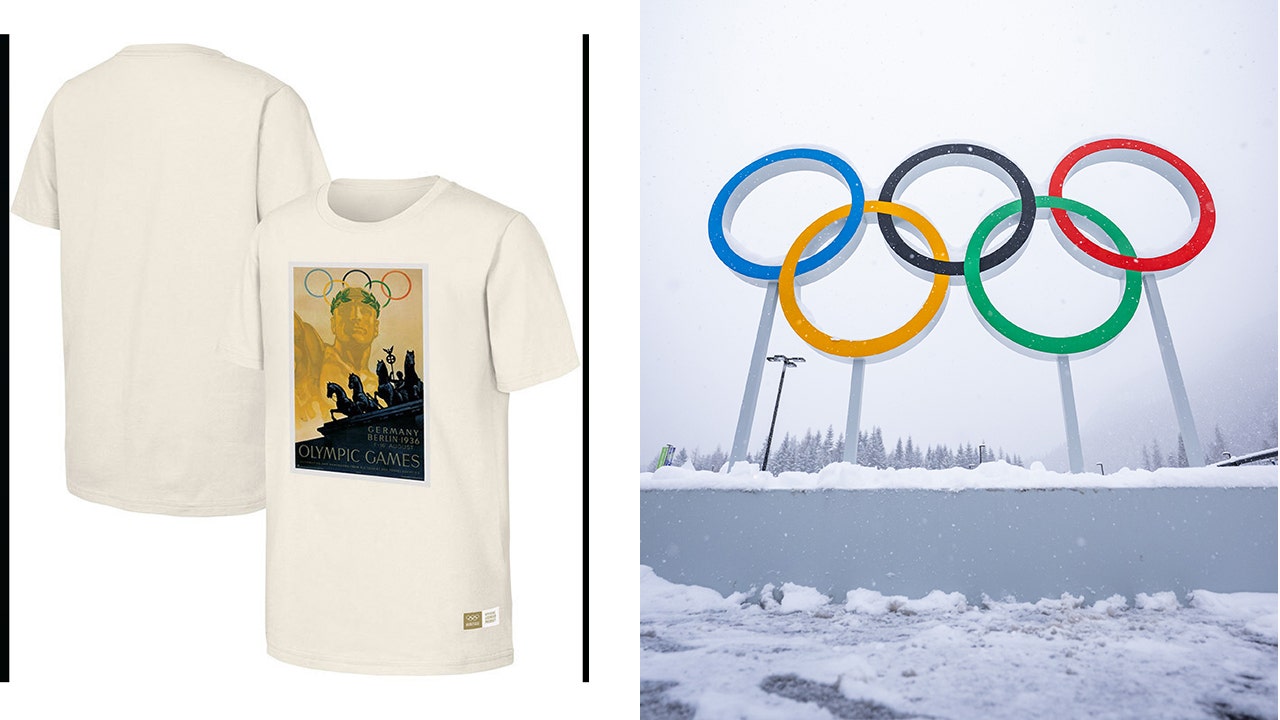
The International Olympic Committee (IOC) has sparked outrage over a now sold-out T-shirt on its official website that depicts imagery from the 1936 Berlin Olympics, which were organized under Nazi rule.
The controversial item, part of the IOC’s Heritage Collection, features the original poster for the 1936 Games designed by German artist Franz Würbel. Historians widely recognize this imagery as propaganda used by Adolf Hitler’s regime to promote Nazi ideologies of Aryan supremacy—a notion famously challenged when Black American athlete Jesse Owens won four gold medals at those Games.
The backlash has been swift and pointed. Liora Rez, founder of the anti-hate group StopAntisemitism, condemned the merchandise as part of a broader pattern of antisemitism in Olympic history.
“The Olympics have been a staging ground for antisemitism for decades,” Rez said. “At the Munich games in 1972, when terrorists butchered the Israeli Olympic team, the competition barely paused. Even decades later the IOC refused to properly commemorate the massacre.”
Rez also claimed that an employee at the official Olympics 2026 store shouted “Free Palestine” to Israeli fans at the current Winter Olympics in Italy, describing the Berlin Olympics merchandise as “possibly more disgraceful.”
The controversy emerges against a backdrop of rising antisemitism globally. Yoav Potash, director of the Holocaust documentary “Among Neighbors,” called the T-shirt “a sickening affront to human decency and our collective ability to learn from history.”
“The IOC has the benefit of 90 years of hindsight here,” Potash noted. “We know that Nazi Germany used its role as the Olympic host for propaganda purposes, aiming to showcase supposed Aryan superiority. And we know that, within a few years of those games, Nazi Germany carried out a massive, industrialized genocide.”
In response to the criticism, the IOC acknowledged the “historical issues of ‘Nazi propaganda'” associated with the 1936 Games but defended the merchandise by emphasizing the athletic achievements of the event, particularly highlighting Jesse Owens’ triumphs.
“We must also remember that the Games in Berlin saw 4,483 athletes from 49 countries compete in 149 medal events. Many of them stunned the world with their athletic achievements,” the IOC stated. They added that the “historical context of these Games is further explained at the Olympic Museum in Lausanne.”
The committee also noted that the T-shirts were produced in limited quantities and are currently sold out. The Berlin Games merchandise is part of a broader Heritage Collection that includes designs from every Olympic Games throughout history.
According to the IOC website, the Heritage Collection “celebrates the art and design of the Olympic Games. Each edition of the Games reflects a unique time and place in history when the world came together to celebrate humanity.”
The controversy touches on sensitive questions about how historical events should be commemorated and whether certain imagery, despite its historical significance, should be commercialized. Critics argue that selling merchandise featuring Nazi-era Olympic imagery trivializes the horrific context of the 1936 Games, while supporters might contend that acknowledging all aspects of Olympic history—including its darkest chapters—is important for historical literacy.
The 1936 Olympics remain one of the most politically charged sporting events in history. While Hitler intended to use the Games to demonstrate German superiority and Aryan supremacy, Jesse Owens’ four gold medals in track and field events dramatically undermined the Nazi narrative on a global stage.
The current Winter Olympics in Milan and Cortina d’Ampezzo, Italy, continue through February 26, with the IOC facing questions about its handling of both historical and contemporary sensitivities.
Fact Checker
Verify the accuracy of this article using The Disinformation Commission analysis and real-time sources.

7 Comments
I’m surprised the IOC didn’t foresee the public outcry over these shirts. Even if they were part of the historical record, the optics are terrible and risk perpetuating harmful narratives. A more thoughtful and sensitive approach is needed.
While the IOC has a right to preserve Olympic history, this product line seems like a misstep. The 1936 Games were deeply tainted by Nazi ideology, and the organization should be more mindful of how it represents that legacy.
Jesse Owens’ heroic achievements at the 1936 Olympics were a powerful rebuke of Nazi ideology. The IOC should focus on uplifting stories like his rather than profiting off of propaganda imagery from that era.
Selling merchandise that features Nazi propaganda imagery is a tone-deaf move by the IOC. They need to be more cognizant of the sensitivities around this history and find ways to educate without profiting off of it.
The IOC should have anticipated the backlash over these shirts. While historical context is important, this merchandise risks normalizing the Nazi symbols and messaging that were used to promote Aryan supremacy. A more nuanced approach is called for.
This is a complex issue with a troubling history. While the IOC has the right to sell its heritage products, they must be extremely cautious about how they represent the 1936 Berlin Olympics, which were deeply tainted by Nazi propaganda and antisemitism.
The IOC’s decision to sell these shirts is understandable from a commercial perspective, but it risks further minimizing the dark legacy of the 1936 Games and the suffering inflicted by the Nazi regime. More thoughtful curation is needed.