


Listen to the article
Iran’s “Supreme Leader” Khamenei: A Digital Afterlife Reveals His Online Propaganda Machine
The final post on Ali Khamenei’s official X account, featuring a Quranic verse, created the illusion he was still alive. In reality, Iran’s “supreme leader” was already dead, killed in a joint U.S.-Israeli strike at the beginning of Operation Roaring Lion. This posthumous social media activity highlighted the sophisticated digital propaganda apparatus Khamenei had built over years.
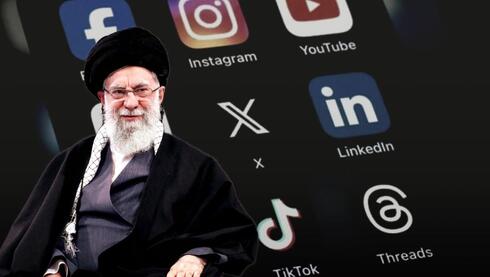
For over a decade, while blocking social media access for ordinary Iranians, Khamenei maintained an extensive multilingual digital presence across major platforms. Between 2016 and 2021, his team operated accounts in Persian, English, Arabic, French, Spanish and Russian. The content strategically mixed nostalgic personal anecdotes and religious quotations with Holocaust denial and fierce anti-American rhetoric.
His Instagram following alone reached over 5 million. In the platform’s early years, around 2013, his social media team attempted to humanize the authoritarian leader with posts that later became viral memes. One such post claimed to share childhood memories: “I went 2school w/a cloak since1st days;it was uncomfortable 2wear it in front f other kids,but I tried 2make up 4it by being naughty&playful.”
Another surprising post rejected violence against women: “According to Islamic tradition, woman is a flower; how oppressive & evil it is of a man to treat a flower aggressively/uncaringly.” This messaging created a jarring contrast with the reality of Iran’s harsh treatment of women under his leadership.
As time passed, this softer approach gave way to increasingly aggressive rhetoric. In January 2021, X removed a post in which Khamenei spread misinformation about Western-made COVID-19 vaccines. His Facebook account, created in 2012, was permanently removed by Meta in February 2024, along with his Instagram presence, after he publicly supported the October 7 massacre. Though his Instagram account was later restored following protests from his office, his social media footprint increasingly focused on anti-Israel messaging.
A quote repeatedly shared across his platforms stated: “Israel is a deadly cancerous tumor in the region that must be eradicated.” This rhetoric escalated even as the Obama administration signed the nuclear deal with Iran in July 2015, designed to prevent Tehran from obtaining nuclear weapons in exchange for sanctions relief.
In October 2024, Khamenei’s media team launched a Hebrew-language X account, a direct attempt at psychological warfare against Israelis. The account’s first post began with the traditional Islamic greeting, while the second carried an explicit threat: “The Zionist regime made a mistake and miscalculated regarding Iran. We will make it understand the power, capability, initiative and will of the Iranian nation.” After just two posts, X suspended the account for violating platform rules against hate speech, though it was later restored after content review.
The identity of Khamenei’s social media ghostwriters remains a subject of speculation. The most plausible theory suggests his official office employed a dedicated social media team as part of a foreign influence campaign. Others believe cyber units within the Islamic Revolutionary Guard Corps managed the accounts. Some Iranian exiles claim his son, Mojtaba Khamenei—long considered a behind-the-scenes power broker—controlled the increasingly aggressive messaging to position himself as a potential successor.
These accounts supported what experts describe as Iran’s international “bot army.” Media investigations have exposed dormant networks in the United States, Turkey and Pakistan that were activated to amplify Khamenei’s statements and create the impression of global support.
The inherent hypocrisy was striking. While Western social media platforms have been blocked in Iran since the failed 2009 protests, both ordinary Iranians and Khamenei’s team used VPN technology to bypass restrictions—citizens to report government repression at great personal risk, and the regime to spread propaganda internationally.
Khamenei’s final tweets before his assassination focused on “steadfastness.” His last post, a Quranic verse suggesting he had foreseen his own death, read: “Among the believers are men who have been true to their covenant with Allah; some of them have fulfilled their vow [and died], and some are still waiting…”
Cybersecurity experts believe this final message was likely pre-programmed for emergency scenarios, reflecting the careful narrative crafted over decades—a blend of religious fervor, anti-Western defiance, and the glorification of martyrdom that characterized his 35-year rule over Iran since 1989.
Fact Checker
Verify the accuracy of this article using The Disinformation Commission analysis and real-time sources.
