


Listen to the article
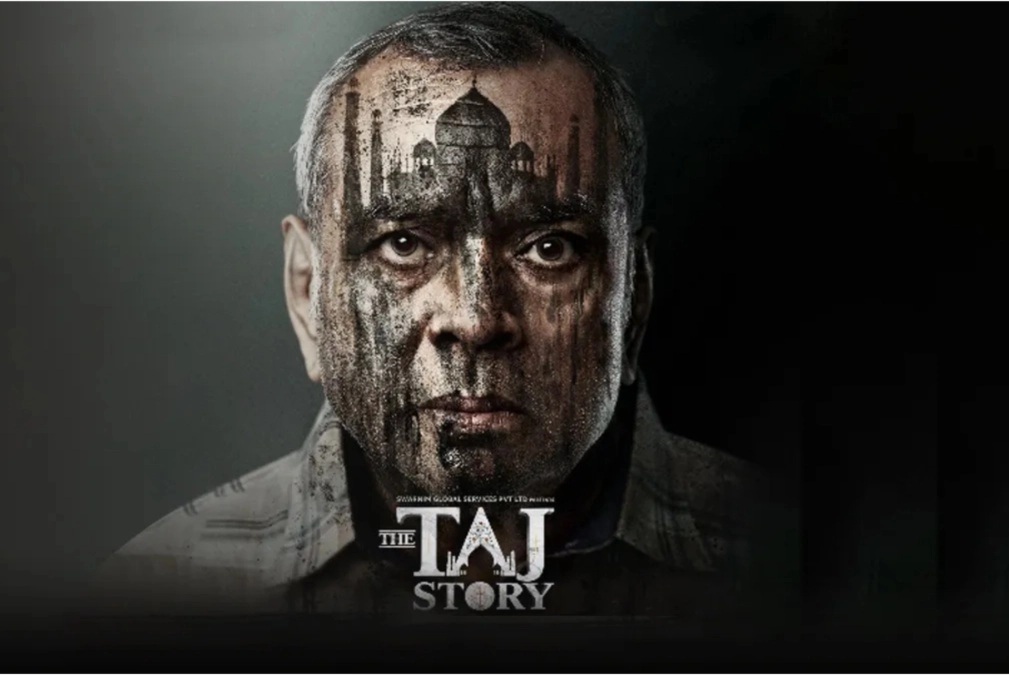
In a controversial new release, Bollywood’s latest historical drama has ignited fresh debate about India’s most iconic monument. “The Taj Story,” directed by Tushar Goyal and released in October 2025, challenges the established history of the Taj Mahal through a narrative that critics say aligns with rising Hindu nationalist sentiments.
The film centers on veteran tour guide Vishu Das who, after 25 years of recounting the love story of Shah Jahan and Mumtaz Mahal to visitors, experiences a crisis of faith. In a pivotal scene, Das confronts a guard at the monument, questioning whether “the story we’ve been telling for years is a lie” and suggesting “doing a DNA test on the Taj Mahal.”
This premise forms the foundation of the 205-minute courtroom drama, which promotes the widely debunked theory that the Taj Mahal was originally a Hindu palace called “Tejo-Mahalaya” that was appropriated by Muslim rulers. Despite opening with a disclaimer identifying the work as fiction, the film’s promotional materials—including a poster depicting the Hindu god Shiva emerging from a tomb—send a clear message about its perspective.
Lead actor Paresh Rawal, a former MP for the ruling Bharatiya Janata Party (BJP), has drawn additional scrutiny to the production. While the director insisted to CNN that no political party funded the film, critics point to its thematic alignment with BJP ideology, known for its Hindu nationalist stance.
“The Taj Story” performed modestly at the box office, grossing approximately $2 million against its $1.3 million budget. However, it has found a receptive audience among right-wing viewers. “If someone tries to stop the film, more people will go and watch it,” said BJP MP Ashwini Upadhyay, while a Mumbai viewer named Onati commented, “We were misled all these years and did not know our real history.”
The Taj Mahal, which attracts over seven million tourists annually, has stood for centuries as a symbol of love and India’s multicultural heritage. Built in the 17th century by Mughal emperor Shah Jahan to honor his wife Mumtaz Mahal, the white marble monument on the banks of the Yamuna River represents architectural excellence and cultural significance that transcends religious boundaries.
Indian historian Swapna Liddle emphasizes that “the Mughal period is well documented, and there are many documents about the construction of the Taj Mahal.” Yet the film largely dismisses established historical evidence, instead portraying Das’s courtroom speeches about a “leftist agenda” and “over-romanticization of Mughal history” as more compelling than archaeological and historical documentation.
The controversy surrounding “The Taj Story” reflects broader cultural tensions in contemporary India. Since the BJP came to power in 2014, critics have pointed to systematic efforts to rewrite aspects of Indian history, particularly regarding the contributions and presence of Muslim rulers. These efforts have included changing textbooks, renaming streets and cities with Mughal origins, and in some cases, demolishing Muslim properties.
The Taj Mahal itself has previously been caught in these cultural crosshairs. In 2017, it was notably omitted from the Uttar Pradesh state government’s tourism brochure. By 2022, a BJP lawmaker had filed a petition to open 22 sealed rooms in the monument to search for “evidence of a Hindu temple”—a petition based on the same “Tejo-Mahalaya” theory promoted in the film.
This pattern of historical revisionism through cinema has become increasingly visible in recent years. Films like “The Kashmir Files” (2022) and “The Kerala Story” (2023) have faced criticism for their portrayals of Muslims, while productions perceived as offending Hindu sentiments have often encountered protests or platform removals.
Liddle warns of the potential impact: “Many in society get their historical perspective directly from films.” She believes the current trend represents “a wave of films that deliberately portray Muslim historical figures as villains” in alignment with political movements—a development she describes as “a very dangerous form of villainy.”
While the Taj Mahal continues to stand as a testament to India’s rich architectural heritage, films like “The Taj Story” represent a contested battleground over national identity and historical narrative in modern India.
Fact Checker
Verify the accuracy of this article using The Disinformation Commission analysis and real-time sources.

13 Comments
The Taj Mahal is such an iconic global landmark. I hope this controversy doesn’t detract from its status as a UNESCO World Heritage Site and one of the world’s great architectural and cultural treasures.
Interesting to see this historical revisionism debate play out around such an iconic monument. I’ll be curious to see how the film portrays the evidence and differing perspectives on the Taj Mahal’s origins.
The film’s premise about a ‘Tejo-Mahalaya’ does seem to align with rising Hindu nationalist sentiment, though the historical evidence appears to overwhelmingly support the established Mughal-era history.
This reminds me of similar debates over historical sites and monuments in other parts of the world. Tracing the evolution and multiple cultural influences on such landmarks can be fascinating, if approached objectively.
While I’m skeptical of the ‘Tejo-Mahalaya’ claims, I’m curious to see how the film’s narrative unfolds. Thoughtful historical reexamination, even of widely accepted narratives, can sometimes uncover new perspectives worth considering.
Agreed. As long as the filmmakers maintain intellectual integrity and avoid overt political agendas, this could be an interesting contribution to the ongoing scholarly discourse around the Taj Mahal’s origins.
As a work of fiction, the film could still raise valid questions and explore alternative historical theories, even if the ‘Tejo-Mahalaya’ claim is widely dismissed. The key will be distinguishing speculation from established facts.
While the ‘Tejo-Mahalaya’ theory seems dubious, I’m curious to see how the filmmakers build their case and respond to counterarguments. An honest, nuanced exploration of the evidence could make for an interesting watch.
Agreed. Revisiting established histories through a new creative lens can sometimes yield valuable insights, even if the central premise is ultimately unpersuasive.
This is a sensitive topic given India’s complex history and ongoing cultural/religious tensions. I hope the filmmakers approach it thoughtfully and avoid fueling further divisiveness, even if presenting a revisionist viewpoint.
Agreed. Nuance and objectivity will be important, rather than sensationalism or overt political messaging, if this film hopes to contribute meaningfully to the historical debate.
The Taj Mahal is such a powerful symbol of India’s rich cultural heritage. I hope this controversy doesn’t distract from appreciating and preserving that legacy, whatever the monument’s precise origins may be.
Agreed. The Taj’s aesthetic and architectural brilliance transcends debates over its history. Maintaining that as the primary focus seems important, rather than getting bogged down in revisionist politics.