


Listen to the article
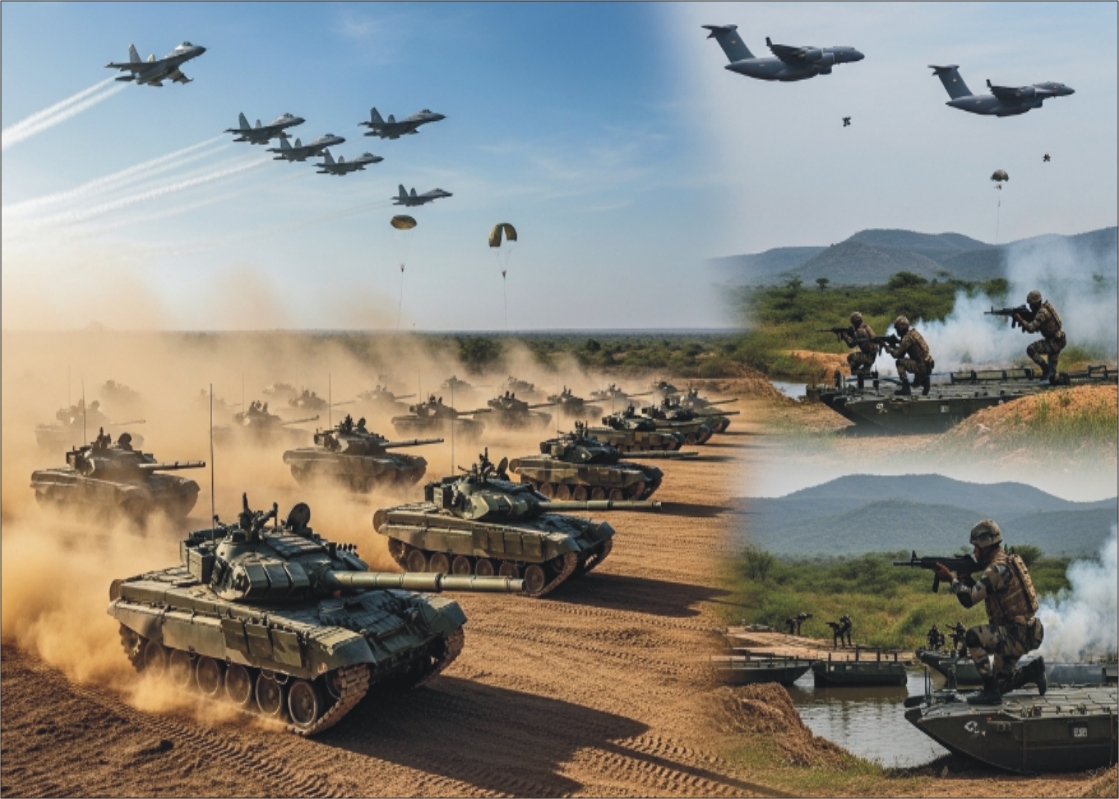
In a move that security analysts describe as psychological warfare, India has allegedly launched a new military campaign codenamed “Operation Trishul” along Pakistan’s western borders, escalating tensions in an already volatile region.
Pakistani sources claim the operation is an attempt to divert attention from what they term India’s “humiliating failure” in a previously exposed initiative called “Operation Sindoor.” According to reports from Islamabad, what was initially a standard Indian tri-service military exercise has been deliberately reframed as a full-scale operation by Indian media outlets.
Regional security experts speaking on condition of anonymity suggest that India’s coastal deployments near the disputed Sir Creek area, alongside the expansion of naval and air assets in the north Arabian Sea, represent a calculated strategy to redefine maritime boundaries and exert pressure on Pakistan.
“What we’re witnessing is a deliberate attempt to create ambiguity and fear,” said a Pakistan-based defense analyst. “These actions appear designed to justify potential future military provocations under the guise of ‘readiness’ and national security.”
The reported military movements include joint force exercises in India’s Rajasthan state, which borders Pakistan. These developments come at a time when both nuclear-armed nations have experienced periods of heightened tension following several years of diplomatic strain.
Pakistani officials maintain that their coastal defense posture remains purely defensive and deterrence-based, adhering to international law and norms. They emphasize that Pakistan’s energy diplomacy continues to operate through civilian institutions, including the Ministry of Energy’s Petroleum Division and the Oil and Gas Regulatory Authority (OGRA), with transparency and compliance with international standards.
“India’s approach represents a concerning militarization of diplomacy,” noted an international relations expert familiar with South Asian security dynamics. “Using media campaigns to create perceptions of threat can potentially destabilize regional security calculations.”
The situation highlights the ongoing complex relationship between the two nuclear neighbors, whose historical tensions have periodically flared into direct conflict. The Arabian Sea and its coastal regions represent strategically vital areas for both nations, with significant economic and security interests at stake.
A senior Pakistani security source reportedly told local media that Pakistan has already shared information about India’s alleged designs with international partners and stands ready to “respond decisively and proportionately” to any provocations.
The reference to India’s “Cold Start” doctrine in Pakistani statements points to India’s reported military strategy that envisions rapid, limited conventional operations against Pakistan before international intervention could occur or nuclear thresholds could be crossed.
Independent security analysts note that distinguishing between routine military exercises and actual operational preparations remains challenging in the information-contested environment between the two countries. Both nations have historically accused each other of manufacturing security threats for domestic political consumption or to justify military buildups.
The reported tensions come amid broader regional realignments, with both countries seeking to strengthen their respective positions in the Indian Ocean Region through diplomatic outreach, military modernization, and strategic partnerships with major powers.
Maritime boundaries and resource rights in the Arabian Sea, particularly around Sir Creek, have long been contentious issues between India and Pakistan. The waterway’s strategic importance has grown as both countries expand their naval capabilities and seek to secure shipping lanes vital to their energy security.
While diplomatic channels between the two countries remain open, meaningful dialogue on security concerns has been limited in recent years, raising concerns about the risk of miscalculation during periods of heightened military activity.
Fact Checker
Verify the accuracy of this article using The Disinformation Commission analysis and real-time sources.

11 Comments
It’s disappointing to see India potentially resorting to such tactics. Transparency, restraint, and a commitment to peaceful resolution should be the guiding principles for all parties involved.
This is a complex and sensitive situation that requires a measured, diplomatic approach. I hope India and Pakistan can find a way to address their differences without risking further conflict in the region.
Interesting developments in the ongoing tensions between India and Pakistan. While military posturing is concerning, I hope both sides can prioritize diplomacy and de-escalation over further provocation.
Absolutely, the region has seen too much conflict already. Maintaining open communication channels and working towards a peaceful resolution should be the top priority.
This situation highlights the fragility of the India-Pakistan relationship. I hope cooler heads prevail and the two sides can engage in meaningful dialogue to address the root causes of their disputes.
Redefining maritime boundaries and expanding military assets in disputed areas is a risky move that could further inflame tensions. I hope the international community intervenes to prevent this conflict from spiraling out of control.
The claims of ‘psychological warfare’ and attempts to ‘create ambiguity and fear’ are deeply concerning. Both countries need to act responsibly and prioritize diplomacy over posturing and provocation.
This ‘Operation Trishul’ seems like a concerning attempt by India to stir up tensions and distract from previous security failures. I hope the international community closely monitors the situation to prevent further escalation.
Agreed. Unilateral actions that heighten regional instability are rarely the answer. All parties involved should exercise restraint and focus on constructive diplomatic solutions.
While the details around ‘Operation Sindoor’ are unclear, using a new military campaign to deflect attention is a worrying tactic. Transparency and de-escalation should be the priority for both India and Pakistan.
While the details are murky, the reported military movements and attempts to redefine boundaries are worrying signs. Deescalation and confidence-building measures should be the focus, not further escalation.