


Listen to the article
Archaeological Survey of India Faces Credibility Crisis Amid Political Controversies
The Archaeological Survey of India (ASI), tasked with preserving the nation’s rich historical heritage, finds itself embroiled in a deepening credibility crisis that extends beyond typical bureaucratic inefficiencies. At its core, the controversy raises serious questions about the integrity of archaeological practices and the institution’s vulnerability to political agendas.
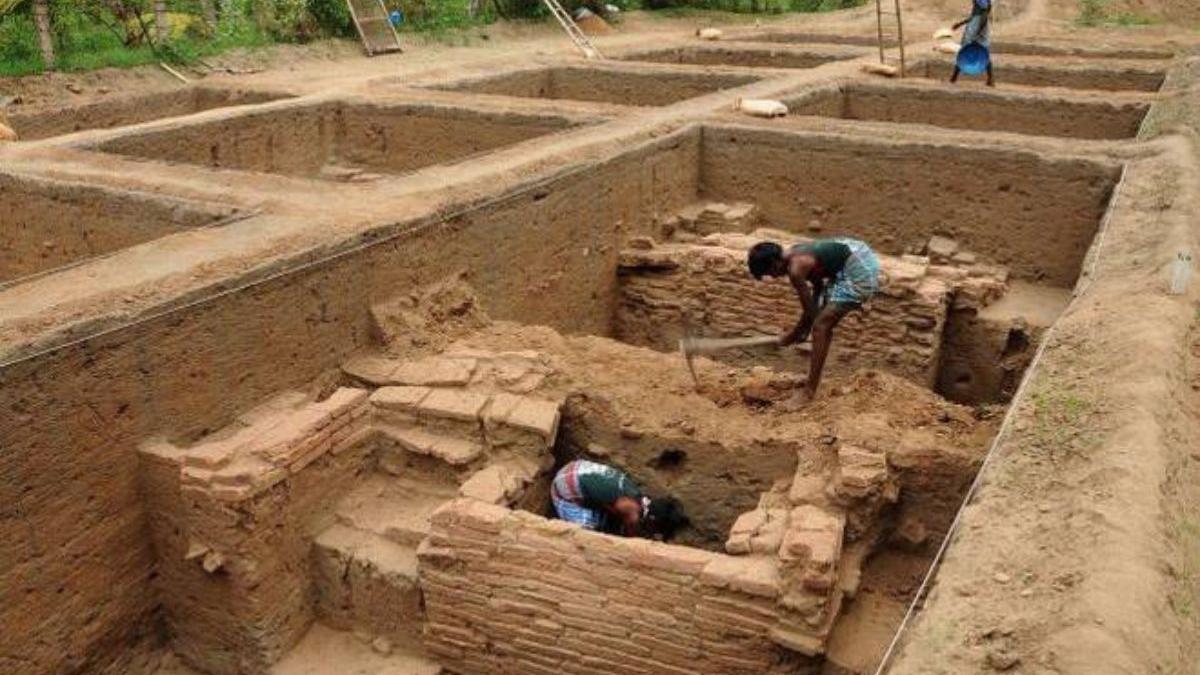
A recent case highlighting these concerns involves archaeologist K. Amarnath Ramakrishna and the Keeladi excavation in Tamil Nadu. Beginning in 2014 under Ramakrishna’s leadership, the Keeladi project initially revealed groundbreaking findings: evidence of a sophisticated, literate urban society predating current understanding of the Indus Valley Civilization, potentially bridging crucial historical gaps between the Iron Age and Early Historic Period.
The project took an unexpected turn in 2017 when Ramakrishna was suddenly transferred to Assam. According to scholars Swarati Sabhapandit and C.P. Rajendran, this transfer was widely interpreted as an attempt to undermine the significance of a South Indian archaeological site that challenged the historical primacy traditionally attributed to North India.
Following Ramakrishna’s transfer, the ASI made the controversial claim that Keeladi held no significant findings and halted the excavation’s third phase. This decision prompted the Madras High Court to intervene, ultimately transferring oversight of the site to the Tamil Nadu State Department of Archaeology. The state department has since uncovered thousands of additional artifacts, further validating the site’s historical importance and casting doubt on the ASI’s earlier dismissal.
Even after Ramakrishna returned to Tamil Nadu in 2021 and submitted his report on the initial excavation phases, the ASI requested revisions—a move critics argue was designed to minimize the significance of the findings. “This episode underscores the politics in archaeological practice and reflects a credibility crisis facing the ASI,” Sabhapandit and Rajendran noted in their analysis.
While the Union government maintains that new historical narratives require broader validation beyond a single set of findings—a reasonable scientific principle—the ASI’s actions reveal troubling inconsistencies. Similar patterns of neglect emerged with the Adichanallur and Sivagalai sites in Tamil Nadu, where years passed before the ASI published findings on Iron Age artifacts, and only after court intervention.
The contrast becomes even more striking when examining the ASI’s approach to excavations in Rajasthan. There, the discovery of an ancient paleochannel was quickly linked to the mythical Saraswati River mentioned in the Rig Veda, with reports even claiming connections to the “Mahabharata period.” This apparent embrace of mytho-historical narratives aligns with certain political agendas but contradicts principles of scientific scholarship.
The ASI’s selective application of scientific rigor represents what experts describe as a “trap of methodological nationalism,” prioritizing state-sanctioned historical narratives over objective research.
Ironically, several scholars have presented compelling evidence for southern origins of Indian civilization. Clarence Maloney’s “The Beginnings of Civilization in South India” challenges the northwest-centric narrative, suggesting early urban centers with advanced social structures emerged independently in coastal Tamil Nadu. Similarly, R. Balakrishnan’s 2019 book “Journey of a Civilization: Indus to Vaigai” proposes a Dravidian foundation for the Indus Valley Civilization, drawing on linguistic, archaeological, and literary evidence to suggest connections between Indus people and ancient Tamil traditions.
The Keeladi findings appear to support these alternative historical frameworks, raising questions about why the ASI seems reluctant to engage with evidence that could expand our understanding of India’s complex past.
The problems facing the ASI extend beyond individual controversies. The institution’s closed internal review system and reluctance to publish findings in academic journals hinder transparency and accountability. Unlike archaeological institutions in countries like Germany, France, and Japan that regularly submit their research to international scrutiny, the ASI has adopted what critics call a retrograde approach to sharing discoveries.
These structural issues aren’t new. For decades, scholars have highlighted concerns including arbitrary transfers, inadequate infrastructure, and outdated methodologies that impede comprehensive historical interpretation. The controversy surrounding the Ayodhya excavation project two decades ago similarly raised questions about scientific integrity in politically sensitive contexts.
To restore its legitimacy, the ASI requires comprehensive reforms, including greater financial autonomy and commitment to rigorous scientific frameworks that embrace India’s pluralistic historical past rather than enforcing politically expedient narratives. The institution would better serve India’s international standing through globally respected archaeological work rather than findings seemingly tailored to political considerations.
Fact Checker
Verify the accuracy of this article using The Disinformation Commission analysis and real-time sources.

11 Comments
This situation highlights the fine line that national archaeological institutions must walk between scientific rigor and political sensitivities. I hope the ASI can find a way to preserve India’s heritage while maintaining its credibility as an impartial, fact-based institution.
This is a complex issue that speaks to the delicate balance between national identity, historical narratives, and scientific inquiry. I hope the ASI can navigate these waters with the utmost professionalism and objectivity, regardless of the political sensitivities involved.
The Keeladi excavation findings, if confirmed, could significantly alter our understanding of early Indian civilizations. However, the reported interference in the project raises serious concerns about the ASI’s ability to conduct impartial research. Maintaining the institution’s credibility should be the top priority.
The Keeladi excavation findings sound fascinating. If the evidence points to a sophisticated urban society predating the Indus Valley Civilization, that could be a major historical discovery. I hope the ASI is able to continue this important work without undue external influence.
Agreed. Archaeological research should be driven by facts, not political agendas. Transferring the lead archaeologist raises red flags and calls the objectivity of the process into question.
This is a concerning situation. The Archaeological Survey of India plays a crucial role in preserving India’s rich history. Any perception of political interference in their work could seriously undermine public trust. It’s important that the integrity of archaeological practices is maintained, regardless of the findings.
The apparent conflict between the Keeladi findings and the ‘current understanding of the Indus Valley Civilization’ is intriguing. Archaeology often challenges existing historical timelines and narratives. I hope the ASI is able to thoroughly investigate this case and publish their findings without external interference.
Yes, archaeological discoveries can upend long-held beliefs about the past. It’s important that the ASI is allowed to follow the evidence wherever it leads, without political pressure to conform to preferred historical narratives.
The transfer of the lead archaeologist is certainly concerning and raises questions about the independence of the ASI. Preserving the integrity of archaeological research should be the top priority, even when the findings challenge established historical narratives.
Agreed. The ASI must be able to conduct its work free from political influence or interference. Transparent and rigorous processes are essential for the institution to maintain public trust.
This is a complex issue that touches on sensitive topics of national identity and historical narratives. While the ASI must maintain scientific rigor, it’s understandable that excavations with potentially significant implications would attract scrutiny. Transparent and impartial processes are crucial to preserve the institution’s credibility.