


Listen to the article
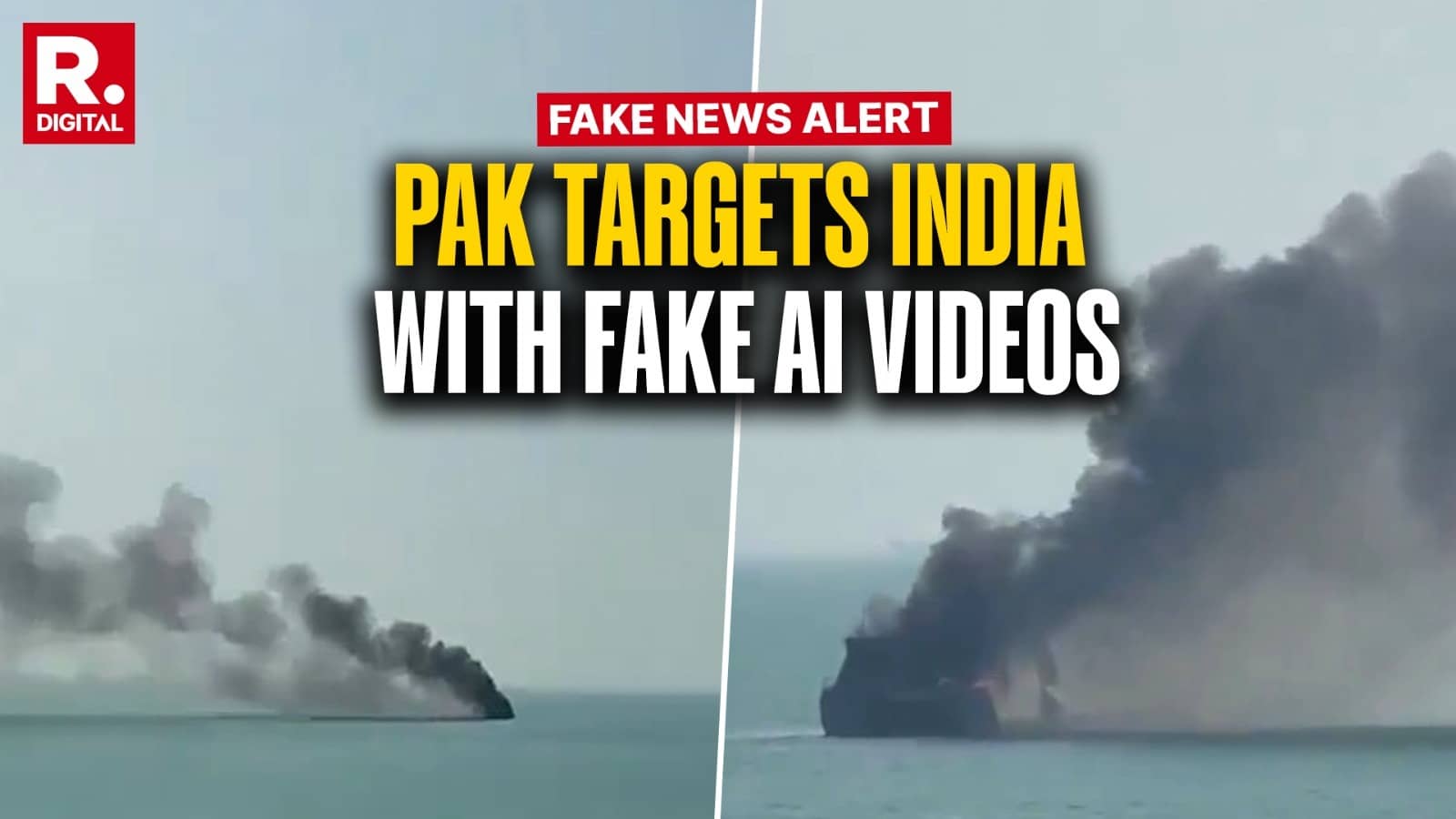
India has exposed what officials describe as a sophisticated disinformation campaign linked to Pakistan’s Inter-Services Public Relations (ISPR), after Pakistani social media accounts circulated an AI-generated video falsely claiming that India helped Israel locate an Iranian warship.
The fabricated video, which spread rapidly across social media platforms, alleged that India had shared the location of the Iranian naval vessel IRIS Dena with Israel, supposedly enabling an attack on the ship. India’s Press Information Bureau Fact Check unit promptly intervened, identifying the video as a digitally manipulated deepfake designed to mislead viewers and inflame regional tensions.
“Beware! This is an AI-generated deepfake video shared to mislead the public,” the fact-checking unit stated on social platform X, emphasizing that statements attributed to the Indian Army Chief were fabricated and never actually made.
Analysis of the video revealed it had been created by manipulating footage from Chief of Army Staff General Upendra Dwivedi’s speech at the Raisina Dialogue. The original footage was altered using artificial intelligence to generate false audio that constructed a misleading narrative about India’s alleged involvement in providing intelligence to Israel.
Independent fact-checkers identified several technical indicators of manipulation, including mismatched lip movements, unnatural phrasing, and digitally generated voice overlays. In his original address, General Dwivedi made no reference whatsoever to the Iranian warship or to any intelligence-sharing arrangements with Israel.
The timing of this disinformation effort appears calculated, emerging amid escalating conflicts involving Iran, Israel, and the United States, with tensions extending beyond the Middle East into the Indian Ocean region. The IRIS Dena had recently participated in a multinational naval exercise hosted by the Indian Navy in Visakhapatnam before departing for Iran. Subsequent reports indicated the warship was struck in international waters near Sri Lanka as regional conflicts intensified.
Pakistani social media accounts leveraged the manipulated video to suggest that India had betrayed Iran by providing critical intelligence to Israel about the ship’s movements. Indian authorities have categorically dismissed these allegations as “false and baseless,” viewing them as part of a coordinated effort to damage India’s diplomatic standing.
Security analysts note this incident represents a concerning evolution in information warfare, with hostile actors increasingly using artificial intelligence to create convincing fake content that can potentially disrupt international relations and inflame regional tensions. The sophisticated nature of the deepfake highlights the growing challenge governments face in countering technology-enabled disinformation campaigns.
Indian officials have warned that the circulation of AI-manipulated content targeting official speeches reflects a deliberate strategy by malicious actors to distort facts and manipulate public perception. The government pointed to recently implemented information technology regulations that require clear labeling of AI-generated content and mandate digital platforms to prevent the spread of manipulated media.
This incident occurs against the backdrop of longstanding tensions between India and Pakistan, with both nations frequently accusing each other of information warfare and propaganda campaigns. Security experts suggest the use of AI-generated content represents a significant escalation in these tactics, potentially making disinformation more convincing and harder to detect.
The Indian government has urged both the public and media organizations to exercise caution when encountering viral content online, recommending verification through credible and official sources before sharing potentially misleading information. Officials stressed that the increasing sophistication of AI-generated content makes critical media literacy and fact-checking increasingly important safeguards against manipulation.
As artificial intelligence technologies become more advanced and accessible, security analysts predict similar disinformation campaigns may become more common in geopolitically sensitive regions, presenting new challenges for governments, media organizations, and technology platforms working to maintain information integrity.
Fact Checker
Verify the accuracy of this article using The Disinformation Commission analysis and real-time sources.

10 Comments
This serves as a reminder that we must be critical consumers of online content, especially when it comes to sensitive geopolitical issues. Verifying information from credible sources is crucial.
Well said. Maintaining a healthy skepticism and cross-checking facts is the best defense against the spread of disinformation.
It’s concerning to see how AI-generated deepfakes can be used to create false narratives and inflame regional tensions. Vigilance and fact-checking will be essential going forward.
Agreed. As these technologies become more advanced, the need for robust media literacy and digital forensics will only increase.
Kudos to India’s Press Information Bureau for promptly identifying and debunking this fabricated video. Proactive fact-checking efforts are crucial to combat the spread of misinformation.
Absolutely. Rapid response and clear communication are key to neutralizing the impact of such deceptive content.
This highlights the challenges of navigating geopolitical tensions in the digital age. Governments must stay vigilant against malicious actors trying to manipulate information for political gain.
Indeed. Fact-checking and transparency are essential to counter disinformation campaigns and maintain an informed public discourse.
Interesting to see India push back against these unfounded claims. Disinformation campaigns can be quite sophisticated, using AI and other tools to create misleading content. It’s important for governments to quickly identify and debunk such fabrications.
Agreed. Exposing these deepfakes is crucial to maintaining public trust and preventing the spread of false narratives.