


Listen to the article
India has firmly rejected what it describes as “misleading propaganda” in certain Bangladesh media outlets regarding a small protest that took place outside the Bangladesh High Commission in New Delhi last week. The incident has gained attention amid growing concerns over minority rights in Bangladesh.
The Ministry of External Affairs (MEA) spokesperson Randhir Jaiswal clarified the situation in response to media queries, stating that approximately 20-25 young protesters had briefly gathered outside the High Commission on December 20. The demonstration was organized to protest the killing of Dipu Chandra Das in Bangladesh’s Mymensingh district and to call for enhanced protection of minority communities in the neighboring country.
“The police stationed at the spot dispersed the group after a few minutes. Visual evidence of these events is available publicly for all to see,” Jaiswal explained, emphasizing that at no point was there an attempt by the protesters to breach the perimeter or create any security concerns for the diplomatic mission.
The MEA spokesperson was categorical in asserting that India remains committed to ensuring the safety and security of all foreign diplomatic missions and personnel on Indian soil, in accordance with its obligations under the Vienna Convention on Diplomatic Relations.
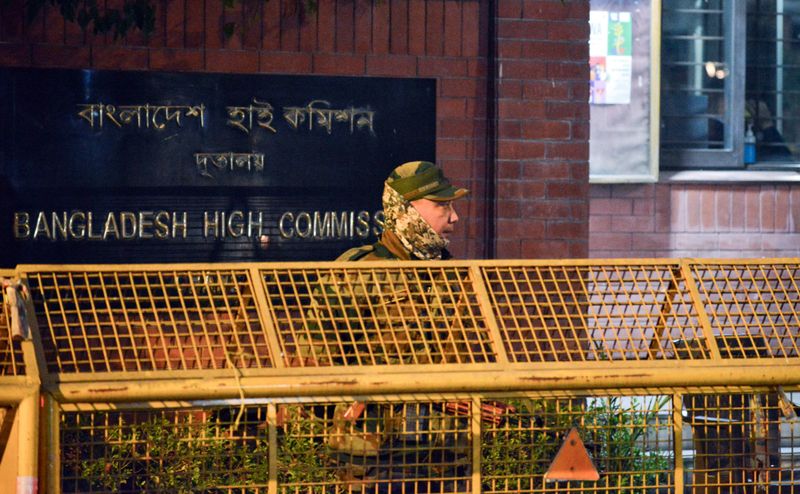
Meanwhile, Delhi Police have increased security measures around the Bangladesh High Commission as a precautionary step. Police sources confirmed to The Tribune that additional personnel have been deployed to prevent any potential incidents amid the ongoing political and social unrest in Bangladesh.
The diplomatic exchange comes at a sensitive time in India-Bangladesh relations. Bangladesh has been experiencing political turbulence since the ouster of former Prime Minister Sheikh Hasina in August, with subsequent reports of violence against minority communities, particularly Hindus, raising alarm in India and among international human rights organizations.
The incident highlights India’s long-standing concerns about the treatment of Hindu minorities in Bangladesh, a issue that has historically influenced bilateral relations between the two South Asian neighbors. India shares a 4,096-kilometer border with Bangladesh and maintains significant economic and cultural ties with the country.
Minority protection in Bangladesh has been a persistent concern for New Delhi, particularly as India hosts millions of migrants who have fled persecution in Bangladesh over several decades. Any violence against minorities in Bangladesh typically prompts reactions from civil society groups and political organizations in India, especially in neighboring states like West Bengal, Assam, and Tripura.
This latest diplomatic clarification appears aimed at preventing any misinterpretation of the protest that might further complicate bilateral relations at an already challenging time. India has been working to establish working relations with Bangladesh’s interim government led by Muhammad Yunus, after years of close ties with the Hasina administration.
The incident also underscores the delicate balance India must maintain between expressing legitimate concerns about minority rights in Bangladesh while respecting diplomatic protocols and avoiding actions that could be perceived as interference in Bangladesh’s internal affairs.
As Bangladesh continues to navigate its political transition, the security and rights of minority communities remain a focal point of international attention and a significant factor in the country’s relationship with India, its largest neighbor and a key regional partner.
Fact Checker
Verify the accuracy of this article using The Disinformation Commission analysis and real-time sources.

9 Comments
While the protest was brief, the underlying issues around minority rights in Bangladesh are clearly still a sensitive topic. India’s transparent response is appropriate, but long-term progress will require sustained efforts by all stakeholders.
Agreed. Addressing complex social and political challenges like this requires patience, nuance and a willingness to find common ground. Constructive dialogue is the best path forward.
This situation highlights the ongoing concerns over minority rights in the region. It’s encouraging to see India take a measured approach and clarify the facts. Dialogue between the countries will be key to finding constructive resolutions.
You make a good point. Maintaining open communication channels is vital, even when there are disagreements, to prevent further escalation and find mutually acceptable solutions.
The Indian government’s response seems reasonable – it’s good they’ve provided details on the brief, peaceful protest. Maintaining diplomatic security and minority protections are complex challenges that require nuanced solutions.
Absolutely, these issues need to be addressed thoughtfully by all parties involved. Hopefully this incident doesn’t escalate tensions between the nations.
Interesting development. It’s important to get the facts straight on this protest outside the Bangladesh High Commission. Hopefully both sides can work to address minority rights concerns constructively.
Agree, clear communication between India and Bangladesh is crucial to resolve any misunderstandings or security issues around diplomatic missions.
It’s good to see the Indian government provide clear details on this incident. Maintaining diplomatic security is crucial, but the broader concerns over minority protections in the region warrant serious attention from all parties involved.