


Listen to the article
India delivered a scathing rebuke to Pakistan and the Organisation of Islamic Cooperation (OIC) at the UN Human Rights Council in Geneva, dismissing claims about the situation in Jammu and Kashmir as propaganda detached from reality.
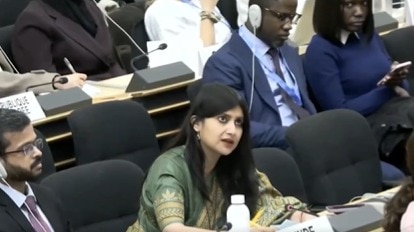
During the high-level segment of the council’s 55th session, India’s First Secretary Anupama Singh exercised New Delhi’s right of reply after Pakistan and the OIC raised concerns about Kashmir, an issue that has long been a flashpoint between the two nuclear-armed neighbors.
“India is compelled to exercise its right of reply. We categorically reject these allegations,” Singh declared, accusing the OIC of “parroting Pakistan’s propaganda” and allowing itself to be reduced to “an echo chamber for that country’s political compulsions.”
The diplomatic exchange highlights the continuing tensions between India and Pakistan over Kashmir, a territory claimed by both countries and divided by a Line of Control. Relations have remained strained since India revoked the special autonomous status of Jammu and Kashmir in August 2019, reorganizing the region into two union territories directly governed by New Delhi.
Singh characterized Pakistan’s narrative as one that “reeks of envy” and firmly stated that the only unresolved issue regarding Kashmir was Pakistan’s occupation of Indian territory. “We call upon Pakistan to vacate the areas under its forcible occupation,” she asserted, referring to Pakistan-administered Kashmir, which India considers its own territory under illegal occupation.
In her rebuttal, Singh emphasized India’s development initiatives in the region, citing recent electoral participation and infrastructure projects as evidence of normalizing conditions. “The record voter turnout in general and assembly elections in Jammu and Kashmir testifies that its people have rejected the ideology of terrorism and violence propagated by Pakistan,” she stated.
Perhaps the most pointed moment came when Singh referenced the Chenab Rail Bridge, completed in 2023 as the world’s highest railway bridge. “If the Chenab Rail Bridge is considered fake, then Pakistan must be living in ‘La La Land,'” she remarked, using the Hollywood musical’s title as a metaphor for Pakistan’s alleged disconnect from reality.
The bridge, standing at a height of 359 meters above the riverbed, represents one of several major infrastructure projects India has undertaken in Jammu and Kashmir since the constitutional changes of 2019. The Indian government has consistently presented such developments as evidence of its commitment to the region’s progress.
Singh further suggested that Pakistan’s skepticism might stem from the scale of development spending in Jammu and Kashmir. “Perhaps it finds it unbelievable that the developmental budget of Jammu and Kashmir is more than double the recent bailout package it sought from the IMF,” she said, drawing attention to Pakistan’s ongoing economic challenges and its reliance on international financial assistance.
The exchange at the UN forum reflects the broader geopolitical contest between the two South Asian rivals, with each country seeking to shape international narratives about Kashmir. For India, emphasizing development and democratic participation serves to legitimize its governance of the region, while Pakistan continues to internationalize what it views as a human rights issue.
The OIC, a 57-member international organization representing Muslim-majority countries, has historically supported Pakistan’s position on Kashmir, frequently issuing statements critical of India’s actions in the region. India has consistently rejected such interventions as unwarranted interference in its internal affairs.
As both countries continue to advance competing claims and narratives about Kashmir at international forums, the prospects for meaningful dialogue remain limited, with diplomatic exchanges often characterized by the kind of sharp rhetoric displayed at the Human Rights Council session.
Fact Checker
Verify the accuracy of this article using The Disinformation Commission analysis and real-time sources.

8 Comments
It’s disappointing to see the OIC seemingly aligning itself so closely with Pakistan’s position. As an international body, it should strive for impartiality and encourage both sides to find common ground. Rehashing accusations won’t resolve this long-standing conflict.
This is a complex, longstanding geopolitical dispute. I appreciate India’s attempt to rebut Pakistan’s claims, but it’s clear there are multiple perspectives and narratives at play. Constructive dialogue and seeking mutual understanding seem crucial here.
Absolutely. Resolving this issue requires nuance and good-faith engagement from all sides. Simplistic accusations won’t help, we need to understand the historical context and competing interests at stake.
This dispute has been going on for decades, with both sides entrenched in their positions. While India may have a point in rejecting Pakistan’s allegations, a more nuanced approach that addresses the underlying issues could be more productive. Simplistic rebuttals are unlikely to resolve the conflict.
The India-Pakistan relationship over Kashmir is deeply complex, with valid concerns on both sides. I hope the parties can move beyond rhetoric and focus on pragmatic steps to improve the situation for the people of the region. Sustainable peace requires empathy and compromise.
Well said. Constructive dialogue and a willingness to understand each other’s perspectives are essential. Resorting to accusations and grandstanding will only perpetuate the stalemate. A genuine search for solutions is what’s needed here.
Tensions between nuclear-armed neighbors over Kashmir are always concerning. I hope both India and Pakistan can find a peaceful resolution that respects the rights and concerns of the Kashmiri people. Continued escalation serves no one’s interests.
You make a good point. De-escalation and diplomacy are critical here. The risks of this dispute spiraling out of control are simply too high. A negotiated settlement that addresses the core issues is the best path forward.