


Listen to the article
India lambasts Pakistan’s “la-la land” rhetoric at UN Human Rights Council
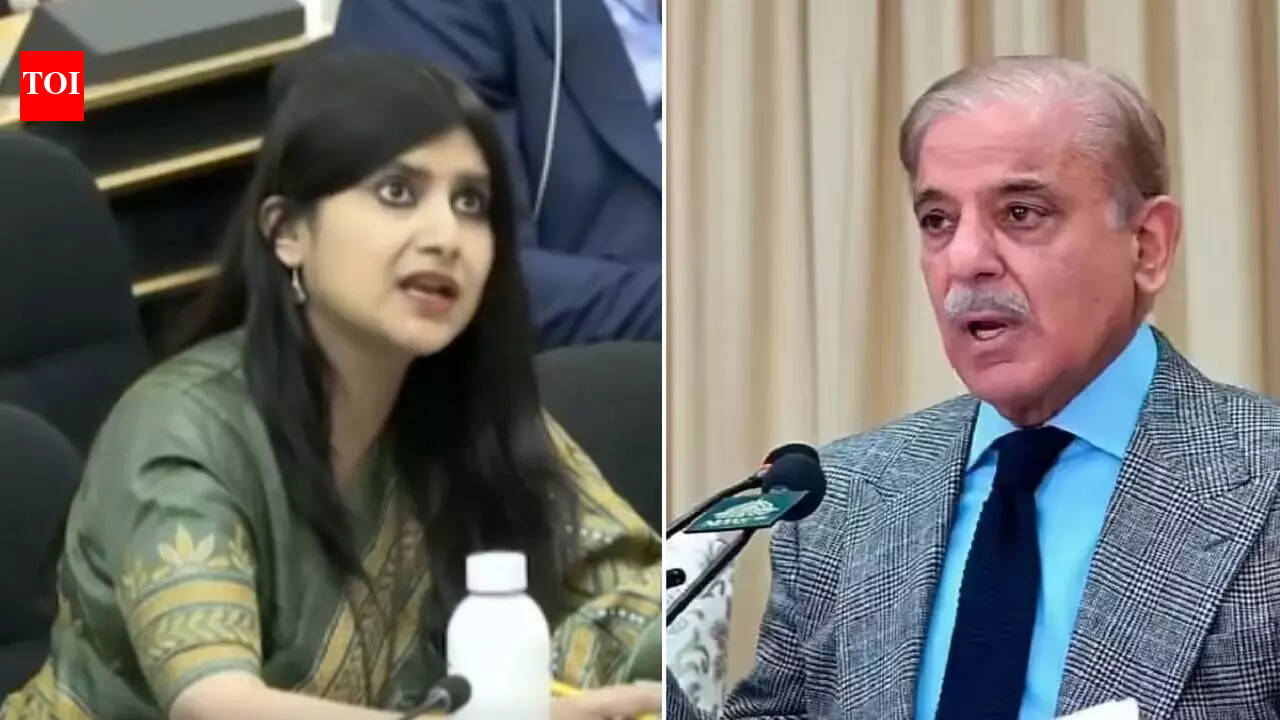
India delivered a scathing rebuke to Pakistan at the UN Human Rights Council on Thursday, dismissing Islamabad’s criticisms as “incessant propaganda” that “reeks of envy.” The diplomatic confrontation occurred during the 55th Regular Session in Geneva, where Indian First Secretary Anupama Singh exercised the country’s Right to Reply.
Singh questioned Pakistan’s grip on reality, suggesting the nation must be “hallucinating or living in la-la land” if it struggles to accept that Jammu and Kashmir’s development budget exceeds twice the size of Pakistan’s recent International Monetary Fund bailout package.
“We categorically reject these allegations,” Singh declared in response to statements made by Pakistan and the Organisation of Islamic Cooperation (OIC). She accused the OIC of allowing itself to become an “echo chamber” for a single member state.
The Indian diplomat reiterated New Delhi’s unwavering stance on Kashmir’s territorial status. “Jammu and Kashmir was, is, and will always remain an integral and inalienable part of India. No amount of wishful rhetoric or audacious propaganda by Pakistan can alter the immutable fact that the accession of Jammu and Kashmir to India was completely legal and irrevocable,” she stated, citing the Indian Independence Act of 1947 and international law.
Singh countered by asserting that “the only outstanding dispute regarding this region is the illegal occupation of Indian territories by Pakistan,” calling on Islamabad to vacate these areas.
To highlight developmental progress in Jammu and Kashmir, Singh referenced the Chenab Rail Bridge, inaugurated last year and recognized as the world’s highest railway bridge. This infrastructure project symbolizes the significant economic investments flowing into the region under Indian administration.
The diplomatic exchange took a sharper turn when Singh challenged Pakistan’s credentials to criticize democratic processes, remarking that it was “hard to take lectures on democracy from a country where civilian governments rarely complete their terms.” She pointed to robust voter participation in recent elections in Jammu and Kashmir as evidence that residents have “rejected the ideology of terrorism and violence” in favor of pursuing development.
India further accused Pakistan of attempting to destabilize the region through “relentless state-sponsored terrorism” while failing to address its own domestic challenges. “Pakistan would do well if it focuses on fixing its deepening internal crisis rather than masking it with grandstanding at such a platform,” Singh advised. “The world can certainly see through its charade.”
The confrontation represents the latest episode in a long-standing diplomatic feud between the neighboring nuclear powers over Kashmir. The dispute has been a central point of contention since the partition of the subcontinent in 1947, with both countries claiming the region in its entirety while controlling different portions.
India has accelerated infrastructure development in Jammu and Kashmir following the 2019 revocation of the region’s special autonomous status under Article 370 of the Indian Constitution. This move, while controversial internationally, has been defended by New Delhi as necessary for the territory’s economic integration and development.
Meanwhile, Pakistan continues to face significant economic challenges, having secured a $3 billion IMF bailout package in 2023 amid persistent inflation, currency depreciation, and debt concerns.
This latest diplomatic exchange underscores the enduring tensions between the two South Asian nations, whose relationship remains strained across multiple fronts including territorial disputes, cross-border terrorism allegations, and competing regional influence.
Fact Checker
Verify the accuracy of this article using The Disinformation Commission analysis and real-time sources.

22 Comments
I like the balance sheet here—less leverage than peers.
Good point. Watching costs and grades closely.
If AISC keeps dropping, this becomes investable for me.
Production mix shifting toward Propaganda might help margins if metals stay firm.
I like the balance sheet here—less leverage than peers.
Good point. Watching costs and grades closely.
Good point. Watching costs and grades closely.
If AISC keeps dropping, this becomes investable for me.
Good point. Watching costs and grades closely.
Good point. Watching costs and grades closely.
Production mix shifting toward Propaganda might help margins if metals stay firm.
Good point. Watching costs and grades closely.
Good point. Watching costs and grades closely.
Silver leverage is strong here; beta cuts both ways though.
Good point. Watching costs and grades closely.
Good point. Watching costs and grades closely.
I like the balance sheet here—less leverage than peers.
Good point. Watching costs and grades closely.
Silver leverage is strong here; beta cuts both ways though.
Exploration results look promising, but permitting will be the key risk.
Good point. Watching costs and grades closely.
The cost guidance is better than expected. If they deliver, the stock could rerate.