


Listen to the article
India Exposes Pakistani Propaganda Using Deepfake Video of Army Chief
Indian authorities have uncovered another instance of disinformation targeting national security, as Pakistan-based propaganda accounts were found circulating a digitally manipulated video of Army Chief General Upendra Dwivedi. The Press Information Bureau’s (PIB) Fact Check unit confirmed that deepfake technology was used to alter General Dwivedi’s speech in an apparent attempt to undermine India’s military standing.
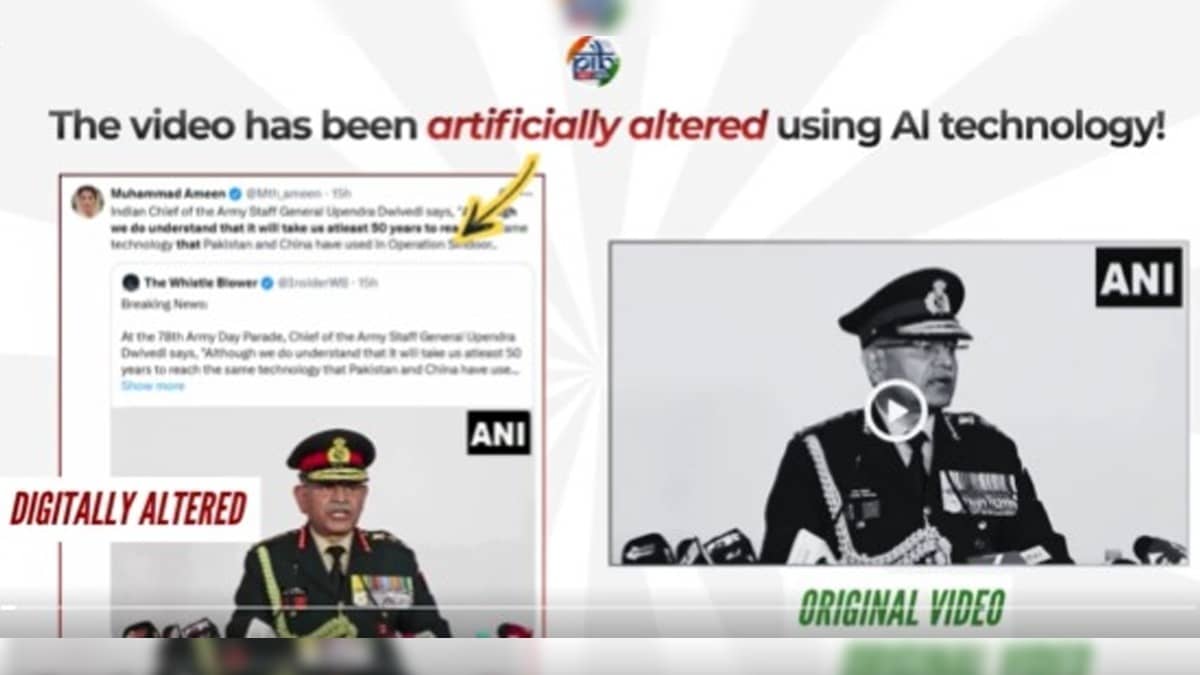
The manipulated video falsely portrayed General Dwivedi claiming that India would need “at least 50 years to reach the same technology that Pakistan and China have used in Operation Sindoor.” PIB Fact Check promptly debunked this fabrication, stating categorically: “General Upendra Dwivedi has made NO such statement.”
In their official statement, the PIB included screenshots of social media accounts distributing the fake video and provided a link to General Dwivedi’s original, unaltered speech. The fact-checking unit emphasized the artificial intelligence technology behind the deception, warning citizens to remain vigilant against such sophisticated forms of misinformation.
This incident marks the latest chapter in an ongoing information warfare campaign that security experts say has intensified with the proliferation of AI-powered tools capable of creating convincing fakes. Deep-learning algorithms can now manipulate video and audio to make public figures appear to say things they never did, presenting a growing national security challenge.
“The use of deepfakes to undermine military leadership represents a significant escalation in information warfare tactics,” said Dr. Rajesh Kumar, a cybersecurity analyst specializing in defense communications. “What makes this particularly concerning is the increasing sophistication of these falsified videos, which can be difficult for the average viewer to identify without expert analysis.”
The timing of this disinformation effort coincides with increased tensions along the India-Pakistan border, where ceasefire violations have been reported in recent months. Military analysts suggest this propaganda attempt may be aimed at creating public doubt about India’s military readiness and technological capabilities.
The PIB Fact Check unit, established specifically to combat misinformation targeting government institutions, has been increasingly active in countering such narratives. The bureau has urged citizens to report suspicious content through dedicated channels, providing both a phone number (+91 8799711259) and email address (factcheck@pib.gov.in) for this purpose.
“This represents a pattern of behavior we’ve documented extensively,” said Manisha Patel, a researcher at the Institute for Strategic Information Studies in New Delhi. “Foreign propaganda networks consistently exploit social media platforms to seed divisive narratives about India’s military preparedness, often timed to coincide with diplomatic or military developments.”
Defense ministry sources, speaking on condition of anonymity, indicated that such disinformation campaigns are carefully monitored and considered part of a broader hybrid warfare strategy targeting India. The sources noted that the reference to “Operation Sindoor” in the fake video appears designed to create a fictional military exercise that could generate concern among Indian citizens about supposed technological advantages held by neighboring countries.
Social media platforms have struggled to contain the spread of such deepfakes, despite implementing policies against manipulated media. The rapid advancement of AI technology has made detection increasingly challenging, though partnerships between government agencies and tech companies have improved response times.
The Indian government has been pushing for stronger regulatory frameworks to address deepfakes and other forms of synthetic media, particularly when they threaten national security or target public officials. Proposed legislation would create enhanced penalties for creating and distributing manipulated media with intent to harm national interests.
As this incident demonstrates, the battleground of international relations now extends well beyond physical borders into the digital information space, where perception can be as strategically valuable as reality.
Fact Checker
Verify the accuracy of this article using The Disinformation Commission analysis and real-time sources.

17 Comments
Deepfake technology is a double-edged sword – it can be a powerful tool, but also a dangerous weapon in the wrong hands. I commend the Indian government for their swift action to expose this propaganda effort.
Absolutely. Staying ahead of the curve when it comes to these sophisticated AI-powered deception tactics is critical for national security and public trust. Kudos to the authorities for their vigilance.
Troubling to see these kinds of manipulated videos being used for propaganda. It’s important for the public to be aware of how advanced deepfake technology has become and to verify information from official sources.
Absolutely. Disinformation campaigns that leverage AI-generated fakes pose a serious threat to public discourse and national security. Kudos to the Indian authorities for quickly debunking this fabrication.
Disturbing to see how advanced deepfake technology has become and how it’s being weaponized for propaganda purposes. The Indian government’s swift response to debunk this fabrication is commendable.
Agreed. Maintaining public trust in institutions and their leadership is crucial, especially when it comes to sensitive national security matters. This incident underscores the importance of robust fact-checking and digital literacy efforts.
This kind of blatant misinformation targeting military leaders is deeply concerning. I’m glad the Indian government was able to swiftly identify and refute the doctored video. Maintaining trust in institutions is critical.
Deepfake technology is becoming increasingly sophisticated and concerning, especially when used for malicious propaganda. It’s good to see the Indian government taking steps to expose and counter these tactics.
Agreed. Fact-checking and public awareness are key to combating the spread of disinformation. We must remain vigilant against these evolving threats to national security and democratic discourse.
This incident serves as a stark reminder of the need for increased digital literacy and fact-checking vigilance in the age of deepfakes. I’m glad the Indian government took proactive steps to counter this propaganda attempt.
This incident serves as a stark reminder of the need for increased digital literacy and fact-checking vigilance in the age of deepfakes. I’m glad the Indian government took proactive steps to counter this propaganda attempt.
Disturbing to see how advanced deepfake technology has become and how it’s being weaponized for propaganda purposes. The Indian government’s swift response to debunk this fabrication is commendable.
Agreed. Maintaining public trust in institutions and their leadership is crucial, especially when it comes to sensitive national security matters. This incident underscores the importance of robust fact-checking and digital literacy efforts.
Kudos to the Indian authorities for quickly exposing this manipulated video and providing the public with the facts. Combating the spread of disinformation is an ongoing challenge, but maintaining trust in institutions is critical.
Absolutely. Staying ahead of the curve when it comes to deepfake technology and its malicious applications is a top priority for governments and citizens alike. Fact-checking and public awareness campaigns are essential in this fight.
This is a concerning development, but I’m glad the Indian authorities were able to quickly identify and debunk the manipulated video. Maintaining transparency and trust in public institutions is crucial.
While the use of deepfakes for propaganda is certainly concerning, I’m encouraged to see the Indian government taking a proactive approach to identifying and refuting these kinds of fabrications. Transparency and accountability are key.