


Listen to the article
In the midst of nationwide immigration enforcement efforts, a striking contrast has emerged between Texas and Minnesota, revealing deeper divides in how Americans consume information about controversial policies.
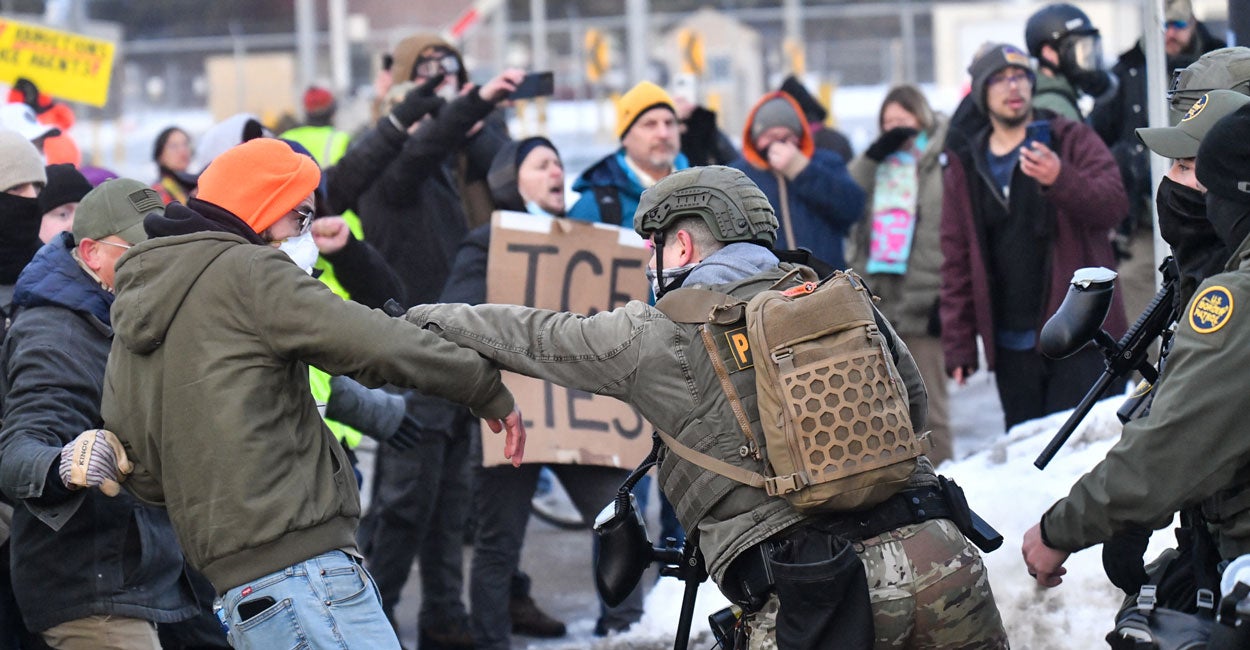
Texas, responsible for approximately 25% of all Immigration and Customs Enforcement (ICE) arrests since the intensification of deportation operations, has processed thousands of removals without major incidents. Meanwhile, Minnesota, accounting for less than 1% of ICE enforcement activity, has seen violent protests erupt in Minneapolis, with demonstrators clashing with authorities.
This stark difference isn’t necessarily rooted in immigration policy itself but rather reflects the fractured information landscape shaping public opinion across the United States, according to recent polling data from Cygnal.
The survey reveals a nation almost perfectly divided on the current administration’s deportation efforts. Fifty percent of respondents believe the policies have gone too far, while 48% think they are appropriate or haven’t gone far enough—a statistical tie indicating no clear consensus among Americans.
What’s particularly revealing is how these viewpoints correlate with media consumption patterns. Voters who believe deportation efforts are excessive disproportionately rely on traditional broadcast networks (NBC, ABC, CBS) and print newspapers for information. Specifically, 51% of this group cites national broadcast television as their primary news source, compared to just 14% of those who feel enforcement hasn’t been stringent enough.
Conversely, respondents who support more aggressive immigration enforcement are more likely to obtain news from cable networks and social media platforms, particularly X (formerly Twitter), where they over-index significantly compared to the general population.
“These groups are consuming different facts, different story selections, different framings of what matters,” the analysis notes, highlighting how media consumption habits have created parallel information ecosystems with limited overlap.
The extensive media coverage of Minnesota’s immigration enforcement conflicts, despite representing a fraction of nationwide operations, exemplifies this divide. Dramatic confrontations in Minneapolis receive wall-to-wall coverage with helicopter footage and live reporting, while Texas conducts enforcement at a much larger scale with minimal national attention.
This editorial focus isn’t merely reporting events but potentially influencing them. The continuous coverage of resistance to immigration enforcement sends implicit signals to activists in other locations about how to gain attention and become part of the national narrative, potentially incentivizing similar confrontations.
The phenomenon represents a fundamental shift in American discourse. Throughout much of the nation’s history, citizens could disagree about policy solutions while generally agreeing on basic facts, largely because they consumed information from the same limited set of sources. Today, that shared factual foundation has eroded.
Focus group research reveals this reality gap consistently, with voters from different political orientations citing “facts” that are entirely unfamiliar to those on the opposite side—not due to deliberate misinformation but because their respective media ecosystems never surfaced that information.
Experts describe this as “tribal epistemology,” where group identity determines not just values but also what counts as credible evidence or significant events before reaching individual judgment.
The consequences extend beyond immigration policy. When half the country perceives a humanitarian crisis while the other half sees overdue enforcement of existing laws—with both sides citing evidence for their positions—it indicates a broader breakdown in shared understanding.
As polarization deepens and media ecosystems become more isolated, the challenge for citizens becomes navigating these information bubbles by actively seeking diverse sources and perspectives that might challenge existing beliefs—a necessary step for maintaining the common factual foundation democracy requires.
Fact Checker
Verify the accuracy of this article using The Disinformation Commission analysis and real-time sources.

14 Comments
The finding that the public is nearly evenly split on immigration enforcement is fascinating. It highlights the power of media narratives to sway views on such a divisive topic.
Absolutely. With such a polarized landscape, the media has a responsibility to provide objective, fact-based reporting to help citizens form their own informed opinions.
It’s concerning if media coverage is perceived as biased on such a contentious issue. Objective journalism is crucial for citizens to make informed decisions about immigration policy.
I agree. The media has a responsibility to provide fair, fact-based reporting to enable citizens to form their own views, not push a particular agenda.
This is a complex issue with valid arguments on multiple sides. The media must be extremely careful not to let their own biases seep into the coverage and further inflame the divisions.
Well said. Maintaining journalistic integrity and impartiality is critical when reporting on sensitive topics that elicit strong emotions and divergent views from the public.
This highlights the challenges in covering sensitive topics like immigration where people have strongly held beliefs. The media must tread carefully to inform without inflaming tensions.
Well said. Balanced, nuanced reporting is key to helping the public understand the nuances of these issues rather than falling into partisan divides.
Interesting how media coverage can influence perceptions around controversial policies like immigration enforcement. It’s important to get objective, fact-based reporting to help the public form balanced views on these complex issues.
Agreed. The media plays a crucial role in shaping public opinion, so it’s critical they strive for impartiality and avoid biased narratives.
The contrast in response between Texas and Minnesota is quite striking. It underscores how media framing can shape public perception of the same policies. Balanced coverage is essential.
Good point. The media’s role in informing and influencing public opinion on contentious issues like this cannot be overstated. Impartiality is crucial.
This is a complex topic where people’s views are heavily influenced by the information sources they rely on. Impartial, in-depth reporting is needed to cut through the partisan noise.
Absolutely. With such polarization, the media must strive to present all sides objectively so the public can better understand the nuances of immigration enforcement.