


Listen to the article
Immigration Enforcement Tensions Escalate Between Illinois Governor and DHS Officials
A growing political dispute between Illinois Governor JB Pritzker and Department of Homeland Security officials has intensified in recent days, highlighting the increasingly polarized national debate over immigration enforcement.
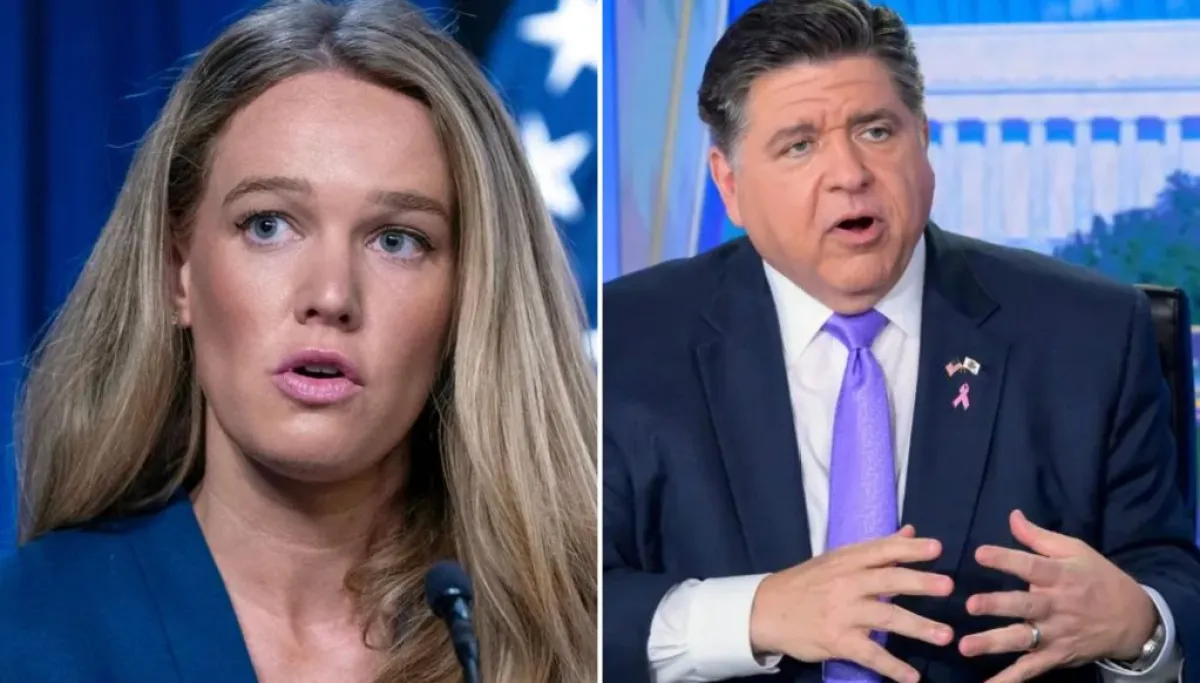
Governor Pritzker called for the resignation or impeachment of DHS Secretary Kristi Noem this week, while also demanding the removal of DHS Assistant Secretary Tricia McLaughlin, whom he labeled a “pathological liar.” The governor’s comments came during an appearance on CNN’s “State of the Union” where he criticized recent immigration enforcement actions.
“Now, we’re seeing it in Minneapolis, we’re seeing the shooting in Portland and elsewhere,” Pritzker said during the interview. “ICE and CBP are breaking their own protocols… literally shooting at people and killing them when, in some cases, they’re U.S. citizens, and they’re doing nothing wrong.”
The governor’s remarks referenced recent controversial incidents involving Immigration and Customs Enforcement (ICE) operations that have drawn national attention. These operations are part of the Biden administration’s efforts to address the significant increase in border crossings and subsequent migration to major urban centers across the country.
McLaughlin, in her role at DHS, has been actively defending the agency’s actions on social media, providing alternative perspectives to what she characterizes as incomplete or misleading media narratives about immigration enforcement operations.
The dispute underscores the complex challenges facing officials at all levels of government as they navigate immigration policy. Illinois, particularly Chicago, has received thousands of migrants in recent years, straining local resources and creating political tensions.
Pritzker has previously criticized federal immigration enforcement tactics, claiming on one occasion that agents were “raiding neighborhoods” and “picking up people who are brown and black and then checking their credentials.” Such characterizations have been firmly rejected by DHS officials.
Federal authorities point to operations like “Midway Blitz” in the Chicago area, which resulted in the arrest of over 1,000 individuals in the country illegally, including those charged with serious crimes. DHS maintains that enforcement actions target individuals based on immigration status and criminal history, not race or ethnicity.
The controversy has been further complicated by the spread of misinformation on social media. Pritzker cited a video purporting to show children being zip-tied by immigration agents, which was later revealed to be satirical content created by a father playing with his child.
Immigration policy experts note that this dispute reflects a broader national tension. Jessica Bolter, associate policy analyst at the Migration Policy Institute, explains: “Local and federal officials often have fundamentally different priorities when it comes to immigration enforcement. State governors prioritize community integration and social services, while federal agencies focus on enforcement of immigration laws.”
The political standoff comes amid record numbers of migrant encounters at the U.S.-Mexico border in recent years, with communities across the country experiencing the downstream effects of these migration patterns.
Law enforcement organizations have defended ICE officers, arguing they perform difficult work under increasing political scrutiny. The National Immigration and Customs Enforcement Council, representing thousands of ICE employees, has consistently maintained that its officers follow established protocols during enforcement actions.
As the dispute continues, communities across Illinois and nationwide remain caught in the middle of competing political narratives about immigration enforcement. The controversy highlights the challenging balance between enforcing immigration laws and addressing humanitarian concerns in a politically divided country.
The ultimate resolution may depend on whether federal and state officials can find common ground on immigration enforcement approaches that address both security and humanitarian considerations.
Fact Checker
Verify the accuracy of this article using The Disinformation Commission analysis and real-time sources.

9 Comments
The governor’s call for the resignation or impeachment of DHS officials seems like an escalation of the dispute. I wonder what the broader political implications of this conflict might be.
It’s concerning to see such strong rhetoric from the governor. I hope both sides can find a way to de-escalate the situation and have a more constructive discussion on immigration policy.
The governor’s comments highlight the deep political divisions around immigration policy in the US. I hope this dispute can be resolved through constructive dialogue rather than further escalation.
This is a complex issue with valid concerns on both sides. I’m curious to see if any independent investigations are launched to shed light on the alleged incidents of excessive force by immigration authorities.
Agreed, transparency and accountability are crucial when it comes to immigration enforcement. It would be helpful to have a more objective assessment of the situation.
Immigration enforcement is a complex and divisive issue. While I can understand the governor’s perspective, I think it’s important to get a balanced view of the facts before drawing conclusions.
Agreed. This appears to be another case of political posturing rather than a constructive dialogue. Hopefully cooler heads can prevail and address the underlying concerns.
This dispute between the Illinois governor and DHS officials seems to be getting increasingly heated. I’m curious to learn more about the specific incidents and policies that are fueling the tensions.
Yes, the governor’s comments about ICE and CBP actions seem quite concerning. I’d be interested to see if there is evidence to back up his claims of excessive force against US citizens.