


Listen to the article
In Hungary, Media Control Creates Uneven Playing Field Ahead of Elections
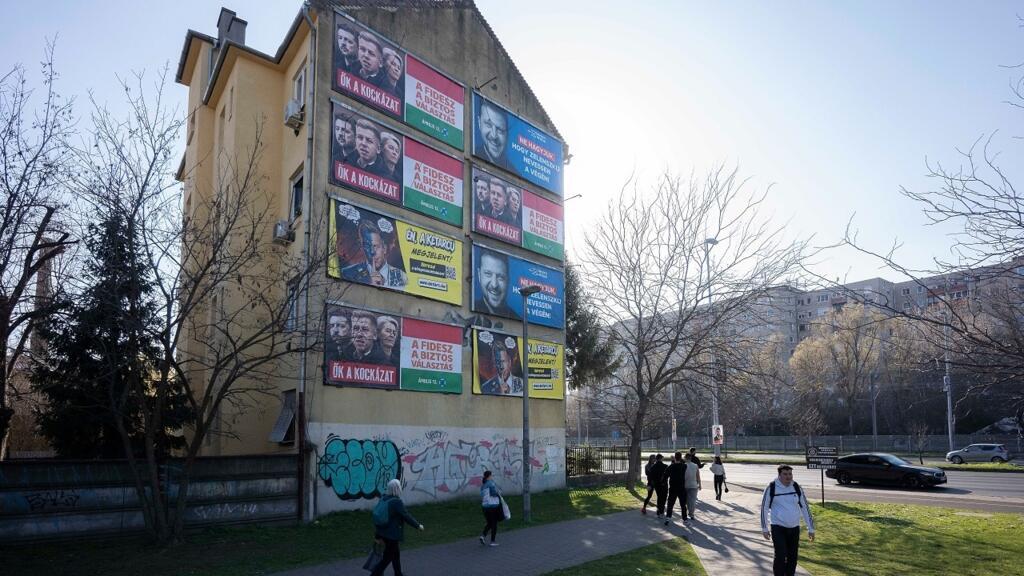
Media experts warn that despite Hungary appearing to meet formal election standards, years of state propaganda and media control have created a significantly distorted information landscape for voters.
According to Marius Dragomir, director of the Media and Journalism Research Centre at Spain’s University of Santiago de Compostela, Prime Minister Viktor Orbán’s Fidesz party has cultivated an extensive media empire over its 16 years in power that helps ensure electoral victory.
“There is no indication that the elections will not be fair,” Dragomir explained in an interview with RFI. “But if you look at the various tactics used by political parties – and especially Fidesz – they try to do anything to win the elections.”
Dragomir pointed to documented use of fake news and the strategic deployment of “enemy” narratives before elections as key tactics. “Fidesz assigns an enemy,” he noted. “Sometimes it is George Soros, who funded various organisations, including the Central European University.” The university was forced to relocate most of its operations from Budapest to Vienna after a 2017 law restricted its ability to function in Hungary.
“Sometimes it is Brussels and the EU. Today, Ukraine is the public enemy and the people who want to bring war to Hungary,” Dragomir added.
The stakes for Orbán’s government are exceptionally high, Dragomir emphasized. “If they lose the election, the whole media infrastructure is going to be dismantled. It’s not going to be an easy process. They are going to lose access to public resources, which they use to control all their institutions and to take over media companies.”
This media control system represents an unprecedented level of financial corruption within the European Union, according to Dragomir. His research indicates the Hungarian government has systematically used public resources – often ironically including EU funding – to finance projects that ultimately enable government-friendly oligarchs to acquire media outlets.
The mechanics of Hungary’s propaganda machine are startlingly direct. “The system is very well organized,” Dragomir explained. “There is a direct link between the prime minister’s press office and MTVA, the public media conglomerate that Fidesz reorganized in 2010 when they returned to power.”
According to Dragomir, government officials regularly dictate coverage to editors. “This office calls the editor-in-chief in the morning, and they tell them what stories to cover and how, sometimes even providing the title to be used,” he said. This content then cascades through the country’s media ecosystem, with numerous outlets republishing the same material.
The effect has been particularly pronounced in rural Hungary, where many citizens rely heavily on local newspapers that have been acquired by government-aligned interests. While Budapest and other major urban centers maintain stronger opposition voices and access to alternative information sources, the government’s narrative dominates the broader media landscape.
Despite this concerning media environment, Dragomir noted two emerging factors that could challenge Fidesz’s grip on power. “During these elections, something new is happening. There is the economic factor. People are starting to suffer economically in Hungary – and when that happens, the ideological and nationalistic narrative is losing ground.”
Additionally, generational differences are becoming more pronounced. “Younger people are moving away from the government narrative,” Dragomir observed.
Small independent outlets like Direct36 continue to offer critical reporting on the government, though their reach remains limited compared to state-aligned media. The persistence of these voices represents an important, if constrained, counterweight to the dominant pro-government narrative that has shaped Hungarian public discourse for over a decade.
As Hungary approaches its election, the question remains whether economic challenges and demographic shifts will be enough to overcome the significant advantages enjoyed by the ruling party through its extensive control of the country’s information ecosystem.
Fact Checker
Verify the accuracy of this article using The Disinformation Commission analysis and real-time sources.

16 Comments
This is a complex issue that highlights the delicate balance between media freedom and political influence. While formal election standards may be met, the strategic use of state-controlled media to push certain narratives is problematic and can undermine the democratic process. Voters deserve access to objective, balanced information to make informed choices.
I agree, the concentration of media ownership and control by a ruling party is a concerning trend that can distort the electoral playing field. Maintaining an independent press is vital for ensuring fair and transparent elections.
The concentration of media ownership and control by a ruling party is a concerning trend that can distort the electoral playing field. Voters should have the opportunity to access a range of viewpoints, not just a narrow, government-approved narrative. Upholding media freedom is essential for the health of democracy.
Well said. The strategic use of fake news and enemy narratives to sway public opinion is a troubling development. Maintaining an independent, fact-based media is crucial for ensuring the integrity of elections.
This is a complex issue that highlights the delicate balance between media freedom and political influence. While formal election standards may be met, the strategic use of state-controlled media to push certain narratives is problematic and can undermine the democratic process. Voters deserve access to objective, balanced information to make informed choices.
I agree, the concentration of media ownership and control by a ruling party is a concerning trend that can distort the electoral playing field. Maintaining an independent press is vital for ensuring fair and transparent elections.
Interesting insights on how political control over media can shape the electoral landscape. It’s concerning to see tactics like fake news and scapegoating used to gain an unfair advantage. Voters deserve access to objective, balanced information to make informed choices.
You’re right, a level playing field and free flow of information are crucial for democratic elections. This type of media manipulation is worrying and can undermine the integrity of the process.
Interesting insights on how political control over media can shape the electoral landscape. It’s concerning to see tactics like fake news and scapegoating used to gain an unfair advantage. Voters deserve access to objective, balanced information to make informed choices.
You’re right, a level playing field and free flow of information are crucial for democratic elections. This type of media manipulation is worrying and can undermine the integrity of the process.
This article highlights the delicate balance between media freedom and political influence. While formal election standards may be met, the strategic use of state-controlled media to push certain narratives is problematic. Maintaining an independent press is vital for ensuring fair and transparent elections.
I agree, the media landscape has a significant impact on the electoral process. Voters need access to diverse and reliable information sources to make informed decisions, not just state propaganda.
The article raises important questions about the role of media in shaping electoral outcomes. While it’s concerning to see tactics like fake news and scapegoating used to gain an unfair advantage, voters ultimately have the power to make informed choices if they have access to diverse and reliable information sources. Upholding media freedom is essential for the health of democracy.
You make a good point. Voters deserve the opportunity to access a range of viewpoints, not just a narrow, government-approved narrative. Maintaining an independent, fact-based media is crucial for ensuring the integrity of elections.
The article raises important questions about the role of media in shaping electoral outcomes. While it’s concerning to see tactics like fake news and scapegoating used to gain an unfair advantage, voters ultimately have the power to make informed choices if they have access to diverse and reliable information sources. Upholding media freedom is essential for the health of democracy.
You make a good point. Voters deserve the opportunity to access a range of viewpoints, not just a narrow, government-approved narrative. Maintaining an independent, fact-based media is crucial for ensuring the integrity of elections.