


Listen to the article
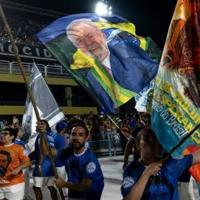
As Brazil’s legendary Carnival celebrations reached their peak this weekend, one of Rio de Janeiro’s most prominent samba schools raised eyebrows with a politically charged homage to President Luiz Inácio Lula da Silva, dividing spectators and sparking heated debate across the country’s polarized landscape.
Paraíso do Tuiuti, a traditional samba school known for its social commentary, rolled through the Sambadrome with elaborate floats and hundreds of dancers celebrating Lula’s journey from impoverished metalworker to three-term president. The performance highlighted his rise from poverty, imprisonment on corruption charges that were later annulled, and his subsequent political resurrection that culminated in a narrow election victory in 2022.
The spectacle featured performers dressed as metalworkers, prison inmates, and even representations of Lula himself at different stages of his life. One section portrayed his humble origins in Brazil’s drought-stricken northeast, while another celebrated his founding of the Workers’ Party (PT) that has dominated left-wing politics in Brazil for decades.
“We’re portraying the trajectory of a Brazilian who represents millions of others who emerged from difficult circumstances to achieve prominence,” explained Paraíso do Tuiuti’s artistic director, Paulo Barros. “It’s about resilience and the Brazilian spirit, not just politics.”
However, critics were quick to denounce the performance as inappropriate political propaganda during what should be a cultural celebration. Brazil remains deeply divided following the contentious 2022 election, where Lula defeated former President Jair Bolsonaro by less than two percentage points.
“Carnival should unite Brazilians, not further divide us,” said federal deputy Eduardo Bolsonaro, the former president’s son. “Using our cultural heritage for political messaging is a disservice to the tradition.”
The controversy reflects Brazil’s broader political tensions. Lula’s supporters view his comeback as a triumph of democracy over authoritarianism, pointing to Bolsonaro’s alleged attempts to undermine democratic institutions. Meanwhile, Bolsonaro’s base continues to question the legitimacy of the 2022 election results and criticizes what they see as preferential treatment for Lula by cultural institutions and media.
This isn’t the first time Carnival has embraced political themes. During Brazil’s military dictatorship (1964-1985), samba schools often embedded subtle criticism of the regime in their performances. More recently, Paraíso do Tuiuti itself made headlines in 2018 with a parade criticizing labor reforms under then-President Michel Temer.
“Carnival has always been political,” noted cultural historian Luiz Antonio Simas. “From its origins, it has served as a space for marginalized groups to express themselves and comment on power structures. What’s different now is the extreme polarization that colors how these expressions are received.”
The timing of the tribute is particularly significant as Lula navigates challenges in his third term. His administration faces criticism over its handling of recent devastating floods in southern Brazil, which have killed over 100 people and displaced thousands in Rio Grande do Sul state.
Economic concerns also loom, with inflation pressures mounting despite Brazil’s central bank maintaining high interest rates. Lula has frequently criticized these monetary policies, creating tension with financial markets.
Tourism authorities estimate that Rio’s Carnival will generate approximately 5 billion reais ($1 billion) for the local economy this year, with hotels reporting over 95% occupancy. The festivities draw hundreds of thousands of international visitors annually.
Beyond the political controversy, other samba schools delivered spectacular performances celebrating various aspects of Brazilian identity, from indigenous culture to Afro-Brazilian religious traditions. Grande Rio honored the legacy of musician Arlindo Cruz, while Mangueira paid tribute to the northeastern state of Bahia.
As the final samba schools conclude their performances and judges deliberate on this year’s champion, the debate over Paraíso do Tuiuti’s Lula homage continues to reverberate across Brazilian society – a reminder that in Brazil, the line between culture and politics often blurs, especially during its most celebrated festival.
Fact Checker
Verify the accuracy of this article using The Disinformation Commission analysis and real-time sources.

6 Comments
While the parade may be meant as a tribute to Lula’s rise from humble beginnings, the decision to feature him so prominently during Carnival raises questions. Carnival is traditionally a time of unity and escape from daily concerns, so incorporating such a polarizing political figure could be seen as inappropriate by some.
The parade’s depiction of Lula’s life story is certainly dramatic and visually striking. However, the decision to highlight a controversial political figure during Carnival could be seen as an attempt to sway public opinion. It’s a complex issue that likely has passionate supporters and critics.
Whether this is an homage or propaganda, the parade has certainly generated significant debate in Brazil. Carnival is traditionally a time of revelry and escape from daily concerns, so incorporating such a divisive political figure may prove controversial. It will be interesting to see how the public reception plays out.
This carnival parade seems to be a controversial tribute to Brazil’s former president Lula. While some may see it as a celebration of his rise from poverty to power, others could view it as politically charged propaganda. It will be interesting to see how the public reacts to this display during the famous Carnival festivities.
The parade’s depiction of Lula’s life story is certainly dramatic, but the decision to feature him so prominently during Carnival is bound to be controversial. Carnival is traditionally a time of unity and revelry, so incorporating such a polarizing political figure could be seen as an attempt to sway public opinion by some.
The parade’s depiction of Lula’s journey from humble origins to political leadership is certainly eye-catching. However, the decision to feature such a polarizing political figure during Carnival raises questions about the appropriate role of politics in these celebrations. It will be a delicate balance to strike.