


Listen to the article
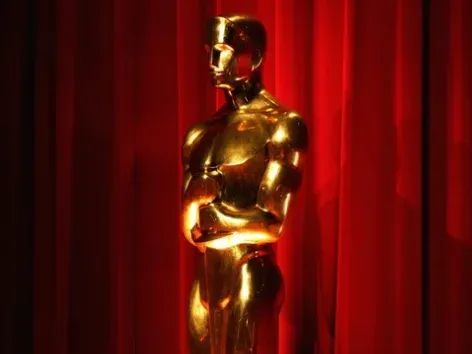
In a controversial turn of events at the 98th Academy Awards ceremony held in Los Angeles on March 16, 2026, Paul Thomas Anderson’s acclaimed film “One Battle After Another” dominated the evening with six Oscar wins, while a Russian documentary sparked outrage among viewers, particularly from Ukraine.
The Russian film “Mr Nobody vs Putin,” directed by Pavel Talakin, a former school organizer from the Chelyabinsk region, unexpectedly claimed the Oscar for Best Documentary Feature. The film documents changes in Russia’s educational system and the dissemination of propaganda in schools following the full-scale invasion of Ukraine. Despite its purportedly critical stance, critics note that the documentary portrays Russians as innocent bystanders, distancing themselves from their government’s actions.
The Academy’s decision to honor this film has generated significant backlash, with many viewing it as normalizing Russian narratives on the international stage while overlooking issues of collective responsibility. The controversy was further intensified by the absence of Ukrainian director Mstislav Chernov’s “2000 Metres to Andriivka” from the nomination shortlist, despite the film’s previous accolades including the prestigious Directors Guild Award. Chernov’s work, which depicts the harsh realities of the front line and the courage of Ukrainian soldiers, was notably overlooked.
Ukraine’s representation at the ceremony was limited to a partial mention in the Best Short Documentary category, which featured “Armed Only with a Camera: The Life and Death of Brent Renaud,” documenting an American journalist killed near Kyiv in 2022.
The evening marked a historic triumph for Paul Thomas Anderson, who finally received recognition after 14 unsuccessful nominations throughout his career. “One Battle After Another,” which chronicles the confrontation between a radical left-wing activist (Leonardo DiCaprio) and a racist colonel (Sean Penn), secured awards for Best Picture, Best Director, Best Adapted Screenplay, Best Supporting Actor (Sean Penn), Best Casting, and Best Editing. This victory represents Anderson’s long-awaited breakthrough in the industry, while Sean Penn claimed his third Oscar, adding to previous wins for “Mystic River” and “Milk.”
In a surprising turn in the acting categories, Michael B. Jordan prevailed over favorites Leonardo DiCaprio and Timothée Chalamet to win Best Actor for his portrayal of twin brothers in “The Sinner,” a thriller about a vampire conflict set in 1930s Mississippi. The film collected a total of four awards, including Best Original Screenplay, Best Original Score, and Best Cinematography.
Irish actress Jessie Buckley claimed the Best Actress award for her performance in “Hamnet,” becoming the first performer since Renée Zellweger in 2020 to sweep all major awards of the season, including Critics’ Choice, Golden Globe, BAFTA, and Screen Actors Guild Awards. Amy Madigan received the Best Supporting Actress Oscar for “Weapons,” coming 40 years after her first nomination.
Technical achievements were recognized across various productions. “Frankenstein” secured three awards for Best Make-up, Best Costumes, and Best Art Direction, cementing its status as a visual masterpiece. “Avatar: Fire and Ashes” won Best Visual Effects, while the racing drama “F-1” predictably claimed the Best Sound category. The Norwegian film “Sentimental Value” was honored as Best Foreign Film.
In animation, Netflix’s “K-Pop Demon Hunters” triumphed over “Zootopia 2,” winning both Best Animated Feature Film and Best Song for “Golden.” The Best Live-Action Short Film category resulted in a rare tie between “Singers” and “Two People Exchanging Saliva,” the first such occurrence since 2012, while “The Girl Who Cries Pearls” was named Best Animated Short Film.
As the film industry reflects on this controversial ceremony, questions about representation, politics, and artistic recognition continue to reverberate throughout the global entertainment landscape.
Fact Checker
Verify the accuracy of this article using The Disinformation Commission analysis and real-time sources.

11 Comments
The Oscar win for this Russian documentary is sure to be met with significant backlash, given the concerns around its portrayal of the Ukraine invasion. The Academy will need to provide a clear and well-reasoned explanation for their choice.
Agreed. Transparency and accountability from the Academy will be crucial in navigating this sensitive situation and addressing the concerns of the international community.
Interesting that a Russian documentary on propaganda would win an Oscar, especially given the controversy around its portrayal of events. I’d be curious to learn more about the Academy’s rationale for selecting this film.
You raise a good point. The decision to honor this film seems questionable, especially given the ongoing conflict in Ukraine and the need for balanced, objective coverage.
While artistic expression should be celebrated, the Academy’s choice to recognize this Russian documentary is puzzling, given the concerns around its potential whitewashing of the invasion of Ukraine. I wonder if there were any strong Ukrainian voices involved in the selection process.
That’s a fair observation. The absence of a Ukrainian documentary from the nomination shortlist is concerning and raises questions about the fairness and impartiality of the selection process.
While artistic expression is valuable, the Academy’s decision to honor a Russian documentary on propaganda during a time of ongoing conflict raises serious questions. I hope they carefully consider the wider implications of their choices.
This is a complex and controversial issue. While the Academy should strive for artistic appreciation, they must also consider the real-world impact of their decisions, especially when it comes to films that may whitewash authoritarian regimes.
The decision to honor this Russian documentary is sure to be divisive. While artistic merit should be the primary consideration, the film’s potential to normalize Kremlin narratives is highly problematic and deserves scrutiny.
I agree. The Academy should be mindful of the broader political and social implications of their choices, especially when it comes to sensitive issues like the conflict in Ukraine.
It’s disappointing to see a film that may downplay Russian culpability receive such prominent recognition. I hope the Academy takes a more thoughtful and nuanced approach to covering sensitive geopolitical issues in the future.