


Listen to the article
In a sequel that amplifies both volume and violence, Aditya Dhar’s “Dhurandhar: The Revenge” fails to recapture the gripping storytelling that made its predecessor a success across ideological divides.
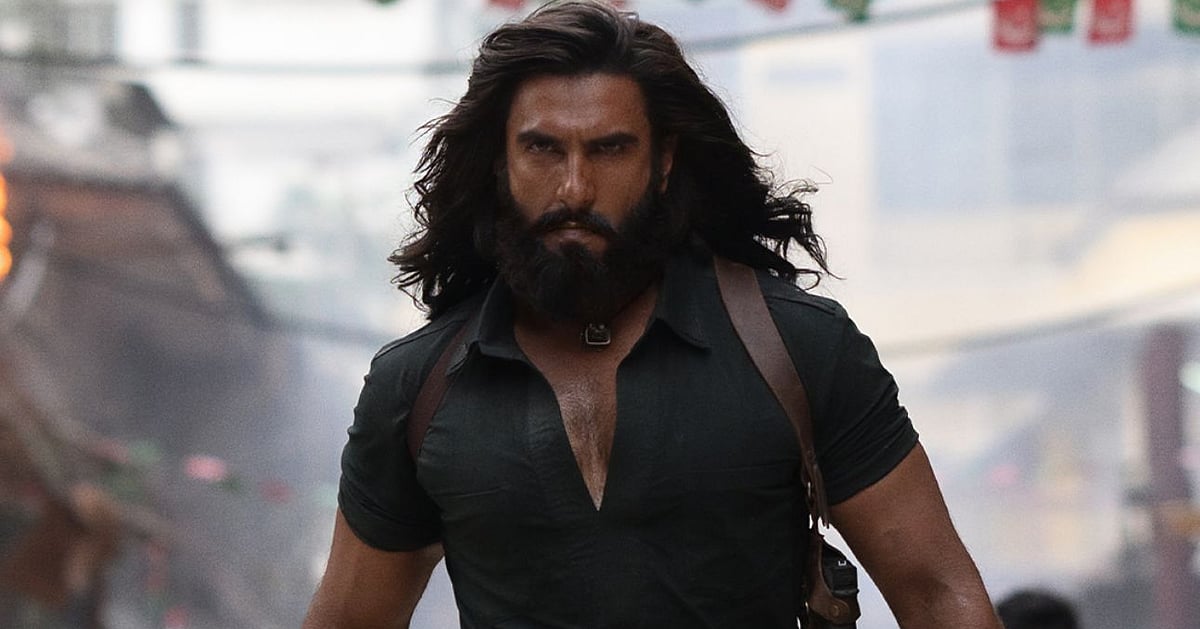
Released as a follow-up to the 2025 spy thriller, the new installment opens with an origin story for protagonist Hamza, played by Ranveer Singh. We learn he was once Jaskirat Singh, a military aspirant whose dreams were shattered by a violent crime that tore his family apart. The opening sequence establishes him as an unstoppable force of vengeance through graphic violence that sets the tone for what follows.
While the first film balanced its nationalist messaging with compelling characters and narrative tension, the sequel leans heavily into political propaganda at the expense of storytelling coherence. Pakistani politics and the Lyari crime scene, central elements of the original film, are largely sidelined. Instead, the narrative pivots to focus on the Modi government’s controversial 2016 demonetization policy, attempting to reframe it as a strategic masterstroke based on intelligence about a conspiracy to destabilize India.
The film portrays Prime Minister Narendra Modi and his administration in unabashedly flattering terms, particularly through R. Madhavan’s character Ajay Sanyal, a thinly veiled stand-in for National Security Advisor Ajit Doval. Even gangster Dawood Ibrahim appears in the narrative, with the film suggesting his influence has been neutralized by the Indian government—a claim undermined by the plot’s own depiction of ongoing threats he poses.
Perhaps the sequel’s greatest weakness is the absence of a compelling antagonist. Akshaye Khanna’s Rehman Dakait brought menacing intensity to the first film, and his elimination leaves a void that the supporting cast struggles to fill. Arjun Rampal’s Major Iqbal undergoes a transformation that comes too late to salvage the narrative, while Sanjay Dutt’s character follows predictable patterns without offering fresh dimensions.
Technical elements that enhanced the original film now feel overblown. The background score lacks subtlety, intruding rather than complementing the action. Violence escalates from the already graphic first installment to include scenes of characters playing football with severed heads. Dialogue increasingly serves ideological messaging, with lines predicting dystopian futures where Hindu identities are threatened, while female characters are given minimal voice or agency.
At over three hours and fifty minutes, the film’s excessive runtime compounds its storytelling problems. Plot threads, including one involving Jaskirat’s best friend, remain underdeveloped. Action sequences that appeared innovative in the first film now feel formulaic, relying on shock value rather than creative choreography.
Despite these shortcomings, Ranveer Singh delivers a committed performance as Hamza, anchoring the film with physical prowess and screen presence. Actor Bedi also stands out as the villainous Jameel, providing rare moments of effective comic timing that temporarily break the monotony.
The film’s unabashed political messaging extends to international relations, with references to India’s friendship with Israel that seem particularly tone-deaf given current geopolitical tensions. This further emphasizes how the sequel prioritizes political positioning over the nuanced storytelling that made the original successful.
As credits roll, viewers may wonder if a third installment is planned—and what further escalations of violence and political messaging it might contain. For now, “Dhurandhar: The Revenge” stands as a cautionary tale of how sequels can lose sight of storytelling fundamentals when ideological agendas take center stage.
Fact Checker
Verify the accuracy of this article using The Disinformation Commission analysis and real-time sources.

10 Comments
This sounds like a rather heavy-handed political thriller that prioritizes messaging over storytelling. While I appreciate the desire to explore relevant issues, a balanced and nuanced approach is often more effective in engaging the audience.
Agreed. A good film should entertain first, and then perhaps subtly introduce thought-provoking themes, rather than beating the audience over the head with propaganda.
It’s disappointing to hear that the sequel has strayed so far from the original’s strengths. Maintaining the balance between entertainment and thought-provoking themes is a delicate act, and it sounds like this film has tipped too far in the direction of political messaging.
Agreed. When a film becomes more about pushing an agenda than captivating the audience, it often falls flat. A good story should be able to stand on its own merits, with any social commentary arising organically from the narrative.
While I appreciate the filmmakers’ desire to address important political and social issues, it seems they’ve lost sight of the core elements that made the first film successful. Striking the right balance between entertainment and meaningful themes is a delicate art that this sequel appears to have missed.
Well said. Audiences are generally more receptive to thoughtful, nuanced explorations of complex topics, rather than heavy-handed propaganda. It’s a shame when a sequel fails to build on the strengths of the original.
It’s a shame when sequels fail to live up to the quality of the original. Straying too far from the core elements that made the first film a success is a risky move. Audiences generally want to see more of what they enjoyed, not a radical shift in direction.
Very true. Maintaining a consistent tone and narrative is crucial, especially for a sequel. Trying to shoehorn in heavy-handed political messages often comes at the expense of engaging storytelling.
I’m always wary of films that seem more intent on pushing a particular agenda than telling a compelling story. Audiences these days are quite savvy and can typically see through blatant propaganda masquerading as entertainment.
Exactly. A good filmmaker should be able to weave relevant themes and social commentary into an engaging narrative, rather than letting the message overwhelm the art of storytelling.