


Listen to the article
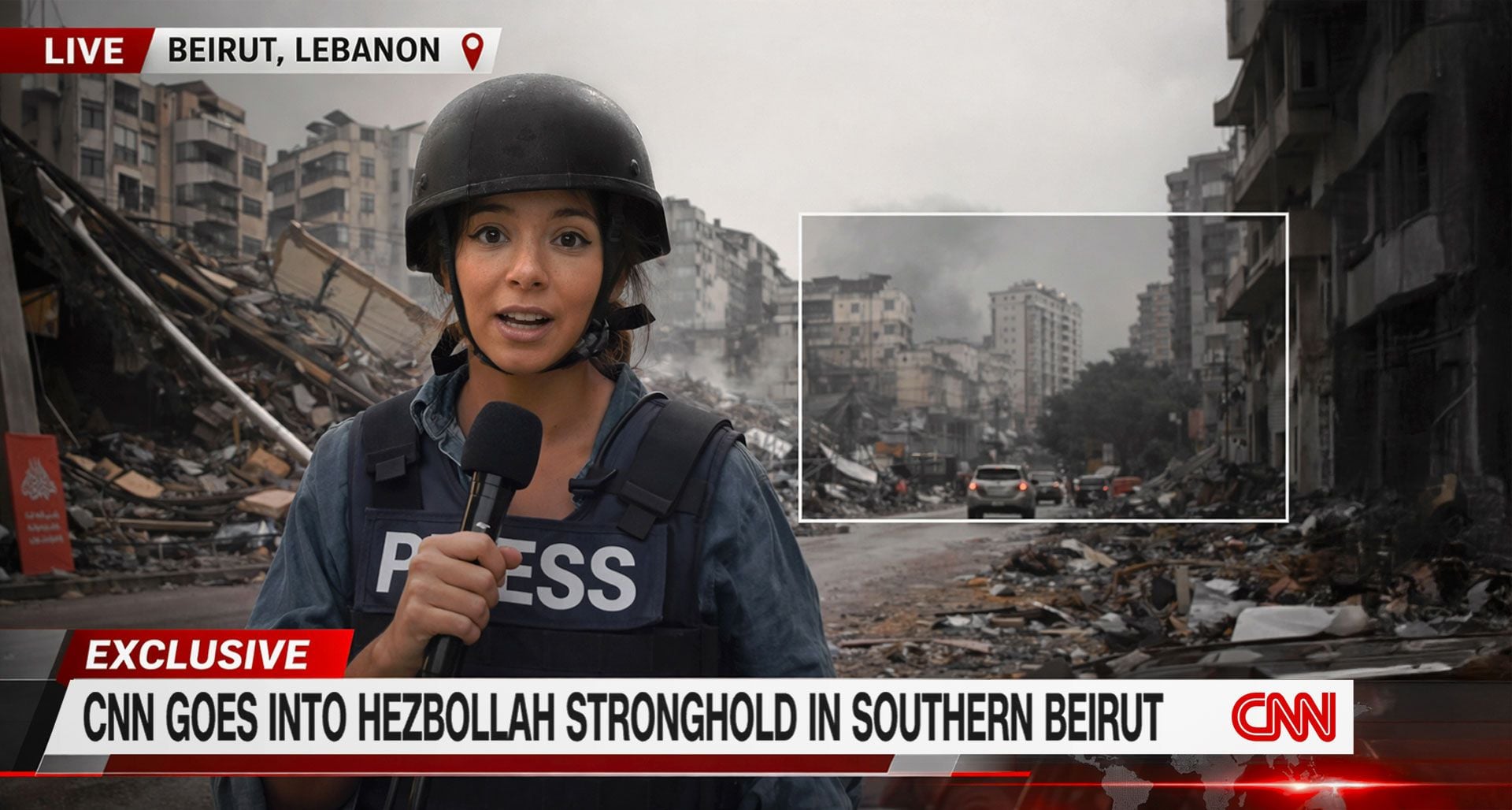
CNN’s Lebanon Coverage Under Scrutiny for Hezbollah Influence
CNN’s reporting from Hezbollah-controlled areas in Lebanon has come under criticism for potentially amplifying the terrorist organization’s narrative while downplaying its role in initiating violence against Israeli civilians.
Observers point to correspondent Isobel Yeung’s recent coverage as particularly problematic. Her team deployed to Lebanon after Hezbollah opened a second front in the Israel-Iran conflict by launching rockets at Israeli communities. However, critics argue that operating under Hezbollah-approved access has led to coverage that obscures critical context about the conflict.
Access to Hezbollah-controlled areas is tightly managed by the organization itself, creating concerns about selective visibility and filtered reporting. This arrangement poses significant challenges for journalists seeking to deliver comprehensive, unbiased coverage of events in the region.
Military analysts note that the Israel Defense Forces (IDF) has implemented measures to minimize civilian casualties when responding to Hezbollah rocket attacks. These include issuing evacuation warnings to Lebanese civilians through phone calls and social media before striking Hezbollah-linked infrastructure – often sacrificing tactical surprise in the process.
“Hezbollah has effectively turned parts of Lebanon into launching pads for attacks against Israel,” explains Middle East security expert Daniel Rothman. “When reporting fails to acknowledge this context, it distorts understanding of why certain areas become military targets.”
The language used in Yeung’s reporting has drawn particular scrutiny. In one segment, she refers to “outgoing rocket fire” without specifying that these rockets targeted Israeli civilians or who launched them. Critics argue this creates an equivalence between aggressor and defender that doesn’t reflect the reality on the ground.
Another report described the city of Tyre as “apocalyptic,” noting it had previously been “buzzing” and “lively” without mentioning Hezbollah’s military infrastructure embedded within civilian areas – including a command center that made the location a strategic target.
Similar conditions exist in parts of Beirut, where entire suburbs have effectively become Hezbollah strongholds. The terrorist organization’s practice of positioning military assets in civilian areas has been well-documented by international observers, though critics say this crucial context is often missing from CNN’s coverage.
Media ethics experts point to subtle linguistic choices that shape viewer perceptions. In some reports, Hezbollah’s rocket attacks are described as a “barrage” while Israeli airstrikes are termed a “bombardment” – language that critics argue creates an unbalanced portrayal of the conflict.
This isn’t the first time Yeung’s reporting has faced such criticism. During her previous work with Vice News covering the 2021 Gaza conflict, critics accused her of insufficiently acknowledging Hamas’s use of civilian infrastructure for military purposes.
“Journalists operating in these environments primarily encounter residents whose perspectives are shaped by that reality,” notes media analyst Sarah Bennett. “While these voices are important, they don’t replace the need for comprehensive context, especially when reporting on conflicts involving designated terrorist organizations.”
The Lebanese civilian population remains caught in this dangerous dynamic. Many have been effectively held hostage by Hezbollah’s military positioning within their communities, while simultaneously facing the dangers of Israeli airstrikes targeting that infrastructure.
As tensions in the region continue to escalate, the responsibility of news organizations to provide balanced, contextual reporting grows increasingly important. Without proper framing, there’s a risk that coverage from Hezbollah-controlled areas may inadvertently serve the organization’s strategic communication objectives rather than providing viewers with a complete picture of this complex conflict.
Fact Checker
Verify the accuracy of this article using The Disinformation Commission analysis and real-time sources.

9 Comments
This is a concerning situation for media coverage in conflict zones. Journalists need unfettered access to report accurately, but Hezbollah’s control over areas risks skewing the narrative. Careful reporting and context is crucial to avoid amplifying propaganda.
Selective visibility and filtered reporting are serious concerns when a terrorist organization controls access. Journalists must work diligently to verify information and provide the full context, even when facing significant challenges.
Absolutely. Maintaining journalistic integrity in the face of such constraints is crucial. Rigorous fact-checking and transparency around limitations are essential to avoid amplifying propaganda.
It’s a complex issue with valid arguments on both sides. Hezbollah’s influence over access poses clear risks, but the IDF’s efforts to minimize civilian casualties also merit coverage. Balanced, fact-based reporting is essential for the public to understand the full context.
Absolutely, a nuanced, impartial approach is needed. Verification of claims from all parties is critical to cut through potential propaganda and provide a clearer picture.
The influence of Hezbollah on media coverage in Lebanon is deeply concerning. Journalists must find ways to report comprehensively without being beholden to the narratives of any single party, even in the face of significant access challenges.
This is a complex situation that highlights the challenges of reporting in conflict zones dominated by militant groups. Journalists must balance the need for access with the imperative to provide objective, fact-based coverage that avoids amplifying propaganda.
This highlights the challenges journalists face in conflict zones dominated by militant groups. Maintaining journalistic integrity while navigating restricted access is an ongoing struggle. Rigorous fact-checking and transparency around limitations are key.
The influence of Hezbollah on media coverage is worrying. While access is important, it shouldn’t come at the cost of objectivity. Journalists must find ways to report comprehensively without being beholden to any single narrative.