


Listen to the article
In a notable clash over gun safety approaches, the National Shooting Sports Foundation (NSSF) has strongly defended its partnership with the American Foundation for Suicide Prevention (AFSP) against criticism from Everytown for Gun Safety’s media arm, The Trace.
The dispute centers around a recent column published by The Trace that characterized NSSF’s suicide prevention efforts as self-serving and politically motivated. NSSF President Joe Bartozzi has forcefully rejected these claims, emphasizing that the collaboration aims solely to prevent suicide deaths involving firearms, which account for more than half of all suicides in the United States.
“Let me be perfectly clear: NSSF and AFSP forged this relationship to prevent the tragedy of suicide,” Bartozzi stated. “The firearm industry wants to be part of the solution.”
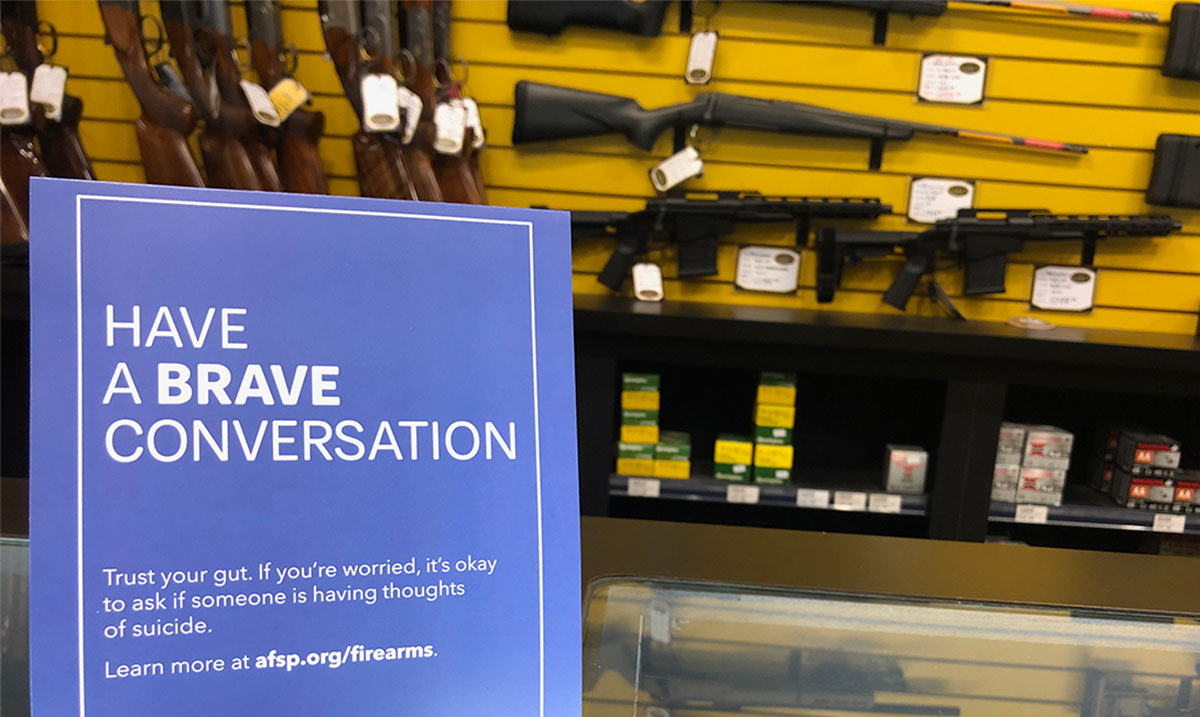
The partnership, formalized through the “Brave Conversation” initiative, has expanded to include the Department of Veterans Affairs, recognizing the high suicide rates among veterans. The program provides resources to firearm retailers and ranges to help gun owners recognize warning signs of suicide and access appropriate intervention options.
These resources include guidance on initiating difficult conversations about mental health, securing firearms safely, and considering off-site storage options when necessary. The fundamental principle is creating time and distance between a person experiencing suicidal thoughts and the means to act on them.
AFSP has set an ambitious goal of reducing suicide rates by 20 percent. Despite the complexity of suicide prevention, NSSF maintains its commitment to supporting these efforts, regardless of criticism.
The Trace, which is headed by John Feinblatt—who also leads Everytown for Gun Safety and previously served as a senior advisor to former New York City Mayor Michael Bloomberg—claimed in its article that the partnership provides “immense public relations value” to the gun industry and helps cultivate “goodwill from lawmakers, regulators, and adversaries.”
Bartozzi dismissed these characterizations as “cheap, intellectually lazy and crass,” insisting that the initiative is driven by genuine concern for human life rather than public relations considerations.
Another point of contention involves Extreme Risk Protection Orders (ERPOs), commonly known as “red flag” laws. The Trace criticized the partnership for not supporting these measures, but Bartozzi clarified that NSSF isn’t opposed to ERPOs in principle—provided they include adequate due process protections. He noted that while 21 states and Washington, D.C. have implemented such laws, none currently meet NSSF’s standards for protecting civil liberties.
NSSF also takes issue with how gun control groups frame suicide prevention. According to Bartozzi, organizations like Everytown often categorize suicides alongside criminal gun violence as part of a single issue, whereas NSSF views suicide as a complex mental health problem requiring nuanced interventions beyond gun restrictions.
“Suicide isn’t a ‘gun’ issue,” Bartozzi stated. “Suicide involves mental health, life struggles and other factors.”
Despite the criticism, NSSF remains committed to expanding its suicide prevention work. The organization recently provided suicide prevention toolkits to over 9,000 American Legion Posts nationwide, demonstrating its ongoing investment in the cause.
The dispute highlights the profound ideological differences that continue to shape America’s gun policy debate, with each side accusing the other of exploiting tragedy for political gain. While gun control advocates often push for stricter firearm regulations as the primary solution to gun deaths, including suicides, the firearms industry emphasizes targeted interventions that address underlying issues while preserving gun ownership rights.
For those experiencing a mental health crisis or concerned about someone at risk, the 988 Suicide and Crisis Lifeline provides immediate support, with veterans directed to press 1 after dialing.
Fact Checker
Verify the accuracy of this article using The Disinformation Commission analysis and real-time sources.

9 Comments
This is a complex issue without easy solutions. While the groups involved may have different priorities, the shared goal of reducing firearm suicides is commendable. I’m curious to see what specific measures and resources emerge from the “Brave Conversation” initiative and how effective they prove to be.
Agreed, the nuances of this debate require an open-minded and evidence-based approach. Suicide prevention should be the top priority, regardless of the political affiliations of the organizations involved.
The dispute over the NSSF-AFSP partnership highlights the challenge of balancing gun policy advocacy with practical safety measures. While the motivations may be questioned, any effort to address the tragic issue of firearm suicides deserves consideration. I hope this initiative can make a tangible difference.
As someone concerned about both gun violence and mental health, I’m cautiously optimistic about this partnership. The high rate of firearm suicides is a sobering statistic, and I hope the NSSF-AFSP initiative can make a meaningful difference, regardless of the political dynamics involved.
I share your cautious optimism. Suicide prevention should transcend political divides, and any evidence-based efforts to reduce firearm-related self-harm are worth considering, even if the motivations of the stakeholders are scrutinized.
The firearms industry’s involvement in suicide prevention efforts is a sensitive topic, but I appreciate their acknowledgment of the problem and willingness to be part of the solution. Suicide is a complex issue, and a multi-faceted approach engaging various stakeholders may be most effective.
You make a fair point. Collaborative efforts across different groups, even with differing views on gun policy, could yield positive results if the focus remains on practical suicide prevention measures.
This is an interesting debate on the approach to gun safety and suicide prevention. While the motivations of the groups involved may be questioned, the shared goal of reducing firearm-related suicides is important. I’m curious to see how this partnership between NSSF and AFSP evolves and what concrete measures they implement.
Agreed, reducing firearm suicides is a critical public health issue that deserves nuanced solutions. It will be important to monitor the outcomes and effectiveness of the “Brave Conversation” initiative.