


Listen to the article
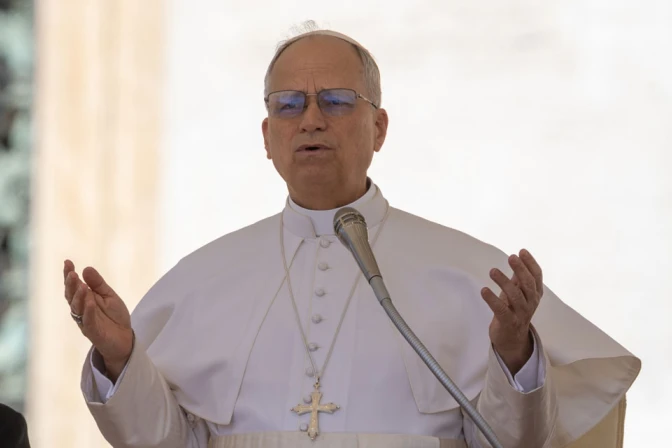
Pope Francis has issued a stark warning to journalists about the dangers of propaganda in modern news reporting, especially when covering conflict zones. During a meeting with Italian journalists at the Vatican on Monday, the pontiff emphasized the critical importance of factual reporting and giving voice to war victims.
“News reporting must guard against the risk of becoming propaganda,” the Holy Father told members of Italian broadcaster RAI and its TG2 news program, who were celebrating the outlet’s 50th anniversary. His comments come at a time when global media faces increasing scrutiny over coverage of ongoing conflicts in Ukraine, Gaza, and other regions.
The Pope specifically addressed war reporting, urging journalists to verify information “so as not to become a mouthpiece for those in power.” This verification process, he stressed, is “even more urgent and delicate — I would say essential” in today’s complex geopolitical landscape.
In an era where information warfare has become as strategic as physical combat, Pope Francis called on news professionals to humanize their coverage by showing “the suffering that war inflicts upon the population” and to relate events “through the eyes of the victims, so as not to transform it into a video game.”
The pontiff acknowledged the practical challenges facing broadcast journalists. “It is not easy in the few minutes of a news program and its in-depth segments. But this is the challenge,” he said, recognizing the time constraints that often force difficult editorial decisions in television news.
Beyond conflict coverage, Pope Francis addressed the technological transformation reshaping journalism. As newsrooms worldwide navigate the shift from analog to digital systems and now face the rapid advancement of artificial intelligence, the Pope emphasized that “no technological innovation can replace creativity, critical discernment, and freedom of thought.”
Artificial intelligence represents “the challenge of our time,” according to the pontiff, who called for regulation of communications “according to the human paradigm and not the technological one.” This approach means “knowing how to distinguish between means and ends” – a principle that has significant implications as news organizations increasingly experiment with AI for content creation and distribution.
The Pope praised RAI for its commitment to laicity and pluralism, defining the former as “a rejection of ideological preconceptions and as an open-minded view of reality.” These values, he suggested, are crucial safeguards against the echo chambers that increasingly define modern media consumption.
“We all know how difficult it is to allow ourselves to be surprised by facts, by encounters, by the gazes and voices of others; how strong the temptation is to seek out, see, and listen only to what confirms our own opinions,” the Pope observed. “But there can be no good communication, nor true freedom and healthy pluralism, without this openness.”
In his closing remarks, Pope Francis encouraged journalists to embrace diversity of thought, particularly “in an age dominated by polarization, ideological closed-mindedness, and slogans that prevent us from seeing and understanding the complexity of reality.”
The Pope’s comments reflect growing concern within religious and secular institutions about the fragmentation of shared truth in public discourse. They also align with his previous statements on media ethics, forming part of a consistent message about responsible journalism as essential to democratic societies and human dignity.
For RAI, Italy’s public broadcaster, the papal audience represented both a celebration of its half-century legacy and a challenge to maintain journalistic integrity amid rapid technological and cultural change. The broadcaster reaches millions of Italians daily and plays a significant role in shaping public opinion in one of Europe’s largest economies.
Fact Checker
Verify the accuracy of this article using The Disinformation Commission analysis and real-time sources.

12 Comments
I appreciate the Pope’s call for journalists to guard against propaganda and prioritize truth over sensationalism. Thorough verification of information is critical, even (or especially) when reporting on geopolitical conflicts.
Absolutely. Journalists must remain vigilant and resist efforts to manipulate the narrative. Humanizing coverage and giving a voice to those suffering the consequences of war is the ethical path forward.
Timely advice from the Pope. In an age of information warfare, journalists must be rigorous in verifying facts and resist the pull of sensationalism or political agendas. Covering the human impact of conflict is crucial.
The Pope makes a fair point – war is not a video game, and news reporting must avoid the temptation of becoming propaganda. Factual, nuanced coverage that centers the human toll is the responsibility of the press.
The Pope’s warning about the risks of propaganda in war reporting is a timely and important reminder. Journalists must stay committed to factual, ethical coverage that centers the human toll of conflict, not political agendas.
Absolutely. In an age of information warfare, the press has a vital responsibility to the public to uphold the principles of truthful, nuanced reporting. Sensationalism and manipulation have no place in credible journalism.
Sage advice from the Pope on the need for journalists to guard against propaganda, especially when covering complex global conflicts. Verifying information and focusing on the human impact should be the top priorities.
An important reminder from the Pope to journalists – we must verify information and avoid becoming mouthpieces for propaganda, especially when covering complex conflicts. Focusing on the human impact of war is crucial.
Agreed. In the age of information warfare, factual and ethical reporting is more vital than ever. Journalists have a responsibility to give voice to victims and humanize the coverage.
I appreciate the Pope’s strong stance against the dangers of propaganda in news reporting, particularly when it comes to war coverage. Verifying information and humanizing the suffering of civilians should be the core focus.
The Pope is right to emphasize the importance of ethical, fact-based journalism, especially when reporting on complex geopolitical conflicts. Giving voice to victims and avoiding the trap of propaganda should be top priorities.
Agreed. Journalists must remain vigilant and committed to truth-telling, even in the face of efforts to manipulate the narrative. Maintaining journalistic integrity is essential for an informed public.