


Listen to the article
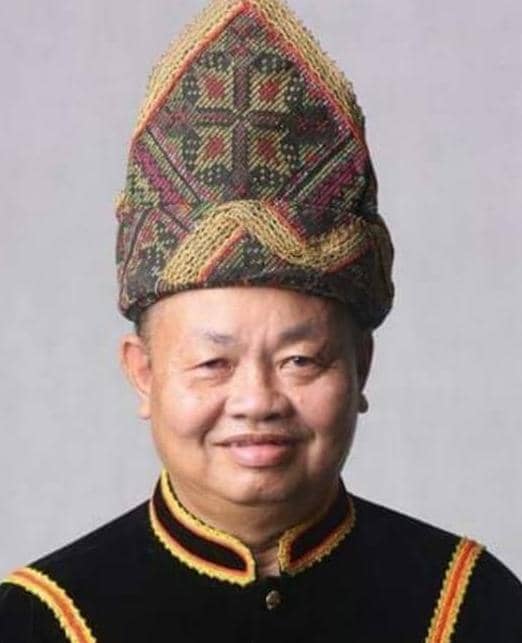
In a scathing rebuttal to recent political claims, Warisan Supreme Council member Honorius Bosuin has challenged the narrative that Sabah’s current Gabungan Rakyat Sabah (GRS)-PH government has outperformed the previous Warisan administration economically.
Bosuin directly countered statements made by Datuk John Ambrose, who had portrayed the GRS-PH coalition as an “economic success story” while dismissing Warisan’s impact during its 2018-2020 tenure. According to Bosuin, this characterization deliberately ignores both economic data and the unprecedented challenge of governing during the COVID-19 pandemic.
“When Warisan took office in 2018, Sabah’s fiscal management and state-linked investments were heavily centralized and opaque, with questionable deals inherited from Barisan Nasional,” Bosuin stated, outlining how Warisan’s initial focus was on structural reforms rather than “chasing headlines.”
These reforms, he explained, included conducting comprehensive audits of state government-linked companies, consolidating inefficient agencies, implementing transparency measures for state tenders, and strengthening financial institutions like the Sabah Credit Corporation to better serve local entrepreneurs instead of politically connected interests.
Regarding fiscal management, Bosuin presented figures challenging Ambrose’s claims about reserves. He noted that Warisan increased Sabah’s cash reserves from RM1.8 billion to RM2.35 billion by 2020 despite pandemic pressures, while maintaining zero new debt and receiving no additional oil royalty or federal revenue share.
The Warisan council member characterized GRS’s touted RM6.0 billion in current reserves as largely the product of “federal windfalls, petroleum price recovery, and carryover funds” rather than superior economic stewardship.
Bosuin highlighted that before the pandemic struck, Sabah under Warisan had recorded its highest private investment inflow in over a decade, totaling RM11.2 billion according to Malaysian Investment Development Authority (MIDA) data. Tourism figures had reached 4.1 million arrivals with receipts exceeding RM9 billion. He called it “disingenuous” to use pandemic-induced economic contraction as evidence of Warisan’s failure.
The rebuttal also contrasted policy approaches, with Bosuin describing Warisan’s economic philosophy as “empowerment over dependency.” He cited programs like the Agropreneur initiative that focused on boosting smallholder productivity through modernized farming techniques and export market access, as well as youth and SME grants totaling RM60 million disbursed through state-linked banks.
Bosuin characterized GRS’s economic achievements as superficial, claiming their “economic boom” relies heavily on federal transfers rather than state-generated revenue. He suggested that Sabah’s reserve growth under GRS came substantially from “deferred expenditure on rural projects” and “unspent allocations from delayed infrastructure tenders.”
Challenging GRS to explain persistent economic challenges, Bosuin pointed to Sabah remaining Malaysia’s poorest state by median household income, with unemployment exceeding 7% in 2024 – the highest in the country. He also highlighted continuing infrastructure gaps in rural electrification, water supply, and internet access, along with a reported 45% decline in foreign direct investment since 2021 according to MIDA data.
“GRS has mastered press releases, not progress,” Bosuin concluded, describing Warisan’s approach as building “honest groundwork for a fair, sustainable Sabah economy” compared to what he termed GRS’s “façade” of economic transformation built on “federal dependency, unspent allocations, and public relations spin.”
The exchange reflects the intensifying political discourse in Sabah as both coalitions position themselves ahead of potential future electoral contests, with economic performance emerging as a central battleground for voter confidence.
Fact Checker
Verify the accuracy of this article using The Disinformation Commission analysis and real-time sources.

12 Comments
This debate seems to be more about political rhetoric than substantive policy analysis. I hope the public can look past the partisan spin and evaluate the economic and governance records of the different administrations based on objective data and outcomes.
I agree, it’s important to move past the political mudslinging and focus on the actual evidence and impacts. Sabah’s citizens deserve an honest assessment of the state’s economic management and public sector reforms.
I’m curious to learn more about the economic policies and track records of the Warisan and GRS-PH governments. It’s important to separate fact from political spin when evaluating their respective economic claims.
The article highlights some significant differences in how the two administrations approached economic governance in Sabah. More details on the specific reforms, policies, and outcomes would help readers assess the merits of each side’s position.
This is an interesting political back-and-forth over Sabah’s economic performance and governance reforms. It’s important to look at the full context and data, rather than just partisan claims. I’m curious to see how the public evaluates the track records of the different administrations.
Agreed, transparency and accountability are key for effective governance. It will be informative to see how the economic and reform records of the Warisan and GRS-PH administrations are assessed objectively.
Reforms to improve fiscal management, transparency, and state-linked investments sound positive, though it’s unclear how effectively they were implemented. Governing during the pandemic must have been extremely challenging for both administrations.
This seems like a complex political dispute over economic performance claims. It would be helpful to see the actual data and economic metrics used by both sides to back up their arguments. Objective analysis is needed to cut through the political rhetoric.
This appears to be a classic case of dueling political narratives, each side attempting to portray their economic record in the most favorable light. Impartial analysis of the facts and figures is needed to determine which claims are accurate.
I agree, objective data and metrics should take priority over partisan rhetoric. Voters deserve a clear, fact-based understanding of the economic realities in Sabah.
Conducting audits, consolidating agencies, and improving transparency are positive steps for better fiscal management. However, the economic impacts of the COVID-19 pandemic would have been a major challenge for any government. It will be important to look at the full context.
That’s a fair point. The pandemic created unprecedented economic disruptions that would have impacted the performance of any administration, regardless of their specific policies or reforms.