


Listen to the article
Pakistan’s Prime Minister’s Office Clarifies Social Media Mix-up on Iran-US Relations
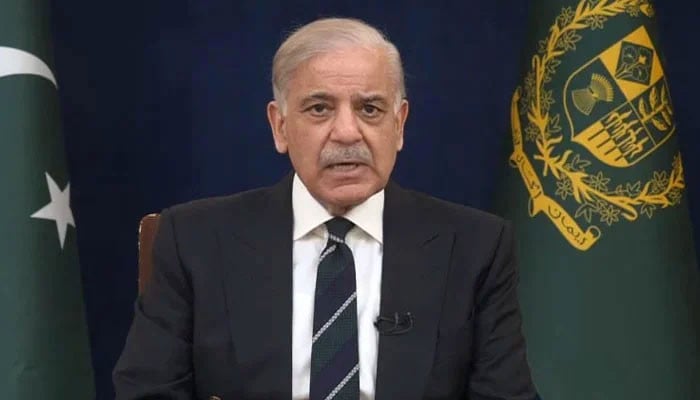
Pakistani officials have firmly rejected what they termed “false and baseless propaganda” regarding Prime Minister Shehbaz Sharif’s recent Twitter post about a potential ceasefire between Iran and the United States.
Government sources in Islamabad said certain media outlets have mischaracterized the Prime Minister’s social media message, creating unnecessary controversy around what they describe as a routine administrative error.
When contacted by reporters, government officials explained that the Prime Minister’s Twitter account operates under the management of a specialized communications team responsible for drafting and publishing official statements. This practice is standard in most governments worldwide, where social media presence requires careful coordination.
“Draft tweets are regularly circulated internally with various identifying labels such as ‘For the perusal of PM Pakistan,’ ‘For the attention of the Prime Minister,’ or ‘Pakistan’s PM messages,'” said a senior bureaucrat who requested anonymity due to the sensitivity of the matter. “In this particular case, a preliminary draft was accidentally published but corrected within a minute once the oversight was identified.”
The incident occurred amid heightened tensions between Iran and the United States, with Pakistan attempting to play a constructive diplomatic role in the region. Pakistan maintains significant relationships with both countries and has historically worked to balance these complex international ties.
The official emphasized that such minor technical errors occur in government communications worldwide and are typically resolved quickly. Similar incidents have been documented across multiple administrations in Pakistan’s history, reflecting the challenges of managing high-level government communications in the digital age.
Of particular significance, according to the Pakistani official, was that following the Prime Minister’s corrected tweet, Iranian Foreign Minister Hossein Amir-Abdollahian reportedly responded with a positive message indicating potential openness to ceasefire discussions. This development suggests that despite the communication hiccup, diplomatic channels remain functional.
The clarification from Islamabad comes in response to international media reports that questioned an earlier version of the tweet, which allegedly referenced a request to former U.S. President Donald Trump regarding an Iran-related deadline. The post was swiftly edited after publication, leading to speculation that officials now characterize as unfounded.
Media analysts note that such incidents highlight the increasing importance of digital diplomacy in international relations. A single social media post can now carry significant diplomatic weight, making precision in communication more critical than ever.
The episode occurs against the backdrop of Pakistan’s efforts to navigate a complex regional landscape. As a nuclear-armed nation sharing borders with Iran, China, and India, Pakistan’s diplomatic positioning is closely watched by global powers.
Pakistan has historically maintained a delicate balance in its relationships with Iran and the United States. While Pakistan and Iran share a 909-kilometer border and cultural ties, Pakistan’s strategic partnership with the United States remains central to its foreign policy, despite occasional tensions.
Regional experts suggest this incident, while minor, underscores the challenges facing nations like Pakistan as they engage in digital diplomacy amid complex geopolitical tensions. The immediate correction of the tweet demonstrates the sensitivity surrounding official communications on matters involving international conflict.
The Prime Minister’s Office has not issued any further statements on the matter, suggesting officials consider the issue resolved following their clarification to media outlets.
Fact Checker
Verify the accuracy of this article using The Disinformation Commission analysis and real-time sources.

12 Comments
This seems like a routine administrative error, as the government spokesperson described. It’s understandable that draft tweets would be circulated internally before final publication. Glad they’re setting the record straight.
Agree, this doesn’t sound like any kind of propaganda or conspiracy. Just standard operating procedures for government social media accounts.
Sounds like this was just an administrative mix-up, not some nefarious propaganda scheme. Glad the government is setting the record straight on their social media processes.
Interesting to learn about the internal procedures for drafting and publishing official tweets. Glad the government is being upfront to counter the ‘false and baseless propaganda’ claims.
Appreciate the government providing clarity on this issue. Routine social media practices like internal drafting and coordination are common, so it’s wise they’re addressing the claims head-on.
This appears to be a routine matter that’s been blown out of proportion. The government’s explanation about draft tweets and coordination seems reasonable and transparent.
Appreciate the government providing clarity on their social media practices. Transparency is important, especially when countering allegations of propaganda or misinformation.
The government’s response seems appropriate and straightforward. Internal drafting and coordination for official tweets is a standard practice, so it’s good they’re addressing the claims directly.
It’s reassuring to see the government addressing these alleged propaganda claims directly. Transparency around standard social media protocols is important to maintain public trust.
The government’s explanation about draft tweets and coordination makes sense. It’s good they’re being transparent and not letting misinformation spread. Curious to see if this clears up the controversy.
Interesting to see the government addressing these social media mix-up claims. Glad they’re clarifying the standard procedures around drafting and publishing official tweets. Transparency is important in these situations.
Yes, it’s good they’re being upfront about their internal social media processes. Helps avoid unnecessary speculation or misinformation.