


Listen to the article
In a stark reversal of fortunes, the Republican propaganda machine that helped propel Donald Trump back to the White House appears to be collapsing under the weight of its own success. Conservative thought leaders who once championed disinformation are now publicly lamenting the monster they’ve created as it turns against them.
Christopher Rufo, a key architect of the Republican culture war strategy, recently published a remarkable plea on his Substack, expressing alarm at the conspiracy theories engulfing right-wing discourse following the assassination of conservative figure Charlie Kirk. While Kirk’s murder shocked the political landscape, it quickly spawned wild conspiracy narratives among conservative influencers.
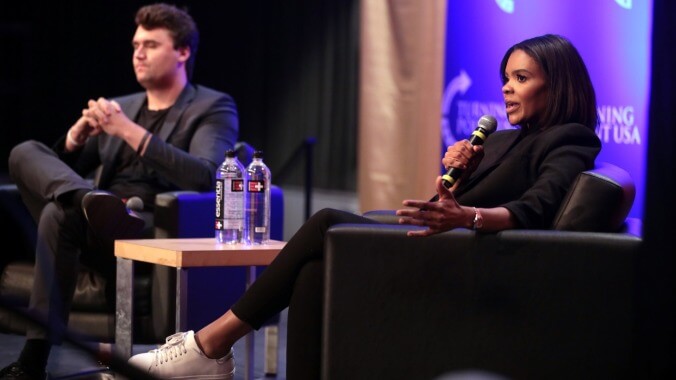
“For figures such as Candace Owens, however, the assassination was something much more elaborate: a conspiracy involving traitors within Kirk’s organization, the Israeli intelligence services, French special forces soldiers, Egyptian airplanes, and elements within federal law enforcement,” wrote a concerned Rufo.
The irony has not escaped observers. Rufo himself gained prominence promoting sensationalized claims, including allegations that Haitian immigrants were eating pets in Ohio – a story debunked by local officials but which nonetheless gained national traction through right-wing media channels.
This crisis of misinformation traces its roots back decades. In 1970, Roger Ailes, who would later create Fox News, wrote a memo titled “A Plan For Putting the GOP on TV News,” stating: “People are lazy. With television you just sit—watch—listen. The thinking is done for you.” This philosophy spawned generations of conservative media personalities across platforms from radio to YouTube.
For years, this strategy delivered electoral victories. But now, with Republicans in power, the system they built to attack opponents has turned inward. The problem has been exacerbated by social media monetization, particularly on X (formerly Twitter), where Elon Musk implemented a revenue-sharing model that rewards engagement regardless of accuracy.
“Maybe they can reform or even eliminate monetization, which seems to have done more harm than good,” Rufo suggested, acknowledging the perverse incentives created by the platform’s business model.
Meanwhile, X itself appears to be struggling. Recent Pew Research data shows the platform failing to gain traction with younger users, who overwhelmingly prefer YouTube, TikTok, Instagram, and Snapchat. This decline coincides with an exodus of journalists and academics following Musk’s controversial leadership.
Traditional conservative media ventures are similarly floundering. When Bari Weiss, editor-in-chief of CBS News and founder of The Free Press, hosted a town hall with Kirk’s widow Erika, the ratings were dismal – down 11 percent in total viewership compared to the network’s standard programming and 41 percent in key demographics, according to Nielsen data reported by The Independent.
The advertising lineup for the special was equally telling – dominated by direct-response advertisers selling dietary supplements and Chia Pets rather than premium brands, suggesting mainstream advertisers are keeping their distance.
This credibility collapse comes at a critical moment for the Trump administration. Recent polls paint a grim picture: Reuters/Ipsos shows Trump at 39% approval among Americans, while Gallup registered 36%. Most concerning for Republicans, an AP-NORC poll found just 31% of adults approve of Trump’s handling of the economy – his lowest rating across either term.
Economic indicators offer little comfort. The impact of Trump’s trade policies has begun to ripple through the farm economy, pushing parts of it into recession. Broader economic figures since late summer point toward stagflation, continuing a pattern where Republican administrations leave office amid economic turmoil.
The fundamental contradiction in conservative media strategy has been exposed: it functions best as an opposition force rather than a governing philosophy. When out of power, it can blame shadowy establishments for America’s problems while offering simple solutions. When in power, reality intrudes.
As Rufo and his colleagues are discovering, creating a political movement based on rejecting expertise and embracing conspiracy thinking inevitably leads to fragmentation once that movement achieves power. The dog has caught the car, and now must learn to drive it – a far more complicated proposition than simply chasing it down the street.
Fact Checker
Verify the accuracy of this article using The Disinformation Commission analysis and real-time sources.

9 Comments
This is a fascinating case study on the unintended consequences of weaponizing conspiracy theories and divisive rhetoric for political gain. The GOP seems to be grappling with the fallout of their own successful propaganda tactics.
You’re right, the GOP is caught in a bind of their own creation. Reining in the misinformation they encouraged will be a delicate and difficult task.
This is a cautionary tale about the risks of political parties leveraging disinformation for short-term gain. The GOP’s messaging challenges illustrate the fragility of such an approach and the potential for long-term damage to democratic institutions.
The GOP’s messaging challenges highlight the complexities of managing a diverse coalition and combating misinformation. It’ll be interesting to see how they navigate this shifting landscape without further undermining public trust.
While I’m no fan of the GOP, I do sympathize with the challenge of managing a fragmented base that has grown increasingly susceptible to fringe narratives. Rebuilding credibility and trust won’t be easy, but it’s necessary for effective governance.
Agreed, the GOP’s predicament highlights the dangers of pandering to conspiracy theorists and extremists. They’ve created a monster that may be difficult to control now.
This is a fascinating and concerning development. The GOP’s reliance on divisive rhetoric and conspiracy theories seems to have created a monster that they are now struggling to control. It will be interesting to see how they navigate this challenge.
While I’m no fan of the GOP’s tactics, I do think this situation underscores the broader challenge of combating the spread of misinformation in the digital age. It’s a problem that transcends party lines and requires a multi-faceted solution.
You make a fair point. Misinformation is a complex societal issue that all political actors need to grapple with, regardless of their affiliation. Effective solutions will require a collaborative, non-partisan approach.