


Listen to the article
The relentless drumbeat of political propaganda has overtaken Ghana’s airwaves, transforming what should be spaces for civic education and thoughtful debate into battlegrounds for partisan warfare, experts and media analysts warn.
The phenomenon bears troubling similarities to historical propaganda machines, where perception management trumps factual reporting. In Ghana’s current media landscape, political party communication bureaus have effectively institutionalized propaganda under the guise of public information.
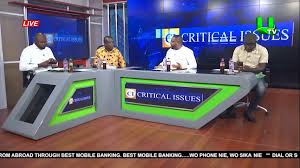
“Turn on any FM station, television channel, or social media space and you will find party communicators fiercely defending their side—sometimes with unshakable confidence, and often with limited facts,” notes Fuseini Abdulai Braimah, a media analyst tracking the deterioration of public discourse in the country.
This system has created a political echo chamber where facts become secondary to partisan loyalty. Party communicators, armed with talking points and sometimes questionable data, dominate airwaves despite often lacking expertise in the subjects they discuss. The result is a public square where loyalty to political parties outweighs commitment to truth.
Media observers point to a concerning trend where genuine experts are sidelined in favor of partisan voices. Development economists, education specialists, and other professionals with deep domain knowledge remain underutilized in public discussions about national policies.
“A development economist is better positioned to analyze the economic potential of the Pwalugu Dam than a party communicator with limited relevant expertise,” Braimah argues. “Ghana has an abundance of human resources—retired professionals, researchers, and civil servants with decades of experience—sitting idle while our national conversation is dominated by self-proclaimed commentators.”
The media industry shares responsibility for this situation. In pursuing “balance,” broadcasters routinely pair representatives from the two dominant parties—the National Democratic Congress (NDC) and the New Patriotic Party (NPP)—regardless of the topic at hand. This practice prioritizes political representation over subject matter expertise.
Another worrying trend is the trivialization of complex social issues. Young commentators with limited life experience hold forth confidently on matters like marriage, parenting, and societal problems, often relying on anecdotal evidence rather than research or lived experience.
Ghana’s political culture of perpetual campaigning further compounds these problems. The moment one election concludes, parties immediately shift focus to the next electoral cycle, turning governance into an endless campaign operation.
“It is absurd that just ten months into a new administration, conversations within parties already center on succession planning for years ahead,” notes Braimah. “This obsession with political succession betrays the poverty of vision in our politics. Governance has become a stepping stone to the next election rather than a platform for transformation.”
One positive development, however, is the recent emergence of internal critique within the ruling NDC. Party members have begun publicly questioning certain government decisions—a departure from the previous administration under former President Nana Addo Dankwa Akufo-Addo, when internal dissent within the NPP was reportedly discouraged.
Media and governance experts propose several solutions to address these challenges. First, the government’s Minister of Information should serve as the primary voice explaining policy, rather than relying on multiple partisan communicators with limited understanding of ministerial functions.
Second, the National Media Commission and Ghana Journalists Association could lead reforms in broadcast content, limiting partisan representation while creating more space for professionals, researchers, and civil society organizations in policy discussions.
Third, Ghana could benefit from a code of political conduct that separates governance from campaigning, with partisan political activities suspended between election cycles to allow governments to focus on policy implementation.
Citizens also have a role to play by demanding higher standards from both media and politicians. By rejecting superficial discussions and insisting on factual, evidence-based conversations, the public can help elevate the quality of national discourse.
“If we continue down this path of deception and division, we may win elections but lose the very soul of our nation,” Braimah warns. “It is time to reset the airwaves, restore respect for expertise, and rebuild a thoughtful republic.”
As Ghana prepares for future electoral contests, the question remains whether its political class and media institutions can break free from propaganda politics and create space for the genuine exchange of ideas that democracy requires.
Fact Checker
Verify the accuracy of this article using The Disinformation Commission analysis and real-time sources.

10 Comments
It’s troubling that political parties have been able to effectively institutionalize propaganda under the guise of public information in Ghana. Restoring journalistic integrity should be a top priority for media regulators.
This is a troubling trend that needs to be addressed. Ghana’s media regulators should consider implementing stricter guidelines and oversight mechanisms to prevent political interests from hijacking the public discourse.
The dominance of partisan communicators on Ghana’s airwaves is deeply problematic. Media outlets must be empowered to report objectively, even on contentious political issues, in order to serve the public interest.
This is a worrying development that undermines the role of the media as a watchdog and forum for open, fact-based discourse. Ghana must act quickly to rein in political influence and reinforce the independence of its media sector.
Agreed, the media’s ability to hold the powerful to account is crucial for a healthy democracy. Ghana’s regulators need to take strong action to curb the spread of political propaganda.
Allowing partisan communicators to dominate the airwaves with limited facts is deeply problematic. Media outlets in Ghana must uphold journalistic standards of impartiality and rigorous fact-checking, even when covering political issues.
You’re right, it’s crucial that the media maintain independence from political influence and prioritize objective reporting over partisan agendas.
Disturbing to see Ghana’s media landscape devolving into an echo chamber of partisan propaganda. Urgent reforms are needed to restore balance, promote factual reporting, and uphold the principles of a free press.
This sounds like a textbook case of the media being co-opted by political interests. Regulators need to step in and enforce safeguards to protect the integrity of Ghana’s public information channels.
This is a concerning trend – when political propaganda crowds out factual reporting, it erodes public trust and undermines democratic discourse. Ghana’s media regulators need to find a way to restore balance and promote unbiased coverage.