


Listen to the article
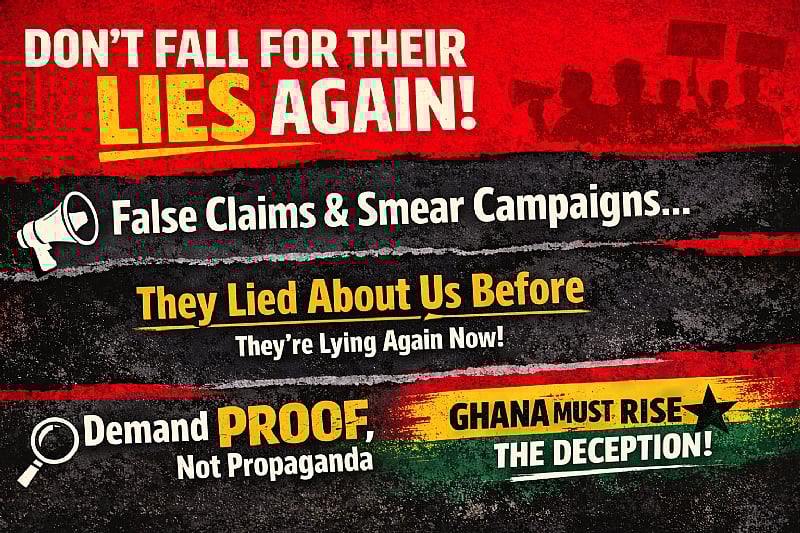
Political observers across Ghana are raising concerns about an emerging pattern of disinformation tactics that some claim are being deployed by the opposition New Patriotic Party (NPP) following its recent electoral defeat. Critics argue these tactics mirror strategies used in previous political cycles, potentially undermining the current government’s economic stabilization efforts.
The controversy centers around a series of allegations that have gained traction in public discourse without substantial evidence. In one instance, claims surfaced that foreign scholarships were being sold at the Scholarship Secretariat. When the accuser was invited by the National Intelligence Bureau to substantiate these allegations, critics note that instead of presenting concrete evidence, the situation evolved into public demonstrations.
Simultaneously, unverified claims have circulated suggesting that the wife of Goldbod’s CEO owns a jewelry shop in Dubai, an allegation that political analysts say appears designed to create an impression of impropriety without supporting evidence.
Political commentators point out that these recent allegations follow a historical pattern in Ghanaian politics. Similar claims were made in previous electoral cycles, including allegations that the late Nana Konadu Agyemang Rawlings owned a gold shop in Switzerland and that former President John Mahama owned apartments in Dubai. These narratives gained significant traction during campaign periods but reportedly faded from public discourse after elections concluded.
“The tactic seems to be consistent – plant suspicion, amplify it through various channels, allow it to shape public perception, and then move on once political objectives have been achieved,” explained a political analyst who has studied Ghanaian electoral communication strategies for over a decade.
The current government, which has been in office for approximately a year, inherited significant economic challenges including structural debt and fragile investor confidence. Economic indicators have shown signs of stabilization in recent months, with renewed investor interest and attempts to address institutional inefficiencies, particularly in entities like COCOBOD, which has faced financial difficulties attributed to previous management decisions.
Government supporters argue that the opposition’s approach represents a form of “destabilization politics” rather than constructive criticism. They contend that while democratic scrutiny is essential, allegations require substantiation and evidence to be meaningful contributions to political discourse.
The controversy raises broader questions about information integrity in Ghana’s political landscape. Media literacy advocates have expressed concern about how unverified claims can rapidly spread through social media channels and influence public opinion before fact-checking mechanisms can engage effectively.
“Democracy requires discernment from citizens,” noted a professor of political communication at the University of Ghana. “The challenge in our current media environment is distinguishing between legitimate criticism and engineered narratives designed primarily to undermine rather than hold accountable.”
The debate reflects Ghana’s ongoing struggle to maintain constructive political discourse amid polarization. With the economy showing early signs of recovery from previous challenges, stakeholders from various sectors emphasize the importance of evidence-based criticism rather than what some characterize as manufactured outrage.
As Ghana continues navigating its democratic journey, political observers suggest that the resilience of its institutions will depend on citizens’ ability to demand verification before accepting politically charged narratives, regardless of which political tradition they originate from.
This pattern of allegation and counter-allegation has become a familiar feature of Ghana’s political landscape, with potential consequences for governance, economic stability, and public trust in both government and opposition forces.
Fact Checker
Verify the accuracy of this article using The Disinformation Commission analysis and real-time sources.

5 Comments
This pattern of unverified claims and misinformation sounds very concerning. Ghanaians deserve a political process focused on substantive issues, not distractions and smear campaigns. The government should take firm action to counter these tactics and protect democratic norms.
This sounds like a worrying pattern of unsubstantiated allegations and misinformation. Ghanaians deserve a political environment focused on real issues, not baseless smears. The government should take strong action to counter these tactics and uphold democratic integrity.
It’s concerning to hear about these potentially deceptive tactics being used in Ghana’s political discourse. Maintaining transparency and evidence-based claims is crucial for a healthy democracy. I hope the authorities can investigate these allegations thoroughly and restore public trust.
It’s disappointing to see these kinds of deceptive tactics emerging in Ghanaian politics. Voters need accurate information to make informed decisions, not a barrage of unsubstantiated allegations. I hope the authorities can get to the bottom of this and restore transparency.
These claims of impropriety and disinformation campaigns are troubling. Ghana’s leaders must exercise caution and prioritize facts over political posturing. Rebuilding economic stability requires good-faith efforts, not underhanded tactics that erode public confidence.