


Listen to the article
Canada’s Climate Policy Retreat Highlights Fossil Fuel Industry Influence
Canada’s climate policy has suffered significant setbacks in 2025, with the federal government reversing course on several key environmental initiatives. In November, Prime Minister Mark Carney’s administration signed a memorandum of understanding with Alberta to remove strict climate policies in the province and support construction of a new pipeline from Alberta to northern British Columbia.
This retreat follows the cancellation of the federal carbon tax earlier this year, alongside terminated funding for home energy-efficiency programs and delayed sales mandates for zero-emission vehicles. These decisions have pushed Canada even further from meeting its climate commitments under the Paris Climate Agreement, which were already insufficient to limit global warming to 1.5°C.
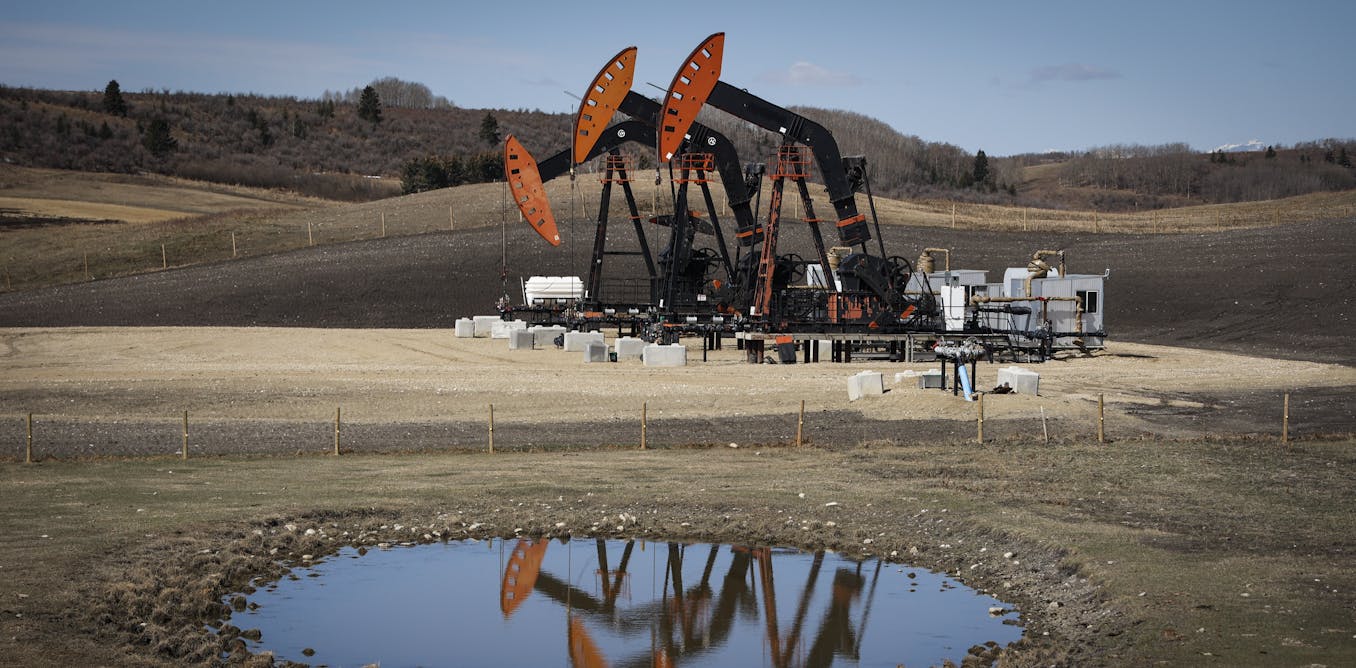
A newly published academic study reveals the driving force behind these policy reversals: a sophisticated network of fossil fuel industry influence dubbed the Climate Change Counter Movement. This global web of foundations, think tanks, and lobbyists has effectively delayed climate action in Canada for decades by systematically undermining environmental policies that threaten industry profits.
“What we’re seeing is the culmination of a 50-year effort by the fossil fuel industry to protect its financial interests at the expense of meaningful climate action,” said one of the study’s researchers, who analyzed both academic and non-academic literature to map the movement’s influence in Canada.
The study documents how the movement’s strategy has evolved over time. Initially focused on denying climate change entirely, the industry has adapted its approach as extreme weather events became increasingly difficult to ignore. Rather than outright denial, today’s tactics exploit legitimate policy debates to create confusion, foster political deadlock, and promote solutions that preserve industry profits.
Three narratives have proven particularly effective in Canada. The first is “fossil-fuel solutionism” – the false premise that fossil fuels can be part of climate solutions rather than the primary problem. The second uses “whataboutism” to deflect responsibility. The third employs appeals to economic well-being, suggesting fossil fuels are essential to Canadian prosperity.
These arguments rest on misleading claims, including the assertion that Canadian fossil fuels are less carbon-intensive than those produced elsewhere. In reality, oil from Canada’s oil sands is approximately 21 percent more polluting than conventional crude oil, according to peer-reviewed research. Similarly, the economic arguments significantly overstate transition costs while minimizing the enormous economic damage of unchecked climate change.
The Canadian oil and gas industry, which represents about 5.3 percent of Canada’s GDP according to Statistics Canada, has successfully leveraged its regional economic importance in provinces like Alberta to exert outsized national influence. This has resulted in policy shifts like those seen throughout 2025.
Market analysts note that these policy reversals come as global investors increasingly shift capital toward renewable energy. The International Energy Agency forecasts that fossil fuel demand could peak before 2030, raising questions about the long-term economic wisdom of doubling down on pipeline infrastructure.
The study outlines a six-part strategy to counter fossil fuel industry influence. First, recognizing how industry narratives have already shaped public opinion. Second, researching the movement’s members, tactics and effectiveness. Third, pursuing legal accountability, similar to the “Sue Big Oil” campaign uniting British Columbia municipalities against fossil fuel companies.
Additional recommendations include healing societal divisions caused by industry propaganda, focusing on less controversial but effective climate policies, and addressing the structural economic power of fossil fuel companies by redirecting financial flows through subsidy removal and market realignment.
Environmental advocates argue these steps are essential if Canada hopes to meet its international climate commitments and contribute meaningfully to global emissions reduction. The study concludes that while the Climate Change Counter Movement has successfully delayed action, it hasn’t permanently derailed it – provided there’s sufficient public awareness and political will to challenge industry influence.
Fact Checker
Verify the accuracy of this article using The Disinformation Commission analysis and real-time sources.

12 Comments
It’s disheartening to see Canada backsliding on climate commitments due to fossil fuel industry influence. Renewable energy solutions are becoming increasingly cost-competitive – we need smart policies to accelerate the transition, not prop up outdated industries.
I agree, Canada should be leading the charge on climate action, not caving to industry pressure. Fossil fuel lobbying is a major roadblock that needs to be overcome.
Concerning news about fossil fuel lobbying hampering climate progress. While economic interests are understandable, we need bold action and leadership to address the urgent threat of climate change. Curious to see what policy solutions and strategies are proposed in the article.
I agree, the fossil fuel industry’s influence seems to be a major obstacle to meaningful climate action. Transparent and accountable policymaking is crucial to put the planet first.
This is a concerning trend that highlights the urgent need for campaign finance reform and greater transparency around political lobbying. The public interest must come before narrow corporate interests when it comes to climate policy.
Well said. Strong, science-based climate policies are essential, and they shouldn’t be held hostage by fossil fuel industry influence. Policymakers need to show real leadership on this critical issue.
This is a troubling trend – the fossil fuel industry’s resistance to climate policies is extremely short-sighted. We need to find ways to balance economic realities with the imperative of reducing emissions and transitioning to renewable energy.
Absolutely. The science is clear on the need for urgent action. Fossil fuel lobbying that undermines climate policy is unconscionable and must be confronted.
The fossil fuel industry’s ability to delay climate action is extremely troubling. We need courageous leaders who are willing to stand up to powerful vested interests and chart a sustainable path forward, even if it means short-term economic disruption.
I agree completely. The long-term risks of inaction on climate change far outweigh any short-term economic concerns. Decisive action is needed to overcome fossil fuel lobbying and transition to a low-carbon future.
This is a worrying development. Fossil fuel lobbying should not be allowed to undermine crucial climate policies and Canada’s commitments under the Paris Agreement. The world is rapidly moving towards renewable energy – Canada needs to get on board or risk being left behind.
Absolutely right. The writing is on the wall – the future is in clean energy, not fossil fuels. Canada should be embracing the transition, not caving to industry pressure. Policymakers need to show real vision and leadership on this issue.