


Listen to the article
State Department Official Criticizes CNN’s Iran Coverage as “Propaganda”
A senior State Department official sparked controversy this week after publicly criticizing CNN’s on-the-ground reporting from Iran, labeling it as “pro-Iran regime propaganda” in a social media post.
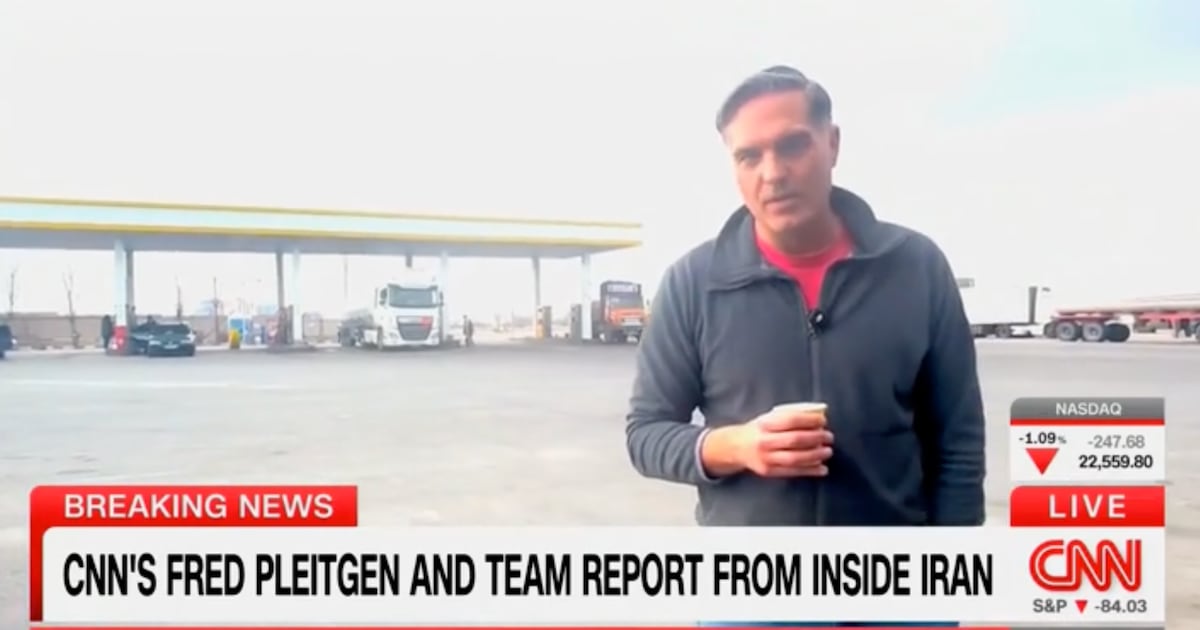
Dylan Johnson, who has served as Assistant Secretary of State for Global Public Affairs since January 30, took issue with CNN senior international correspondent Frederik Pleitgen’s live report from Iran, where the journalist described relatively normal daily life amid escalating tensions between Iran and the United States.
In his report, filmed during a coffee stop while traveling to Tehran, Pleitgen noted that while he had observed “destroyed buildings, thick black smoke and checkpoints with armed personnel,” there was “no sign of order collapsing here.” The correspondent showed footage of open shops with well-stocked shelves, including fresh produce, and gas stations without long lines, suggesting fuel remained “readily available” and there was no visible “degree of panic anywhere.”
Johnson shared a 30-second clip of the report on X (formerly Twitter), with the caption: “CNN appears to now be doing straight up pro-Iran regime propaganda because someone gave this guy a coffee…”
The State Department later offered a measured response to Johnson’s post, telling NPR: “We encourage media outlets to verify information with official U.S. government sources before publication.” This statement raises questions about the appropriate relationship between government officials and independent media coverage during international conflicts.
Johnson’s role at the State Department specifically involves overseeing “strategic communications, public messaging and engagement with domestic and international media.” Before his appointment to this position, he worked as deputy communications director for Trump’s 2024 presidential campaign.
The incident highlights the tensions between government messaging and independent journalism during military operations. CNN is the first U.S. network granted access to report from Iran since President Trump initiated military strikes on February 28. The network has acknowledged that they operate in Iran only with “government permission,” a standard practice for international media working in restricted environments.
Meanwhile, the conflict continues to escalate. American and Israeli military strikes have intensified in recent weeks, with Iran launching retaliatory operations. President Trump claimed on Thursday that Iran is being demolished “ahead of schedule and at levels people have never seen before,” further asserting that the country now has “no air force, no air defense.”
Secretary of Defense Pete Hegseth reinforced this position, suggesting that U.S. military operations against Iran are entering a new phase. “Iran is hoping that we cannot sustain this, which is a really bad miscalculation,” Hegseth said. “We set the timeline.”
The ongoing military campaign carries significant costs. Reports indicate that Trump’s military action against Iran has cost American taxpayers an estimated $5 billion. The human toll includes six American service members killed in a single Iranian drone strike on a military facility in Kuwait.
The confrontation between the State Department official and CNN reflects broader tensions about media coverage during wartime. While government officials often seek to control messaging around military operations, journalists are tasked with providing accurate, independent reporting from conflict zones—even when their observations might contradict official narratives.
As the situation in the Middle East continues to develop, the incident underscores the critical importance of independent journalism and the challenges reporters face when covering complex international conflicts.
Fact Checker
Verify the accuracy of this article using The Disinformation Commission analysis and real-time sources.

12 Comments
While I respect the State Department official’s role, I’m not convinced the ‘propaganda’ label is warranted based on the limited information provided. Nuanced reporting is valuable, even if it doesn’t align with certain political narratives.
Exactly. Healthy debate and scrutiny of media coverage is important, but it should be grounded in a fair assessment of the full context, not partisan rhetoric.
Criticizing media coverage is fair, but calling it ‘propaganda’ is a strong accusation. I’d encourage looking at the full report objectively before rushing to judgment.
Valid point. Journalists should strive for impartiality, but it’s also important to consider the on-the-ground realities they’re observing.
The tensions between the US and Iran are undoubtedly complex, and it’s important to have a range of perspectives. However, dismissing on-the-ground reporting as ‘propaganda’ seems like an oversimplification.
I agree. While constructive criticism is warranted, it’s crucial to avoid knee-jerk reactions and instead engage in a more nuanced discussion of the issues at hand.
I’m curious to understand the State Department official’s specific concerns with the CNN reporting. While scrutiny of media is warranted, it’s important to avoid overly partisan rhetoric.
Agreed. Constructive criticism is valuable, but labeling reporting as ‘propaganda’ without a clear rationale is counterproductive.
While I understand the desire to hold media accountable, it seems hasty to label CNN’s reporting as ‘propaganda’. Their correspondent’s observations on the ground provide useful context that shouldn’t be dismissed.
I agree – it’s important to have balanced, on-the-ground reporting to understand the full picture, even if it doesn’t align with certain political narratives.
The tensions between the US and Iran are complex, and it’s understandable that there would be differing perspectives on media coverage. However, dismissing on-the-ground observations as ‘propaganda’ seems premature.
Good point. It’s important to maintain a balanced and objective view, rather than quickly jumping to accusations, even from government officials.