


Listen to the article
U.S. Department of Labor Faces Backlash Over Tweet With Nazi-Era Parallels
The U.S. Department of Labor has come under intense criticism after posting a tweet that many observers claim bears striking similarities to Nazi propaganda slogans from the 1930s.
The controversial social media post, which has garnered over 11.2 million views, featured historical images of American founding fathers and war scenes alongside the text: “One Homeland. One People. One Heritage. Remember who you are, American.”
Critics were quick to point out the disturbing parallel between this phrasing and the infamous Nazi slogan “Ein Volk, ein Reich, ein Führer,” which translates to “One People, One Empire, One Leader.” This slogan was a cornerstone of Nazi propaganda during Adolf Hitler’s rise to power and throughout the Third Reich.
The tweet, published over the weekend, has sparked widespread condemnation from historians, political analysts, and members of the public. Many view it as an alarming echo of fascist rhetoric from one of the darkest periods in modern history.
Patrick Jaicomo, a constitutional attorney, was among those who responded critically on social media, writing: “The U.S. Department of Labor is now openly using Third Reich slogans. This is how low our political discourse has fallen.”
The controversy comes at a particularly sensitive time in American politics, with heightened concerns about growing extremism and nationalist rhetoric. Civil rights organizations have increasingly warned about the normalization of language that was once associated exclusively with fascist movements of the 20th century.
Holocaust education advocates have repeatedly emphasized the importance of recognizing early warning signs of authoritarian messaging, particularly when they appear in official government communications. The Department of Labor, which is responsible for promoting the welfare of American workers and job seekers, has found itself at the center of an unexpected historical comparison that many find deeply troubling.
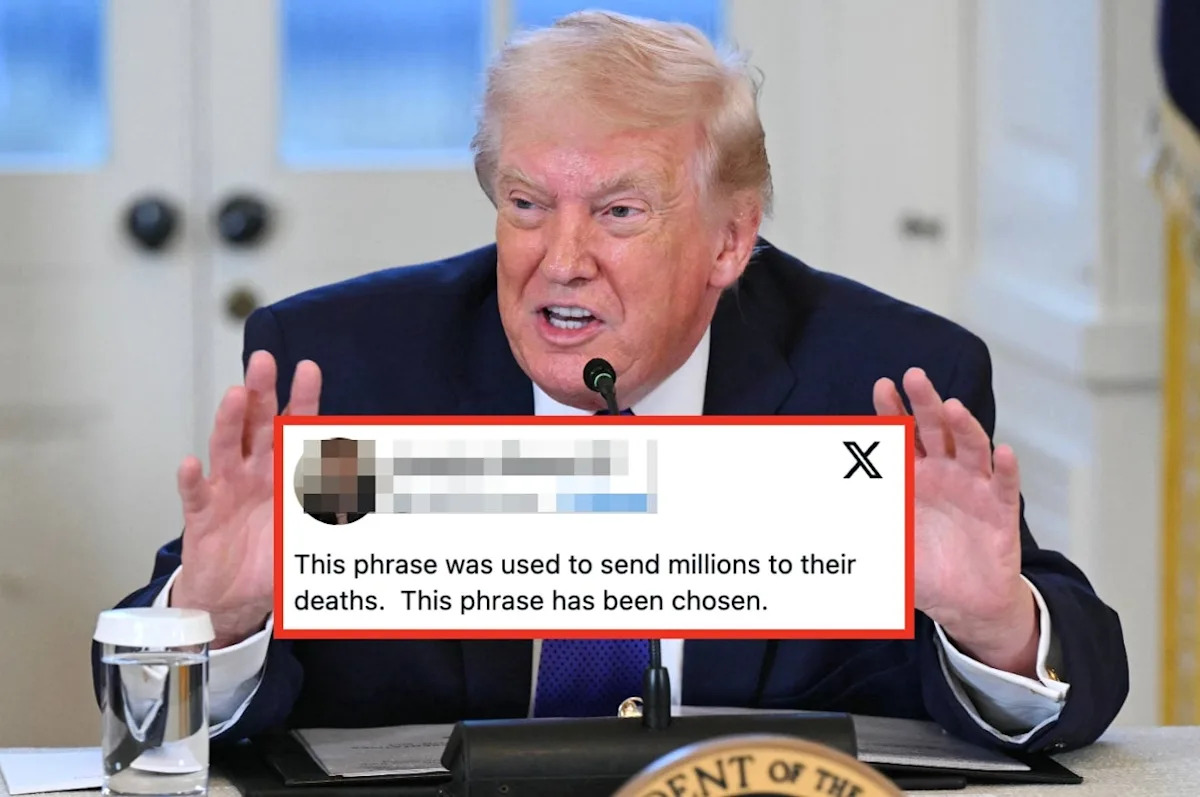
Jessica Simor KC, a prominent legal expert, noted in her response to the tweet: “This was the phrase that sent millions to their deaths and it is being chosen again.”
The incident raises questions about the approval process for government communications and whether there was sufficient historical awareness among those responsible for creating and publishing the content. Government agencies typically have multiple layers of review for public messaging, making the oversight particularly notable.
The Department of Labor has not yet issued an official response to the criticism or explained how the messaging was developed and approved. Communications experts suggest that the incident highlights the need for increased historical literacy among government communications staff.
This is not the first time the Trump administration has faced criticism over messaging that critics say contains troubling historical parallels. Previous controversies have involved campaign imagery and rhetoric that opponents have characterized as having authoritarian undertones.
As the controversy continues to gain attention, political observers are watching closely to see how the administration responds and whether similar messaging appears in future communications from government agencies. The incident serves as a reminder of how historical parallels can quickly transform routine government communications into lightning rods for public debate about the boundaries of acceptable political rhetoric in a democracy.
The Department of Labor’s core mission of protecting workers’ rights and ensuring fair labor practices stands in stark contrast to the associations many are drawing from its recent social media activity, creating a dissonance that will likely require explicit clarification from agency leadership in the coming days.
Fact Checker
Verify the accuracy of this article using The Disinformation Commission analysis and real-time sources.

6 Comments
This is a deeply worrying parallel. Even if unintentional, the use of such loaded language is highly problematic and plays into the hands of extremist groups. The department should thoroughly review their messaging and processes to avoid such missteps in the future.
Invoking nationalist slogans from the Nazi era is extremely troubling, even unintentionally. The Department of Labor should exercise much greater sensitivity when crafting public messaging, to avoid any resemblance to fascist rhetoric.
I agree. Any use of language reminiscent of Nazi propaganda, regardless of intent, is highly inappropriate and risks normalizing those toxic ideologies. A swift and sincere apology is warranted here.
As someone who cares about mining and energy issues, I’m troubled to see this kind of controversy around the Department of Labor. Regardless of intent, evoking Nazi slogans is completely unacceptable. I hope they issue a sincere apology and take steps to prevent similar incidents.
This is a concerning parallel to Nazi propaganda. While historical references can be meaningful, using slogans with such dark connotations is highly problematic and divisive. I hope the department swiftly addresses this and clarifies their intent.
While I understand the intent may have been patriotic, the similarities to Nazi propaganda cannot be ignored. Evoking that kind of nationalist rhetoric, even inadvertently, is extremely concerning. The department needs to address this sensitively and transparently.