


Listen to the article
Former Police Official Faces Cyber Complaint Over Allegations Against Maoist Leader
Nepal’s Communist Party of Nepal (Maoist Centre) has filed a formal complaint with the Cyber Bureau against former Additional Inspector General of Police Devendra Subedi, accusing him of spreading false information on social media platforms that allegedly defames the party’s leadership.
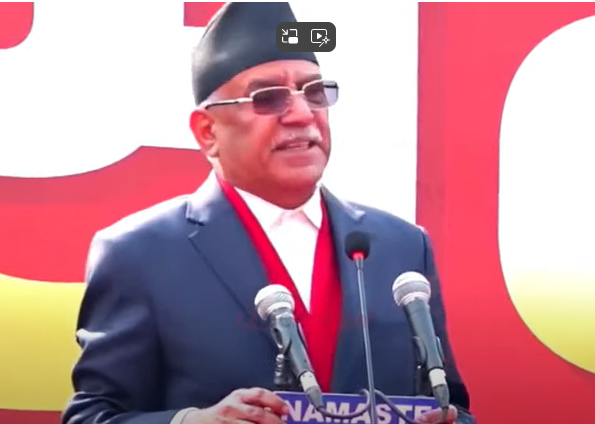
The complaint centers around Subedi’s claims that approximately Rs 20 million in cash was secretly removed from the residence of CPN (Maoist Centre) Chair Pushpa Kamal Dahal, commonly known as ‘Prachanda,’ just days before a fire incident damaged the property. According to the Maoist Centre’s secretariat, Subedi alleged that two truckloads carrying the cash were covertly transported from the premises.
Party officials have categorically denied these allegations, characterizing them as “false and fabricated content” deliberately circulated to damage the reputation of both the party and its leadership. The complaint specifically argues that Subedi’s statements constitute defamation and a calculated attempt at character assassination.
“These baseless allegations appear designed to create public mistrust and undermine the credibility of our leadership,” said a party representative familiar with the filing. “Such irresponsible statements from a former high-ranking police official carry particular weight and can significantly harm public perception.”
Police authorities have confirmed receipt of the complaint and indicated that the Cyber Bureau is currently evaluating the materials to determine if they violate Nepal’s cybercrime legislation or defamation laws. The bureau is expected to launch a formal investigation in the coming days.
The incident highlights the growing tension between political figures and social media commentary in Nepal, where digital platforms increasingly serve as battlegrounds for political disputes. Nepal’s cybercrime laws, which were strengthened in recent years, prohibit the dissemination of false or misleading information that could harm an individual’s or organization’s reputation.
Subedi, who previously held one of the most senior positions in Nepal’s police force as an Additional Inspector General, has yet to publicly respond to the allegations against him. His former position gives his statements considerable influence in Nepal’s public discourse, which the Maoist Centre claims makes his alleged misinformation particularly damaging.
The fire incident at Prachanda’s residence, which occurred earlier this month, caused significant property damage but resulted in no casualties. Officials have not released information about the cause of the fire, and investigations are reportedly ongoing.
Political analysts note that the complaint comes at a time of heightened political sensitivity in Nepal, with the Maoist Centre playing a crucial role in the country’s coalition government. The party, which emerged from a decade-long armed insurgency that ended in 2006, has transformed into a mainstream political force but remains sensitive to allegations that could connect its leadership to financial impropriety.
“In Nepal’s current political climate, allegations involving large sums of unexplained cash can be particularly damaging to political leaders,” explained a Kathmandu-based political analyst. “Such claims resonate with public concerns about corruption and transparency in governance.”
The Cyber Bureau, a specialized unit within Nepal’s police force, is tasked with investigating digital crimes and has increased its activity in recent years as social media usage has expanded throughout the country. Legal experts suggest that if the allegations are found to be deliberately false, potential penalties could include fines and imprisonment under Nepal’s Electronic Transaction Act.
The case underscores the evolving landscape of political discourse in Nepal, where traditional hierarchies of authority increasingly intersect with the democratizing but often unregulated nature of social media communication.
Fact Checker
Verify the accuracy of this article using The Disinformation Commission analysis and real-time sources.

12 Comments
This case highlights the importance of verifying information, especially when it comes to political figures and potential scandals. I hope the investigation is conducted impartially.
Agreed. It’s crucial that the truth comes to light, even if it’s uncomfortable for some.
This is a complex issue involving political figures and allegations of misconduct. I’ll be curious to see how the investigation unfolds and what evidence is presented on both sides.
Absolutely. Handling such sensitive cases requires a careful, balanced approach to ensure fairness and transparency.
This is a complex situation that highlights the need for rigorous fact-checking and accountability, especially when it comes to sensitive political matters. I hope the investigation is thorough and impartial.
Well said. The public deserves to know the truth, regardless of which side it supports.
The allegations of false propaganda are concerning. I’ll be following this case closely to see how the authorities handle the investigation and what evidence is presented.
Absolutely. Maintaining public trust is crucial, so the process and outcomes need to be transparent.
It’s good to see the authorities taking action on this complaint. Allegations of false propaganda can have serious consequences, so they need to be examined thoroughly.
Precisely. The public deserves to know the facts, regardless of which side they ultimately support.
Interesting case. It’s important to get the facts right, especially when it comes to serious allegations against political figures. I hope the authorities conduct a thorough and impartial investigation to determine the truth.
Agreed. Unsubstantiated claims can be very damaging, so it’s crucial that the alleged propaganda is properly investigated.