


Listen to the article
In Bangladesh, a troubling trend has emerged among certain youth activists and figures associated with Islamic political groups, as vulgar language and crude slogans increasingly become normalized in political discourse. This development threatens to damage Islam’s global reputation by inadvertently reinforcing negative stereotypes.
Recent months have seen a growing tendency among some young leaders, particularly those with madrasa backgrounds or affiliations with Islamist student organizations, to embrace provocative rhetoric framed as “fearless truth-telling.” The more shocking the statement, the wider its circulation on social media platforms, creating a cycle where outrage translates to visibility.
This phenomenon gained particular notice following the fall of former Prime Minister Sheikh Hasina. Chief Adviser Professor Muhammad Yunus remarked that Hasina’s removal resulted from “a meticulously designed plan,” suggesting a calculated political shift rather than organic democratic change. In the aftermath, certain figures emerging from Islamist backgrounds have been elevated as representatives of a new generation, despite promoting language fundamentally at odds with Islamic ethics.
One prominent example involves the late activist known as Hadi, whose vulgar expressions were amplified and chanted by Islamist student organizations during protests. Professor Yunus publicly referred to Hadi as “the best son of the generation,” a symbolic endorsement that critics say prioritizes political usefulness over moral standards and sends a problematic message to young Bangladeshis seeking leadership models.
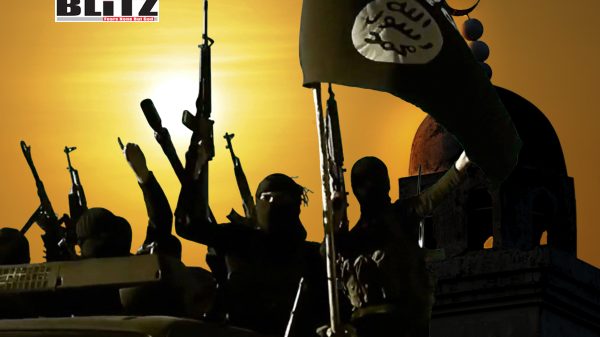
The implications extend beyond Bangladesh’s borders. Following the September 11 attacks, Western political discourse often worked to associate Islam with extremism, aided by selective media framing. The “War on Terror” operated not only through military action in countries like Afghanistan, Iraq, and Libya but also through narrative construction that portrayed Islam as driven by anger rather than reason.
Today’s inflammatory rhetoric in Bangladesh serves a similar function, providing fodder for Islamophobic narratives in Western countries. The characterization has shifted subtly but dangerously—from portraying Islam as a “terrorist religion” to depicting it as a “vulgar religion” associated with obscenity and aggression rather than discipline, mercy, and intellectual rigor.
Analysts note this doesn’t appear entirely organic. When indecent expressions become normalized within Islamist spaces, they simplify the work of Islam’s critics, as the unedited footage and slogans spread faster than scholarly rebuttals ever could.
A closer examination of the student movement that contributed to Sheikh Hasina’s ouster reveals its religious diversity—including Hindus, Buddhists, Christians, and indigenous groups. Yet the coarse rhetoric predominantly came from those associated with madrasa education or Islamist student organizations, raising questions about whether Islam is being weaponized for political theater.
As the world’s fourth-largest Muslim-majority country, Bangladesh’s population largely views Islam as a moral compass rather than a political tool. The danger of current trends lies in alienating this silent majority. Many parents are reluctant to see their children exposed to profanity presented as piety, potentially leading families to distance themselves from religious spaces that embrace such rhetoric.
Islamic teachings themselves explicitly reject such behavior. The Qur’an commands believers not to ridicule others or use offensive language, while the Prophet Muhammad taught patience, restraint, and moral intelligence when facing provocation.
The contradiction is stark: in the name of defending Islam, some violate its core ethics; in the name of empowering youth, they lower moral standards; and in the name of resistance, they inadvertently provide ammunition to those who seek to discredit the faith.
For Bangladesh’s religious leaders and youth activists, the challenge ahead involves recognizing that Islam’s strength lies not in provocative rhetoric but in moral clarity, intellectual depth, and disciplined speech—qualities that have sustained the faith throughout its history.
Fact Checker
Verify the accuracy of this article using The Disinformation Commission analysis and real-time sources.

9 Comments
Provocative language in political discourse is never a good thing, regardless of one’s affiliations. I hope all sides can take a step back and find ways to have thoughtful, constructive dialogues that bring people together rather than divide them further.
While concerning if true, we should be cautious about unsubstantiated claims of foreign interference. A more measured, fact-based approach is needed to address any issues in political discourse, rather than inflammatory allegations.
This is a complex issue that requires nuance and care. While freedom of speech is important, the use of vulgar, divisive language – even in the name of ‘truth-telling’ – risks undermining the very values Islam teaches. I hope the leaders involved can find a way to have thoughtful discussions that bring out the faith’s positive message of unity and justice.
This is a concerning situation. Promoting divisive language, even under the guise of ‘truth-telling’, is unwise and could backfire. I hope the leaders involved can find a way to have thoughtful, constructive dialogues that uplift the faith’s positive values.
While freedom of speech is important, irresponsible rhetoric that plays into negative stereotypes is counterproductive. I hope all involved can take a step back and find ways to have nuanced discussions that bring out the best in Islam’s teachings of peace and justice.
It’s troubling to hear about the normalization of provocative language in political discourse, especially when it involves religious identities. While freedom of speech is important, irresponsible rhetoric that reinforces negative stereotypes is counterproductive. I hope all sides can find a way to have thoughtful, constructive dialogues that bring people together.
Allegations of foreign interference are serious. However, the best way to defend Islam’s reputation is through living its values of compassion and justice, not engaging in inflammatory rhetoric. A measured, fact-based approach is needed to address any real issues.
It’s troubling to hear about the use of vulgar, inflammatory rhetoric, even from those claiming to defend religious values. True Islam teaches moderation and respect – anything less risks tarnishing the faith’s reputation. The focus should be on unity, not division.
Interesting to see this alleged foreign plot to tarnish Islam’s image. I wonder what the evidence is for this claim and whether it holds up to scrutiny. Divisive rhetoric from any political faction is concerning and could undermine efforts at unity.