


Listen to the article
FCC Chairman Threatens Broadcaster Licenses Over Iran Conflict Coverage
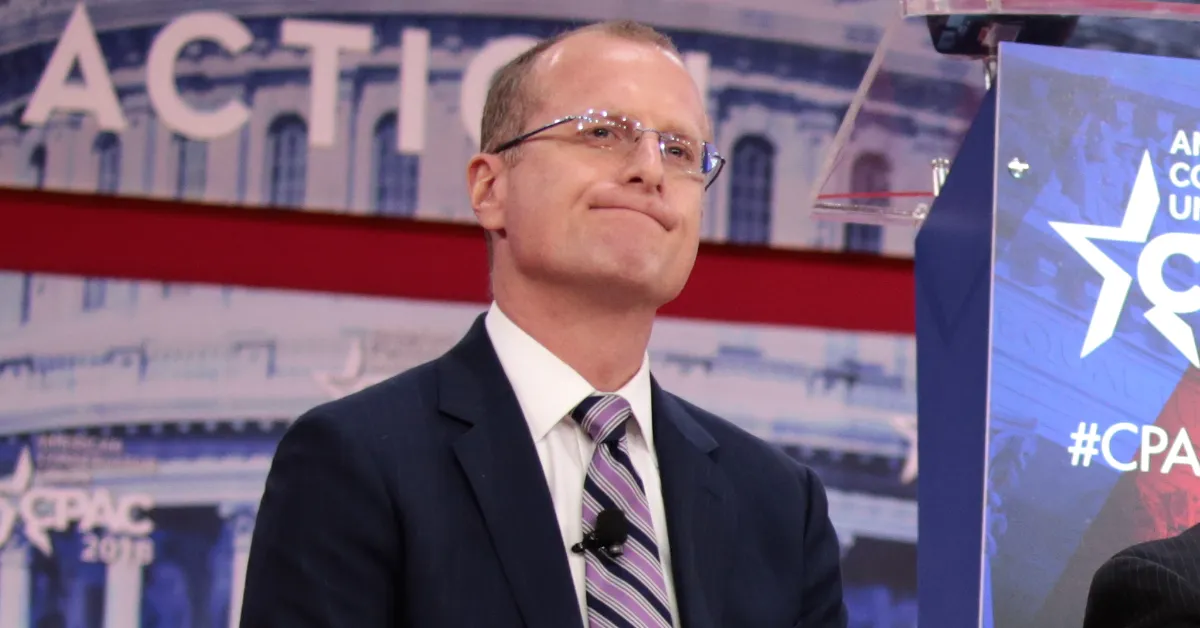
Federal Communications Commission Chairman Brendan Carr has issued veiled threats against radio and television stations regarding their coverage of the ongoing military conflict in Iran, suggesting their broadcast licenses could be at risk during renewal periods.
In a series of weekend social media posts, Carr targeted what he called “broadcasters that are running hoaxes and news distortions” about the conflict, warning they have a “chance now to correct course before their license renewals come up.”
“The law is clear: Broadcasters must operate in the public interest, and they will lose their licenses if they do not,” Carr declared in his posts.
However, industry experts note the law isn’t actually clear on this matter. While broadcasters do operate under a “public interest” obligation to serve their communities, this term has never been specifically defined in regulatory frameworks. This ambiguity has historically required the FCC to interpret the obligation on a case-by-case basis, with news programming typically viewed as one method of fulfilling public interest requirements.
This isn’t the first time Carr has leveraged this regulatory gray area. Last year, after late-night host Jimmy Kimmel wrongly suggested that a man who shot political activist Charlie Kirk was aligned with Trump supporters, Carr encouraged broadcasters to drop Kimmel’s program. Within hours, media giants Nexstar Media Group and Sinclair, Inc. pulled the show from their ABC affiliates – companies that notably had pending business transactions requiring FCC approval at the time.
Though Carr later claimed the broadcasters were simply fulfilling their public interest obligations independently, the incident prompted FCC Commissioner Anna Gomez to call for clearer definitions of these requirements.
“I have called for the commission to initiate a rulemaking to define what it means by the public interest,” Gomez stated during an appearance at the University of Mississippi last October. “Otherwise, we’re just regulating against what we don’t like, and that is a direct violation of the First Amendment.”
Carr’s latest threats appear tied to former President Donald Trump’s recent criticism of media coverage regarding the Iran conflict. Trump took to his Truth Social platform to complain about newspaper reporting on the military action – which reportedly has limited public support and contradicts Trump’s own campaign promises to avoid foreign wars. The criticism specifically targeted coverage of an Iranian missile strike against five refueling aircraft at a U.S. military base in Saudi Arabia.
Using Trump’s complaints as a springboard, Carr suggested the FCC might scrutinize news coverage during license renewal processes. “The American people have subsidized broadcasters to the tune of billions of dollars by providing free access to the nation’s air waves,” Carr stated. “It is very important to bring trust back into media, which has earned itself the label of fake news.”
This regulatory approach has precedent, though with limited success. Three years ago, a grassroots organization attempted to block the license renewal of a Fox-owned television station in Philadelphia, claiming it was too closely aligned with Fox News Channel, which had settled with a voting machine company over election misinformation. The FCC rejected the challenge, ruling it was politically motivated and that the station had fulfilled its public interest obligations.
Media law experts express concern that Carr’s latest threats could create a chilling effect on broadcast journalism during a sensitive international conflict. The situation highlights ongoing tensions between regulatory oversight and First Amendment protections in broadcast media, particularly as America’s political landscape becomes increasingly polarized.
For broadcasters navigating this uncertain regulatory environment, the lack of clear public interest guidelines creates significant compliance challenges at a time when accurate reporting on international conflicts serves a crucial democratic function.
Fact Checker
Verify the accuracy of this article using The Disinformation Commission analysis and real-time sources.

24 Comments
The cost guidance is better than expected. If they deliver, the stock could rerate.
Exploration results look promising, but permitting will be the key risk.
Exploration results look promising, but permitting will be the key risk.
The cost guidance is better than expected. If they deliver, the stock could rerate.
Interesting update on FCC Chairman Under Trump Administration Raises Concerns Over Broadcast Licenses Amid War Coverage. Curious how the grades will trend next quarter.
Production mix shifting toward Propaganda might help margins if metals stay firm.
Good point. Watching costs and grades closely.
Nice to see insider buying—usually a good signal in this space.
Uranium names keep pushing higher—supply still tight into 2026.
Good point. Watching costs and grades closely.
Good point. Watching costs and grades closely.
Nice to see insider buying—usually a good signal in this space.
Good point. Watching costs and grades closely.
Interesting update on FCC Chairman Under Trump Administration Raises Concerns Over Broadcast Licenses Amid War Coverage. Curious how the grades will trend next quarter.
Good point. Watching costs and grades closely.
Good point. Watching costs and grades closely.
Silver leverage is strong here; beta cuts both ways though.
Good point. Watching costs and grades closely.
Good point. Watching costs and grades closely.
Exploration results look promising, but permitting will be the key risk.
Good point. Watching costs and grades closely.
If AISC keeps dropping, this becomes investable for me.
Good point. Watching costs and grades closely.
Good point. Watching costs and grades closely.