


Listen to the article
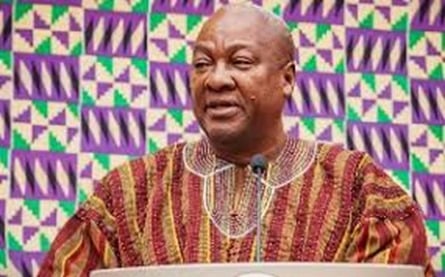
In a tense political climate marked by economic challenges, President John Mahama delivered his State of the Nation Address (SONA) this week, drawing mixed reactions from political observers and citizens alike.
The address comes at a particularly sensitive moment, with Ghana’s cocoa sector experiencing significant price fluctuations that have sent ripples throughout the agricultural economy. The government’s response to the cocoa price crisis has been widely criticized as inadequate, adding pressure to President Mahama as he presented his annual assessment of Ghana’s condition.
Critics noted that much of the President’s address appeared to echo themes from his previous year’s speech, continuing to attribute current economic difficulties to the previous administration’s policies. This rhetorical approach, now over a year into his second and final term, has begun to wear thin with many Ghanaians who expected a more forward-looking assessment focused on concrete achievements and solutions.
“The traditional goodwill new governments enjoy is fast depleting,” noted one political analyst, reflecting growing public sentiment that the blame game should give way to demonstrable progress on key initiatives promised during Mahama’s campaign.
Among the most scrutinized aspects of the address was the limited progress report on the National Democratic Congress (NDC) government’s signature “reset agenda,” which had been positioned as a cornerstone of economic revitalization. Particularly conspicuous was the minimal mention of the previously touted Operation Recover All Loot (ORAL) initiative, which had promised significant financial recovery from alleged corruption under the previous administration.
The President’s highly publicized “24-Hour Economy” policy also came under intense scrutiny. What was once presented as a transformative economic program now appears to be still in its planning stages, with Mahama announcing that enabling legislation is still being developed rather than reporting on implementation successes.
This stands in stark contrast to the previous administration’s Free Senior High School (SHS) program, which, despite its initial implementation challenges, was rapidly rolled out upon the New Patriotic Party (NPP) taking office. A recent World Bank report, cited by Bloomberg on February 23, described the Free SHS as “Ghana’s most significant social policy since 1957,” underscoring its substantial impact.
The President also appeared to modify expectations about the 24-Hour Economy initiative, suggesting that it would not necessarily involve businesses operating additional shifts as previously indicated—a clarification that has left many wondering about the program’s actual parameters and potential benefits.
Against the backdrop of domestic economic challenges, Ghana also faces external pressures that received limited attention in the address. The escalating conflict in the Middle East, with the United States and Israel engaging militarily with Iran, threatens to disrupt global trade patterns and potentially impact Ghana’s economic recovery projections.
This international dimension adds complexity to Ghana’s economic outlook, particularly given previous statements by NDC officials suggesting that distant global conflicts have minimal impact on Ghana’s economy—a position that many economists find questionable in an increasingly interconnected global marketplace.
As President Mahama navigates the second year of his term, the gap between campaign promises and governance realities appears to be widening. With public patience wearing thin and both domestic and international challenges mounting, the administration faces increasing pressure to move beyond rhetoric and demonstrate tangible progress on its economic agenda.
The cocoa sector, a historical cornerstone of Ghana’s economy, will likely serve as a key indicator of the administration’s economic management capabilities in the coming months, as global market conditions and domestic policy decisions converge to impact this vital industry.
Fact Checker
Verify the accuracy of this article using The Disinformation Commission analysis and real-time sources.

8 Comments
The cocoa price crisis is a significant challenge for Ghana’s economy. I’m curious to see if the President’s address offered any robust, data-driven strategies to stabilize the sector and support farmers during these turbulent times.
Good point. The agricultural economy is a critical pillar, so effectively addressing the cocoa issue should be a top priority for the administration.
Analyzing political speeches for rhetorical techniques is an important exercise in understanding the nuances of messaging and persuasion. It will be interesting to see if the President can shift the narrative and present a more forward-looking, solutions-oriented vision.
Interesting analysis of political rhetoric and the challenges of addressing economic woes. It’s a delicate balance between acknowledging past failures and charting a clear, forward-looking vision. Curious to see if the President can shift the narrative and regain public trust.
Valid point about the diminishing goodwill over time. The public is understandably eager for tangible progress, not just rehashed talking points.
It’s understandable that the public is growing weary of the blame game. Ultimately, citizens want to see tangible progress and improvements in their daily lives, not just political rhetoric. The President has his work cut out for him.
Attributing current issues to the previous administration is a common political tactic, but it can only go so far before it starts to ring hollow. The President needs to demonstrate concrete solutions and results to restore confidence.
Absolutely. Blaming the past is an easy scapegoat, but true leadership requires taking responsibility and driving meaningful change.