


Listen to the article
Ghana’s history is marked by a disturbing pattern of political vilification that has left deep scars on the national psyche. From former leaders like Ignatius Kutu Acheampong and Akwasi Afrifa who were executed following military coups, to the posthumous branding of Kwame Nkrumah as a “nation wrecker,” propaganda and political expediency have repeatedly been weaponized against individuals for political gain.
These cases represent just the tip of the iceberg in a troubling historical narrative where reputations were destroyed, legacies erased, and national unity undermined through coordinated campaigns of misinformation. The damage extends beyond high-profile figures to include countless ordinary citizens who became silent victims of political purges during various regimes.
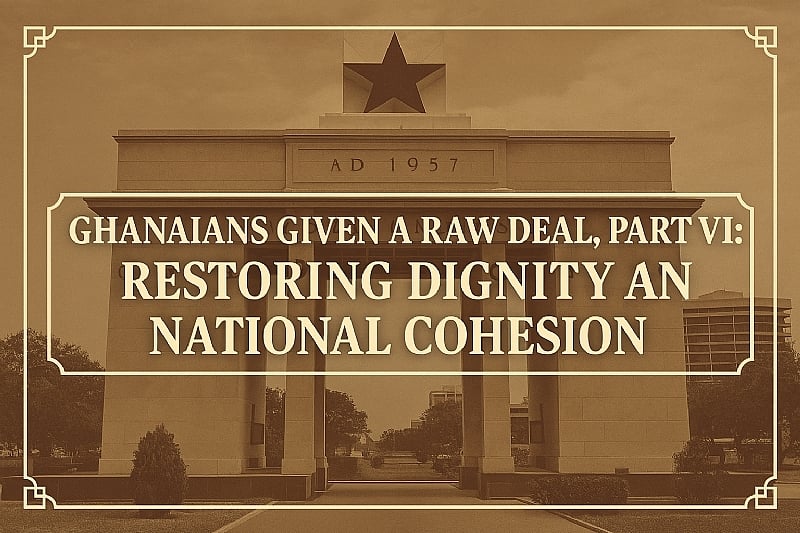
Political analysts and historians have increasingly called for Ghana to confront this painful past with honesty and purpose. A recent series titled “Ghanaians Given a Raw Deal” has documented how propaganda systematically dismantled lives and legacies across different political eras, highlighting the need for national reconciliation.
“Restoring dignity to those given a raw deal is not just about individuals,” explains a retired senior citizen who has been advocating for national healing. “It’s about strengthening our democracy, healing collective wounds, and building genuine national cohesion.”
The case for restoration rests on several pillars. Truth-building establishes trust between citizens and their government, ensuring that history is documented honestly rather than manipulated for political advantage. Justice provides healing for families who have watched loved ones vilified or executed without fair process. National memory that acknowledges both achievements and injustices forms the foundation of authentic unity.
Ghana’s experience mirrors similar challenges faced by other post-colonial African nations that have undergone political instability and military interventions. Countries like Rwanda and South Africa have implemented various reconciliation mechanisms with varying degrees of success, providing potential models for Ghana to consider.
Experts suggest several concrete pathways toward national healing. Truth commissions could provide forums to document and acknowledge injustices committed by past regimes, giving voice to victims and creating an official historical record. Memorialization efforts—including monuments, archives, and educational curricula—would honor both leaders and ordinary citizens who suffered political persecution.
Financial and social support for families of those unjustly executed or vilified represents another important dimension of reconciliation. Perhaps most critically, improved civic education could help citizens develop the critical thinking skills needed to question propaganda, demand evidence, and resist manipulation by political actors.
“This is not about NDC or NPP, military or civilian governments,” emphasizes the senior citizen advocate, referring to Ghana’s two dominant political parties. “Propaganda has been deployed across all political traditions, but its victims belong to the nation, not to one party.”
The cross-cutting nature of historical injustice means that restoration must transcend partisan interests to become a genuinely national project. This represents a significant challenge in Ghana’s often deeply polarized political landscape, where historical narratives frequently become battlegrounds for contemporary political advantage.
As Ghana approaches another election cycle in 2024, political observers note that confronting historical injustices could either further divide the nation or become a rare opportunity for political consensus. The path chosen will likely influence Ghana’s democratic trajectory and social cohesion for generations to come.
“Restoring dignity is not only about correcting history,” concludes the retired citizen’s appeal. “It is about reclaiming Ghana’s identity, strengthening democracy, and ensuring that no citizen is ever destroyed by political lies again. National cohesion demands truth, justice, and memory.”
Fact Checker
Verify the accuracy of this article using The Disinformation Commission analysis and real-time sources.

23 Comments
Systematic dismantling of reputations and legacies is a concerning trend that needs to be addressed. Promoting national unity is the way forward.
I agree, confronting this painful history head-on is crucial. Only by acknowledging the past can Ghana truly heal and move towards a more cohesive future.
Confronting the past with honesty and purpose is crucial. Promoting national reconciliation and cohesion should be the top priority.
I hope this series can shed light on the full scope of the damage caused by political vilification. Addressing these wounds is vital for Ghana’s future.
Weaponizing propaganda against individuals is a disturbing practice that undermines democracy. Restoring dignity and national cohesion is the right path.
Systematic dismantling of reputations and legacies is a troubling pattern that needs to be addressed. Promoting national cohesion is the way forward.
I hope this series can bring much-needed attention to these issues. Restoring dignity to those affected is critical for Ghana’s future.
Weaponizing propaganda against individuals is a disturbing practice that undermines democracy. Restoring dignity and national cohesion is the right path.
This is a complex and sensitive issue that requires nuance and care. I hope the process of national healing can bring Ghanaians together.
Agreed, the path forward will not be easy but it’s necessary to build a stronger, more united Ghana. Honesty and empathy will be key.
This is a concerning pattern of political vilification that undermines national unity. Restoring dignity and confronting the past honestly is crucial for true reconciliation.
I agree, the systematic dismantling of reputations and legacies through propaganda is deeply troubling. Addressing this painful history is necessary for Ghana to move forward.
This is a sobering reminder of the human costs of political expediency. Restoring dignity to those affected should be a national imperative.
Erasing legacies and undermining national unity through propaganda is a disturbing trend. Restoring dignity is an important step in the right direction.
This is a complex and sensitive issue that requires nuance and empathy. I hope Ghana can find a way to heal these deep wounds and move forward united.
Agreed, promoting national reconciliation should be the top priority. Addressing the root causes of these divisions is crucial for a stronger, more resilient Ghana.
This is a complex and sensitive issue that requires nuance and empathy. I hope Ghana can find a way to heal these deep wounds and move forward united.
Agreed, promoting national reconciliation should be the top priority. Addressing the root causes of these divisions is crucial for a stronger, more resilient Ghana.
Confronting the past with honesty and purpose is a necessary step towards national healing. Restoring dignity and unity should be the ultimate goal.
Confronting the past with honesty and purpose is a necessary step towards national healing. Restoring dignity and unity should be the ultimate goal.
It’s good to see efforts to confront this troubling history and work towards reconciliation. Addressing the root causes of these divisions is crucial.
Propaganda and misinformation should never be used as political weapons. Highlighting these issues and promoting national cohesion is an important step.
Absolutely, the damage done to ordinary citizens caught in these political purges needs to be acknowledged. Restoring dignity is critical for national unity.