


Listen to the article
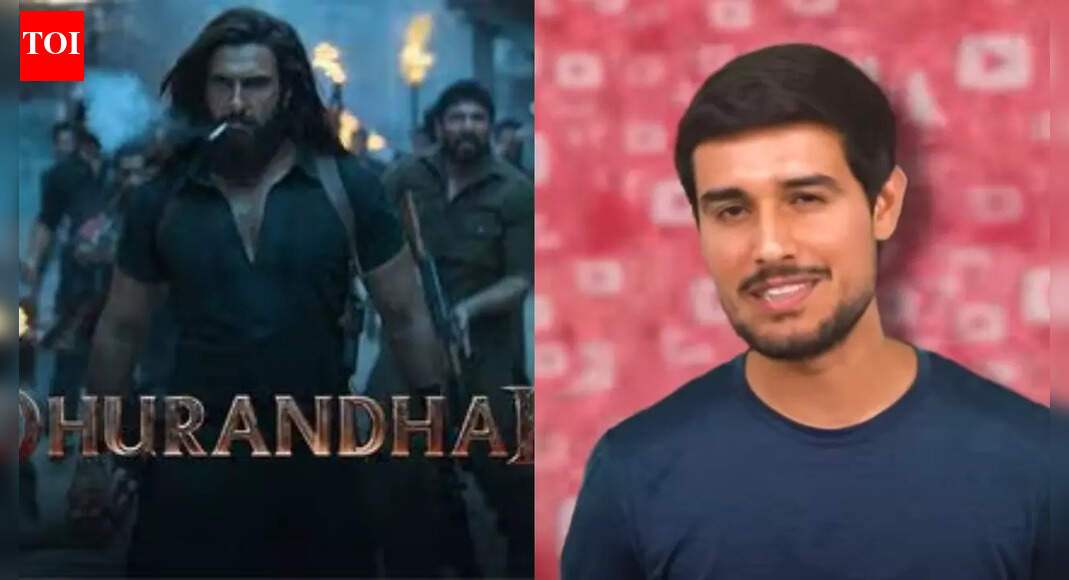
Popular YouTuber Dhruv Rathee has ignited fresh controversy with his latest social media declaration targeting what he described as a “Rs 300 crore propaganda film,” widely interpreted as a reference to the box office hit “Dhurandhar.” Without explicitly naming the film, Rathee’s provocative statement has generated significant buzz across social media platforms.
On Saturday afternoon, Rathee posted on X (formerly Twitter): “It takes 1 YouTube video to destroy a Rs 300 crore propaganda film. And I guarantee you that the MELTDOWN after this video will be so bad. They’re not ready for this. Releasing tonight ;).” The timing of his statement is particularly noteworthy as it comes shortly after “Dhurandhar” surpassed the Rs 300 crore milestone at the Indian box office, leading many users to conclude he was referring to the Ranveer Singh-led action thriller.
This isn’t the first time Rathee has voiced strong opinions about the film. Following the release of the “Dhurandhar” trailer in November, he directly criticized director Aditya Dhar, stating that he had “truly crossed a limit of cheapness in Bollywood.” Rathee took specific issue with the film’s violent content, comparing it to “ISIS beheadings” being presented as entertainment.
“His lust for money is so unhinged that he is willingly poisoning the minds of the young generation,” Rathee had added, suggesting the film’s graphic content could have negative societal impacts.
Despite such criticisms, “Dhurandhar” has emerged as one of the year’s biggest commercial successes. Since its December 5 release, the spy thriller has amassed over Rs 480 crore net in India and approximately Rs 740 crore gross worldwide, demonstrating significant audience appeal despite the controversy surrounding its content.
The film features Ranveer Singh portraying an Indian intelligence operative who infiltrates criminal organizations in Pakistan’s Lyari region that have connections to terrorist networks. Its success comes amid ongoing debates about the portrayal of violence in mainstream Indian cinema and the responsibilities filmmakers have toward their audiences.
Rathee’s announcement of a video “exposing” the film has garnered significant attention online, with many of his followers eagerly anticipating what appears to be a detailed critique. Known for his analytical breakdowns of political and social issues, Rathee has amassed a substantial following on YouTube where his investigative content frequently generates millions of views.
The controversy highlights the increasingly polarized discourse surrounding Indian cinema, particularly films that touch on geopolitical themes or contain graphic violence. Industry observers note that social media has transformed how films are discussed, with influential content creators like Rathee capable of shaping public perception independent of traditional media channels.
Film industry analysts suggest that while such controversies can sometimes boost a film’s visibility through additional publicity, they also raise important questions about the intersection of entertainment, propaganda, and social responsibility. The debate surrounding “Dhurandhar” reflects broader cultural tensions about national identity, the glorification of violence, and the role of cinema in shaping public attitudes.
As audiences await Rathee’s promised video, the incident underscores the evolving relationship between traditional media, social media influencers, and how entertainment is both consumed and critiqued in the digital age.
Fact Checker
Verify the accuracy of this article using The Disinformation Commission analysis and real-time sources.

18 Comments
As a student of film and politics, I’m intrigued by Rathee’s claims. Propaganda in cinema is a complex issue, and I’ll be closely following the discourse around this film to better understand the nuances involved.
That’s a thoughtful approach. Navigating the intersection of art, politics, and ideology requires nuance and an openness to diverse perspectives. I look forward to seeing how this debate unfolds.
Interesting development in the ongoing debate around this film. I’ll reserve judgment until I’ve seen Rathee’s video, but I appreciate him using his platform to scrutinize potential propaganda, even in mainstream Bollywood.
Well said. Healthy skepticism towards potential messaging in popular media is important, especially given the reach and influence of major films. I’m glad to see this discussion taking place.
As a fan of Bollywood films, I’m intrigued by the claims of propaganda. While box office success doesn’t necessarily equate to quality, it will be worth examining the content and messaging of this movie more closely.
Good point. Just because a film is commercially successful doesn’t mean it’s immune to criticism. I’ll be watching Rathee’s video with an open mind.
While I’m a fan of the lead actor, I understand Rathee’s concerns about potential propaganda. Big-budget films can sometimes gloss over nuanced historical and political issues. I’ll be watching Rathee’s video with an open mind.
That’s a fair perspective. Even popular artists and filmmakers aren’t immune to criticism, especially when it comes to sensitive subject matter. I look forward to seeing Rathee’s analysis.
As someone who follows the Indian entertainment industry closely, I’ve noticed an increasing trend of films being used as vehicles for nationalist messaging. While artistic expression is important, we should also be vigilant about potential propaganda.
That’s a thoughtful observation. The line between patriotism and propaganda can be blurry, so it’s crucial to scrutinize the intentions and impacts of such films.
Interesting perspective on this controversial film. I’m curious to see Dhruv Rathee’s take and understand his concerns about the propaganda angle. Social media debates on sensitive topics like this can get heated quickly.
I agree, it will be important to approach this objectively and avoid inflammatory rhetoric. Let’s see what evidence Rathee presents in his video.
Dhruv Rathee is known for his well-researched analysis, so I’m curious to see what specific issues he has identified with this film. Reasonable people can disagree on the interpretation of artistic works.
Agreed. Rathee’s track record suggests he likely has some substantive concerns to raise. Healthy debate on these topics is welcome, as long as it remains civil and evidence-based.
This is a sensitive topic that touches on issues of nationalism, historical narratives, and the power of cinema. I hope the debate can remain civil and fact-based, focusing on the merits of the film itself rather than personal attacks.
Absolutely. Healthy discourse on these complex matters is important, but it requires nuance and empathy from all sides.
Rathee’s claim of a ‘₹300 crore propaganda film’ is a bold accusation. I’ll be interested to see what specific evidence he presents to support that assertion. Films can often be interpreted differently by various viewers.
You raise a fair point. Without seeing the full context, it’s premature to make definitive judgments. Let’s wait for Rathee’s video and then evaluate the arguments objectively.