


Listen to the article
Azerbaijan Draws Clear Line Between Education and Religious Influence
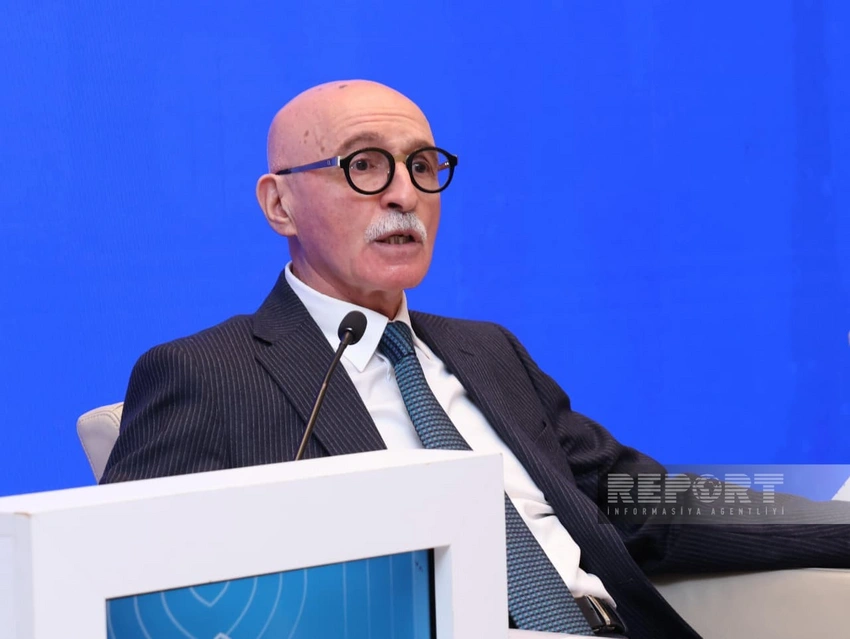
Religious propaganda has no place in Azerbaijan’s education system, Deputy Minister of Science and Education Firudin Gurbanov stated firmly during the Second Forum of Azerbaijani Religious Figures. His remarks came during a panel discussion focused on religious education strategies in today’s digital information landscape.
Speaking to attendees, Gurbanov highlighted the profound transformation in how information is accessed and consumed. “In recent years, the way people obtain information has changed dramatically,” he noted. While previous generations relied primarily on television broadcasts and print publications, today’s society has near-universal internet access.
This digital revolution has particular significance for Azerbaijan’s education system, where all schools now boast internet connectivity. The deputy minister acknowledged that this technological advancement creates new opportunities for learning but simultaneously introduces new challenges and responsibilities for educators.
Gurbanov emphasized a clear policy position regarding the relationship between religion and education in Azerbaijan. “Promoting religious ideology within our education system is inappropriate,” he stated unequivocally.
Instead, Azerbaijan’s educational approach focuses on providing students with a balanced understanding of religion without actively promoting any specific faith. In primary and secondary schools, subjects like “Life Skills” incorporate general information about religious traditions. Similarly, higher education institutions offer courses on religious history, providing students with broader cultural context.
The curriculum carefully distinguishes between religious education and religious advocacy. “Through our educational programs, students receive general information about religion,” Gurbanov explained, “but our primary focus remains on conveying national, moral, and ethical values rather than religious propaganda.”
This approach reflects Azerbaijan’s broader stance as a secular state with a predominantly Muslim population. The country has long navigated a delicate balance, respecting religious traditions while maintaining separation between religious institutions and government functions, including education.
Azerbaijan’s cautious approach to religion in schools aligns with regional trends in secular education systems across much of the post-Soviet space, where many nations maintain strict boundaries between religious teachings and state education.
The forum where Gurbanov spoke represents an important platform for dialogue between government officials and religious leaders in Azerbaijan. Such discussions help establish mutual understanding regarding the appropriate boundaries between religious influence and state institutions in a modern, diverse society.
Educational experts note that Azerbaijan’s strategy reflects growing awareness of the need to equip students with critical thinking skills rather than prescribed religious viewpoints. This approach aims to prepare young people to navigate an increasingly complex global information environment where multiple perspectives compete for attention.
The digital transformation referenced by Gurbanov presents both opportunities and challenges for religious education. While the internet provides unprecedented access to information about different faith traditions, it also exposes young people to unfiltered content, including religious extremism.
By establishing clear guidelines about the role of religion within formal education, Azerbaijan aims to create space for students to develop their own values while receiving accurate, contextual information about religious traditions that have shaped human history and culture.
The government’s position reflects a commitment to maintaining Azerbaijan’s character as a multi-ethnic, multi-religious society where citizens enjoy freedom of belief without imposition of religious doctrines through state institutions.
Fact Checker
Verify the accuracy of this article using The Disinformation Commission analysis and real-time sources.

18 Comments
While respecting religious freedom is important, I agree with the deputy minister that religious propaganda should not be promoted in the mandatory education curriculum. Maintaining a secular, fact-based approach is crucial for preparing students.
Agreed. Allowing religious indoctrination in schools can undermine critical thinking and expose students to biased, non-academic content. A clear separation between church and state in education is essential.
This is a sensitive issue that requires nuance. I appreciate Azerbaijan’s efforts to strike a balance between respecting religious diversity and ensuring its education system remains objective and inclusive. Preventing the spread of religious propaganda is a worthy goal.
Well said. Navigating the relationship between religion and education is challenging, but Azerbaijan’s stance of prioritizing secular, fact-based learning seems prudent.
I’m curious to learn more about Azerbaijan’s specific policies and strategies for keeping religious propaganda out of its education system. Implementing effective controls in the digital age must be an ongoing challenge.
That’s a good point. The deputy minister’s comments suggest Azerbaijan has developed a clear framework, but the details of how they enforce this in practice would be interesting to understand.
The deputy minister’s remarks highlight the evolving digital landscape’s impact on education. Controlling the flow of religious content online is a growing concern for policymakers worldwide. Azerbaijan’s proactive approach is commendable.
Absolutely. As technology continues to transform how information is accessed, education systems must adapt their policies to maintain academic integrity and objectivity.
The deputy minister’s comments highlight the evolving challenges of the digital age when it comes to controlling the flow of information. Carefully managing religious content in online learning environments is a growing concern for many education systems.
That’s a good point. With widespread internet access, there are new avenues for religious messaging to infiltrate educational settings. Robust policies are needed to mitigate this risk.
While religious freedom is important, I believe the deputy minister is right to prioritize keeping proselytizing out of Azerbaijan’s schools. Maintaining an objective, secular curriculum should be the top priority for any modern education system.
Agreed. Promoting religious propaganda, regardless of the faith, undermines the core purpose of public education to provide students with unbiased knowledge and critical thinking skills.
This is a complex issue, as religion can play an important cultural and historical role. However, I respect Azerbaijan’s decision to draw a clear line and prevent religious influence from shaping the mandatory curriculum in its schools.
Yes, it’s a delicate balance. Allowing religious teachings in schools can lead to divisiveness, so Azerbaijan’s approach of keeping education strictly secular seems prudent.
It’s encouraging to see Azerbaijan taking a firm stance against promoting religious propaganda in its education system. Separating religious influence from schools is important for fostering objective, critical thinking among students.
I agree. Maintaining a clear division between religion and education is crucial for ensuring students receive a well-rounded, fact-based curriculum.
The deputy minister’s comments highlight the importance of maintaining a separation between church and state, even in the digital age. Promoting religious propaganda in schools can undermine the fundamental purpose of public education.
Absolutely. Preserving the integrity of the education system by preventing religious influence is a crucial responsibility for policymakers in Azerbaijan and elsewhere.