


Listen to the article
In a political climate fraught with tension, the rhetoric surrounding immigration enforcement has reached new heights as ICE agents are deployed to assist at airports amid ongoing federal budget disputes.
This week, ICE agents began appearing at major airports across the country to help manage TSA lines as security personnel face their third consecutive missed paycheck. The deployment comes as wait times at security checkpoints have stretched beyond three hours at some locations, causing significant disruption to travelers.
The move has sparked intense debate among political leaders. Several prominent Democrats, including Connecticut Senator Richard Blumenthal, House Minority Leader Hakeem Jeffries, and Senate Minority Leader Chuck Schumer, have voiced strong opposition to the presence of ICE agents in airports, characterizing it as potentially threatening to travelers.
Meanwhile, supporters of the deployment argue that ICE agents are providing essential support services, distributing water to stranded passengers, assisting with luggage, and helping to maintain operations during what has become a staffing crisis at the TSA.
The controversy reached new heights when Philadelphia District Attorney Larry Krasner, known for his progressive stance on criminal justice reform, issued a stark warning that he would pursue legal action against ICE agents he deemed to be overstepping their authority at the city’s airport.
“The president cannot pardon you and, yes, I will put you in handcuffs… if you decide to make the terrazzo floor of this airport anything like you did the streets of Minneapolis,” Krasner stated, referring to previous immigration enforcement operations.
The deployment comes amid broader tensions surrounding immigration policy, with the administration describing it as a pragmatic solution to airport staffing shortages while critics view it as a provocative political maneuver.
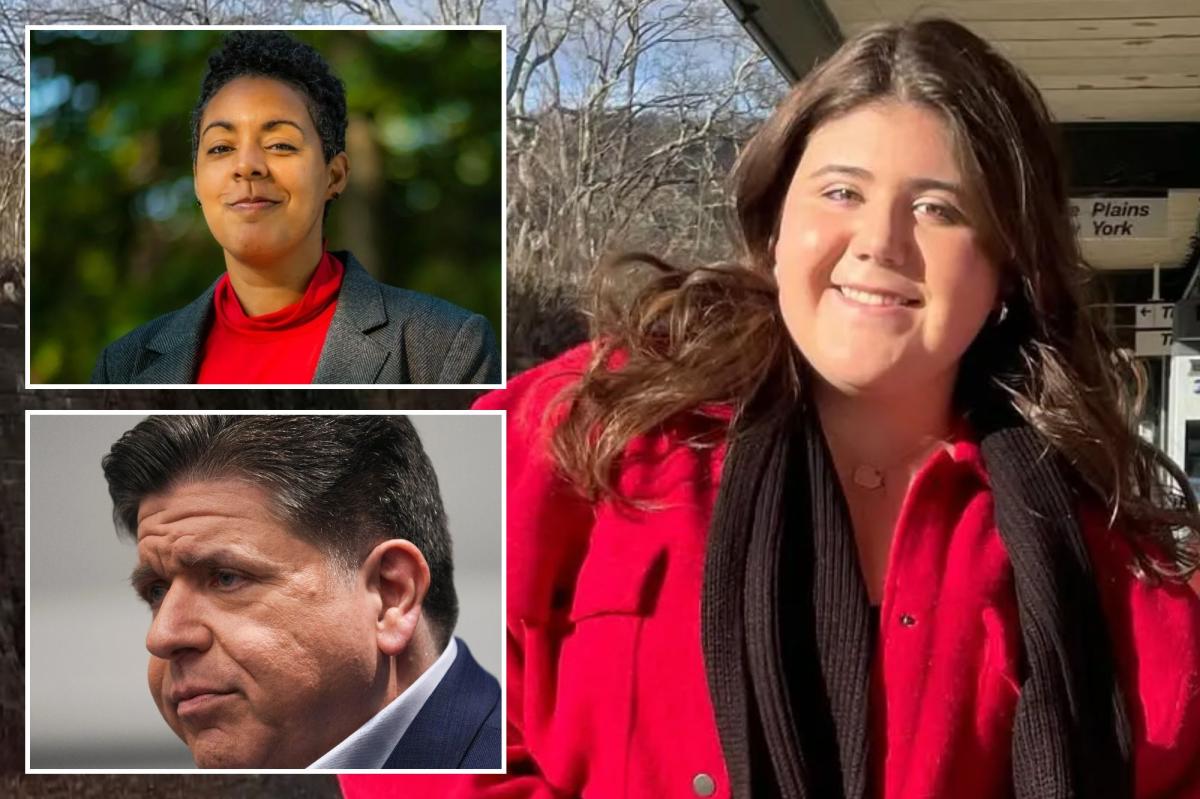
The debate over ICE’s role has been further inflamed by a recent tragedy in Chicago. Sheridan Gorman, an 18-year-old Loyola University Chicago student, was fatally shot while walking with friends along the city’s lakefront. Authorities have charged Jose Medina-Medina, a 25-year-old Venezuelan national, with the murder.
Illinois Governor JB Pritzker attributed the tragedy to “national failures, a failure to have comprehensive immigration reform, a failure of the president to go after the worst of the worst,” highlighting the deeply entrenched political divisions over immigration policy.
The case sparked additional controversy when Chicago Alderman Maria Hadden initially suggested the victim might have “unintentionally startled” the alleged assailant, comments for which she later apologized after public backlash.
Adding another layer to the discourse, Loyola’s campus newspaper, The Phoenix, issued an apology for initially describing the suspect as an “illegal immigrant,” stating the terminology didn’t align with Associated Press style guidelines or the publication’s values. The paper subsequently revised its description to “25-year-old Rogers Park resident.”
This linguistic debate reflects broader disagreements about how to frame immigration issues in public discourse, with media organizations increasingly moving away from terms like “illegal alien” in favor of alternatives such as “undocumented immigrant.”
Political analysts note that the current tensions represent more than just disagreements over policy—they reflect fundamental divisions in how Americans view the role of immigration enforcement and border security in a functioning democracy.
As travelers navigate airport security in the coming days, they’ll be confronted not just with longer lines, but with the physical manifestation of one of America’s most contentious political debates, as uniformed ICE agents work alongside TSA personnel in an unprecedented deployment that continues to generate passionate responses from across the political spectrum.
Fact Checker
Verify the accuracy of this article using The Disinformation Commission analysis and real-time sources.

10 Comments
While political rhetoric is often heated, we should focus on facts and public safety. ICE agents assisting TSA at airports during the staffing crisis seems like a pragmatic solution, even if some disagree with the approach.
I agree, maintaining airport operations and security should be the priority here, regardless of one’s political leanings.
I’m curious to hear more about the potential impacts, both positive and negative, of ICE agents assisting at airports. This seems like a complex situation without easy answers.
Good point. There are likely valid concerns on both sides that merit careful consideration to find the right balance.
While I understand the concerns about the presence of ICE agents in airports, if their assistance is truly helping to maintain operations and security during this staffing crisis, then that should be the primary consideration. Public safety must come first.
This deployment of ICE agents raises interesting questions about the proper role of law enforcement in supporting critical infrastructure like airports. I’d like to see a more nuanced discussion of the tradeoffs involved.
Agreed, this is not a black-and-white issue. Reasonable people can disagree on the best approach while still prioritizing public safety.
The deployment of ICE agents to airports is certainly a controversial move, but if it helps maintain operations and security during this staffing shortage, it may be a necessary, if imperfect, solution. We should evaluate the outcomes objectively.
While the political rhetoric around this issue is heated, I hope our leaders can come together to find a pragmatic solution that addresses the TSA staffing crisis without unduly alarming travelers. Public safety should be the top priority.
This seems like a complex issue with valid concerns on both sides. I hope our political leaders can move beyond partisan posturing and work together to find the best way to support the TSA and ensure airport safety and efficiency.