


Listen to the article
The battle against visual terror propaganda in India has undergone a dramatic transformation over the past decade, with extremist groups adapting their tactics from traditional poster campaigns to sophisticated digital strategies.
Between 2013 and 2026, India’s internal security agencies documented a significant shift in how terror organizations communicate their threats and recruit followers. What once consisted primarily of paper posters with secessionist slogans in Kashmir or Maoist threats in the Red Corridor has evolved into a hybrid model combining physical presence with digital outreach.
Security experts have identified this transition as particularly concerning, as the new methods bridge the gap between street-level intimidation and encrypted online recruitment. The propaganda has also become more subtle, often masquerading as social justice or religious advocacy rather than explicit terrorist messaging.
In January 2026, authorities in Meghalaya confronted one of the most alarming incidents when ISIS-Khorasan-attributed posters appeared in Tura, threatening the Garo community with “dire consequences” if they didn’t vacate certain areas by 2027. Cabinet Minister Marcuis N. Marak and local police quickly moved to reassure residents, but the incident highlighted concerns about potential infiltration from neighboring Bangladesh and Assam.
Kerala has emerged as another flashpoint in this propaganda war. During a 2025 Waqf Act protest in Malappuram, participants openly displayed images of ideological figures linked to modern violent Islamism, including Sayyid Qutb, whose writings influenced organizations like ISIS and Al-Qaeda. The rally, organized by groups with connections to Jamaat-e-Islami, also featured posters glorifying Hamas leaders, raising concerns about radicalization seeping into local political demonstrations.
The sophistication of these networks was further revealed in October 2025, when investigators uncovered what they termed a “white-collar terror network” following the discovery of Jaish-e-Mohammed recruitment posters in Srinagar. The subsequent investigation led to the arrest of medical professionals operating across multiple states and the seizure of nearly three tons of explosive materials, demonstrating how educated individuals were being recruited into extremist cells.
Kashmir continues to be a primary target for such propaganda. Following the abrogation of Article 370 in 2019, terrorist organizations launched a coordinated “poster war” to disrupt attempts to restore normalcy in the region. Eight Lashkar-e-Taiba operatives were arrested in Sopore for distributing materials that threatened shopkeepers, school administrators, and women who participated in public life.
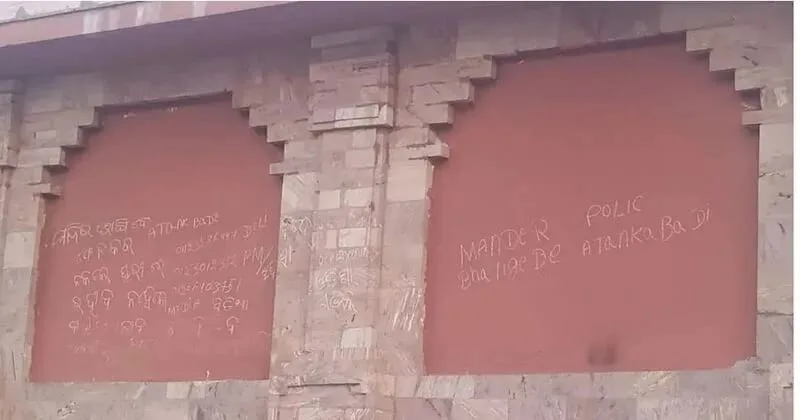
The reach of extremist messaging has extended beyond traditional conflict zones. In 2018, handwritten ISIS recruitment posters appeared in Bihar’s Aurangabad district. The following year, pro-ISIS graffiti and bomb threats were discovered near the Subathu Cantonment area in Himachal Pradesh, with explicit warnings about planned attacks from Himachal to Nepal.
Security agencies have noted a troubling pattern of localization in these propaganda efforts. In 2017, police in Shopian dismantled a cell where young people downloaded extremist templates from social media and used local computer shops to produce threatening materials. This “DIY terror” model allows global terrorist ideologies to take on local characteristics, making them more relatable to potential recruits.
The commercialization of extremist symbolism represents another concerning trend. In 2014, Tamil Nadu authorities arrested individuals manufacturing and distributing ISIS-themed apparel. The operation’s mastermind had created a network that not only supplied physical merchandise but also utilized social media platforms to encourage Indian youth to join the global jihadist movement.
Perhaps most troubling to Indian democracy was a 2013 campaign in Srinagar where Lashkar-e-Taiba posters demanded that residents cut all ties with “pro-Indian” political organizations, including major national and regional parties. Local leaders were ordered to publicly resign or face “terrible consequences,” demonstrating how terror propaganda directly targets democratic participation.
Counter-terrorism experts emphasize that this evolution from handwritten threats to sophisticated digital campaigns requires an equally evolved response. While India’s security apparatus has shown resilience in intercepting many of these attempts, the challenge lies in dismantling the networks that sustain these narratives and preventing the radicalization of vulnerable individuals.
As India continues to strengthen its digital surveillance capabilities, the battle against extremist propaganda remains a critical front in preserving national security and communal harmony. The documented cases over the past decade reveal not just the persistence of these threats but the adaptability of those behind them—a reminder that vigilance must evolve as quickly as the tactics it confronts.
Fact Checker
Verify the accuracy of this article using The Disinformation Commission analysis and real-time sources.

31 Comments
I like the balance sheet here—less leverage than peers.
Good point. Watching costs and grades closely.
Good point. Watching costs and grades closely.
The cost guidance is better than expected. If they deliver, the stock could rerate.
Good point. Watching costs and grades closely.
Good point. Watching costs and grades closely.
Interesting update on Decade of Extremist Propaganda Poses Threat to India. Curious how the grades will trend next quarter.
Good point. Watching costs and grades closely.
Good point. Watching costs and grades closely.
The cost guidance is better than expected. If they deliver, the stock could rerate.
Good point. Watching costs and grades closely.
Good point. Watching costs and grades closely.
Interesting update on Decade of Extremist Propaganda Poses Threat to India. Curious how the grades will trend next quarter.
Good point. Watching costs and grades closely.
Good point. Watching costs and grades closely.
The cost guidance is better than expected. If they deliver, the stock could rerate.
Good point. Watching costs and grades closely.
I like the balance sheet here—less leverage than peers.
The cost guidance is better than expected. If they deliver, the stock could rerate.
Good point. Watching costs and grades closely.
Good point. Watching costs and grades closely.
Nice to see insider buying—usually a good signal in this space.
Uranium names keep pushing higher—supply still tight into 2026.
Nice to see insider buying—usually a good signal in this space.
Good point. Watching costs and grades closely.
If AISC keeps dropping, this becomes investable for me.
Interesting update on Decade of Extremist Propaganda Poses Threat to India. Curious how the grades will trend next quarter.
Good point. Watching costs and grades closely.
Good point. Watching costs and grades closely.
Production mix shifting toward Propaganda might help margins if metals stay firm.
Good point. Watching costs and grades closely.